


Question by Fr. Bonaventure Quaidoo, Archdiocese of Accra:
My Lord, in the light of the Church’s teaching that sacred music is an integral part of the liturgy, as affirmed in Sacrosanctum Concilium, and considering the biblical principle that the labourer deserves his wages, should Church musicians who dedicate time, training, and professional skill to liturgical service be entitled to just remuneration? Or, since music ministry is fundamentally an act of worship and service to God, should such service ordinarily be offered freely and voluntarily?
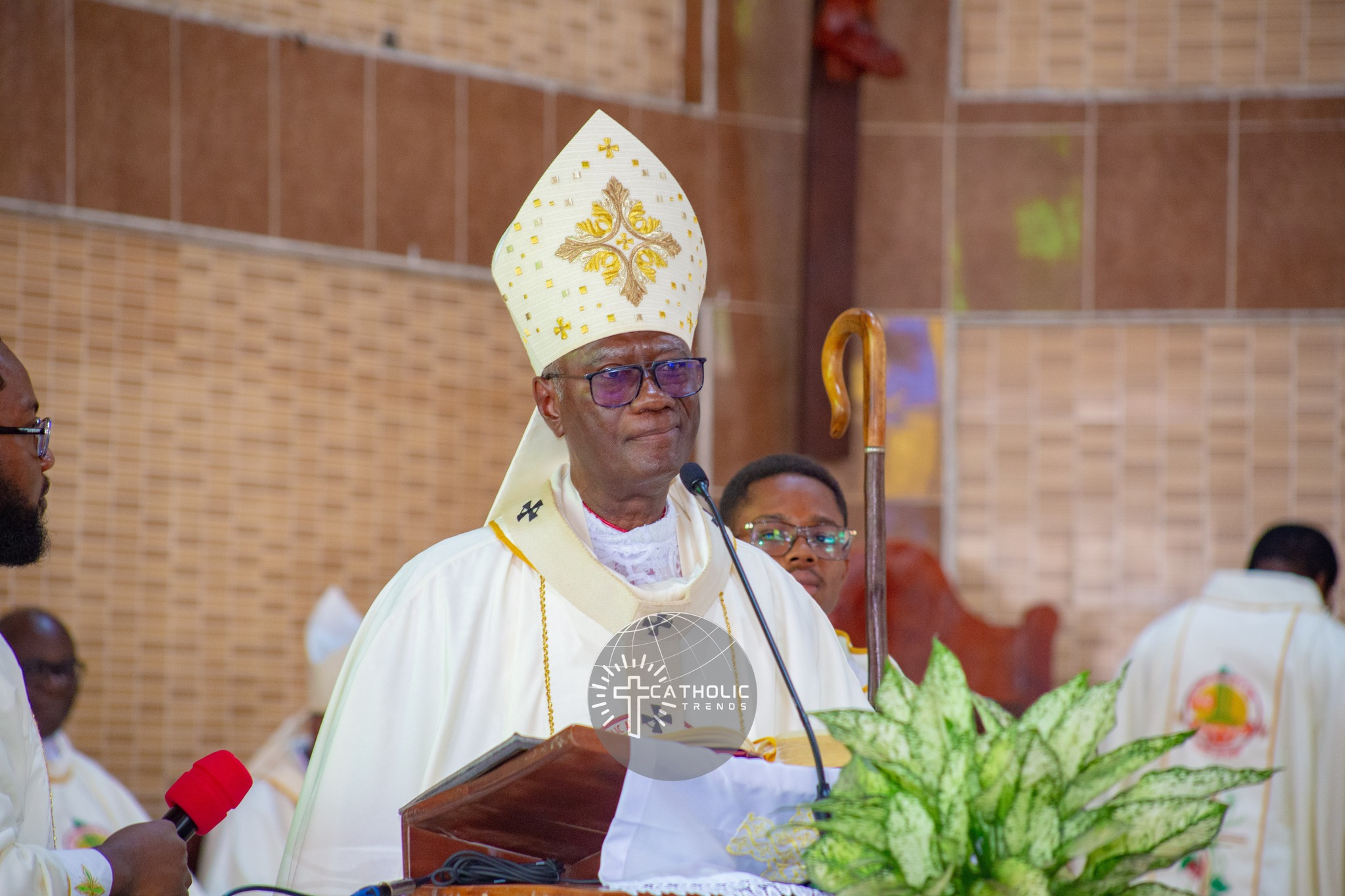
Answer by Most Rev. Joseph Osei-Bonsu:
The question of whether Church musicians should receive just remuneration or offer their services freely is both pastoral and theological. It touches on the dignity of labour, the nature of ministry, and the Church’s responsibility towards those who serve her.
Above all, it concerns worship, because sacred music is not merely decorative but an integral part of the liturgy. In addressing this matter, devotion must be balanced with justice. Music in the Church is not a commodity, yet neither can the Church ignore the time, skill, and commitment required to sustain it. The challenge, therefore, is to honour the musician while preserving the spiritual nature of the gift they offer.
Sacred Music in the Life of the Catholic Church
On the importance of music in the liturgy, the Second Vatican Council, in Sacrosanctum Concilium, teaches:
“The musical tradition of the universal Church is a treasure of inestimable value… Therefore sacred music is to be considered the more holy in proportion as it is more closely connected with the liturgical action… and as such it forms a necessary or integral part of the solemn liturgy” (Sacrosanctum Concilium, 112).
Music is therefore not secondary; it forms part of the Church’s public prayer. In the Eucharist, in the sacraments, and in the Liturgy of the Hours, music directs hearts towards God, supports the proclamation of the Word, and fosters the active participation of the faithful.
Church musicians are therefore more than performers; they exercise a genuine ministry. Their work requires preparation, rehearsal, and fidelity to liturgical norms. Musicians must understand the rhythm of the liturgical year, the needs of the assembly, and the theological meaning of the texts they sing or accompany. Whether paid or unpaid, their role contributes significantly to the life of worship.
Musicians Offering Their Services Freely
Throughout history, many musicians have offered their gifts to the Church voluntarily, motivated primarily by devotion rather than remuneration.
Giovanni Pierluigi da Palestrina, a Catholic composer from Italy, devoted his life to sacred polyphony during the Counter-Reformation. He composed works such as Missa Papae Marcelli, fulfilling his formal obligations while also producing additional sacred works as acts of devotion, demonstrating the integration of professional skill and personal faith.
Similarly, Johann Sebastian Bach, a Lutheran composer from Germany, worked as a salaried church musician in Leipzig. Yet he inscribed many of his works with the phrase Soli Deo Gloria (“to God alone be the glory”), revealing that worship remained his primary motivation even within a professional role. Franz Liszt, a Catholic composer who later received minor orders, composed Masses, oratorios, and organ works as expressions of spiritual devotion, often without expectation of payment.
Within the Catholic Church in Ghana, composers such as Michael Kofi Amissah have played an important role in shaping the musical life of parish worship. Through his Mass settings, choral anthems, and liturgical compositions, he provided music suitable for the celebration of the Holy Mass and other church services. His works blend Catholic liturgical texts with melodic and rhythmic elements drawn from Ghanaian musical culture.
Many of his compositions circulated widely among parish choirs, often being copied, shared, and taught during rehearsals, diocesan gatherings, and liturgical celebrations. In this way, his music helped choirs to participate more actively in the liturgy while remaining faithful to Catholic worship. Beyond their artistic value, these works also served a pastoral purpose by strengthening congregational participation and fostering a deeper sense of prayer through music within local Catholic communities.
Beyond the Catholic tradition, Ephraim Amu, a minister of the Presbyterian Church of Ghana, composed numerous hymns and choral works that incorporated indigenous Ghanaian rhythms and languages into Christian worship. His music helped to shape Ghanaian church music by promoting African cultural identity within Presbyterian liturgy and congregational singing.
Many other church musicians in Ghana have similarly offered their compositions as part of their ministry. J.H. Nketia was a renowned Ghanaian composer and ethnomusicologist who made significant contributions to African and church music. Associated with the Presbyterian Church of Ghana, he composed and arranged choral works that integrated Ghanaian musical elements with Western choral traditions.
His scholarship and compositions greatly influenced the development of African church music and inspired many musicians to incorporate indigenous musical forms into Christian worship. Likewise, Newlove Annan, a Methodist church musician known for his choral works and hymn arrangements, contributed music that circulated widely among church choirs primarily for worship rather than commercial purposes.
The Evangelical Presbyterian Church, Ghana, has also produced notable church musicians who have contributed significantly to Ghanaian sacred choral music. Composers such as Kenneth Kwaku Avotri Kafui, George Worlasi Kwasi Dor, Emmanuel Tachie Achire, and Hope Senalor Konu have written works widely performed in church worship and choir festivals. Their compositions often blend Western choral traditions with indigenous Ghanaian musical elements. In many cases these works were shared freely for congregational worship and church events, though some were also published or commissioned.
In Pentecostal traditions in Ghana, musicians such as S. K. Ampiah and Emmanuel Kwasi Mireku have shaped congregational worship through numerous gospel songs, praise choruses, and worship pieces widely sung in churches, prayer meetings, and revival gatherings. These songs often emphasise themes such as thanksgiving, repentance, divine protection, and personal devotion to God.
Many of these musicians approached their work primarily as a form of ministry. While their music has sometimes been recorded and distributed commercially, the deeper motivation has often been the desire to edify the faithful and support worship. Their songs frequently spread through church networks, choir groups, and informal teaching during services and conventions, becoming part of the shared repertoire of Pentecostal worship in Ghana.
Apart from these well-known figures, parish choirs, organists, and cantors who rehearse weekly without remuneration also participate in sacred ministry. They offer their skills as prayer rather than for profit. These examples demonstrate that sacred music often transcends compensation; the interior disposition of the musician remains decisive.
Musicians Receiving Remuneration
At the same time, the Church has long recognised the legitimacy of remunerating musicians whose professional work sustains liturgical life.
George Frideric Handel, associated with the Church of England, composed the celebrated oratorio Messiah and other sacred works under patronage, receiving payment for his labour while contributing profoundly to Anglican sacred music.
Similarly, Wolfgang Amadeus Mozart, a member of the Catholic Church, composed numerous Masses and sacred works for church authorities in Austria, receiving commissions while directing his artistry towards the glory of God. Joseph Haydn, also a Catholic, likewise produced many Masses for cathedrals and abbeys, balancing professional responsibilities with deep devotional inspiration.
In France, the Catholic composers César Franck and Olivier Messiaen served as salaried organists at Sainte-Clotilde Basilica and Église de la Sainte-Trinité respectively. Their compositions and liturgical improvisations often extended beyond their official duties, illustrating how professional musical service within the Church can coexist with profound spiritual commitment.
Similarly, in Ghana many parish music directors, choir trainers, and organists receive stipends in recognition of the sustained work required to organise choirs, rehearse singers, and coordinate liturgical music.
Justice and the Right to Remuneration
Sacred Scripture affirms that “the labourer deserves his wages” (Luke 10:7; 1 Timothy 5:18). Professional training, rehearsal, and leadership in sacred music constitute real labour deserving recognition. At the same time, remuneration should never overshadow the spiritual nature of the ministry. A free offering is virtuous only when it is genuinely voluntary, while compensation should be understood as justice rather than a fee for worship.
The Church must therefore avoid exploiting goodwill while preserving devotion. Volunteers who freely offer their gifts should be honoured and encouraged, while professional musicians whose livelihood depends upon their service should receive fair support.
Avoiding Extremes
Two extremes must be avoided. Sacred music should never become merely a commercial performance detached from prayer, yet dedication should not be presumed without recognition or support. A balanced approach recognises the legitimacy of both voluntary and professional service. Volunteers contribute out of love for God, while professionals help to maintain consistent standards of excellence and leadership. Clear parish or diocesan guidelines regarding stipends, training, and pastoral support can help to ensure fairness while preserving the devotional character of the ministry.
Conclusion
History and contemporary practice reveal a consistent pattern. Some musicians, such as Giovanni Pierluigi da Palestrina, Johann Sebastian Bach, Franz Liszt, Ephraim Amu, J.H. Nketiah, Michael Kofi Amissah, S. K. Ampiah, and Emmanuel Kwasi Mireku offered their gifts primarily as acts of worship. Others, including George Frideric Handel, Wolfgang Amadeus Mozart, Joseph Haydn, César Franck, and Olivier Messiaen, received remuneration while contributing profoundly to the Church’s musical heritage.
Both approaches are valid when rooted in devotion and justice. The Church must hold together worship and fairness so that musicians are neither exploited nor commercialised. When devotion and justice remain in balance, sacred music uplifts worship, enriches the assembly, and directs hearts towards God. It reminds us that music in the Church is both gift and service—freely offered yet responsibly sustained—always for the glory of God.






Discussion about this post