


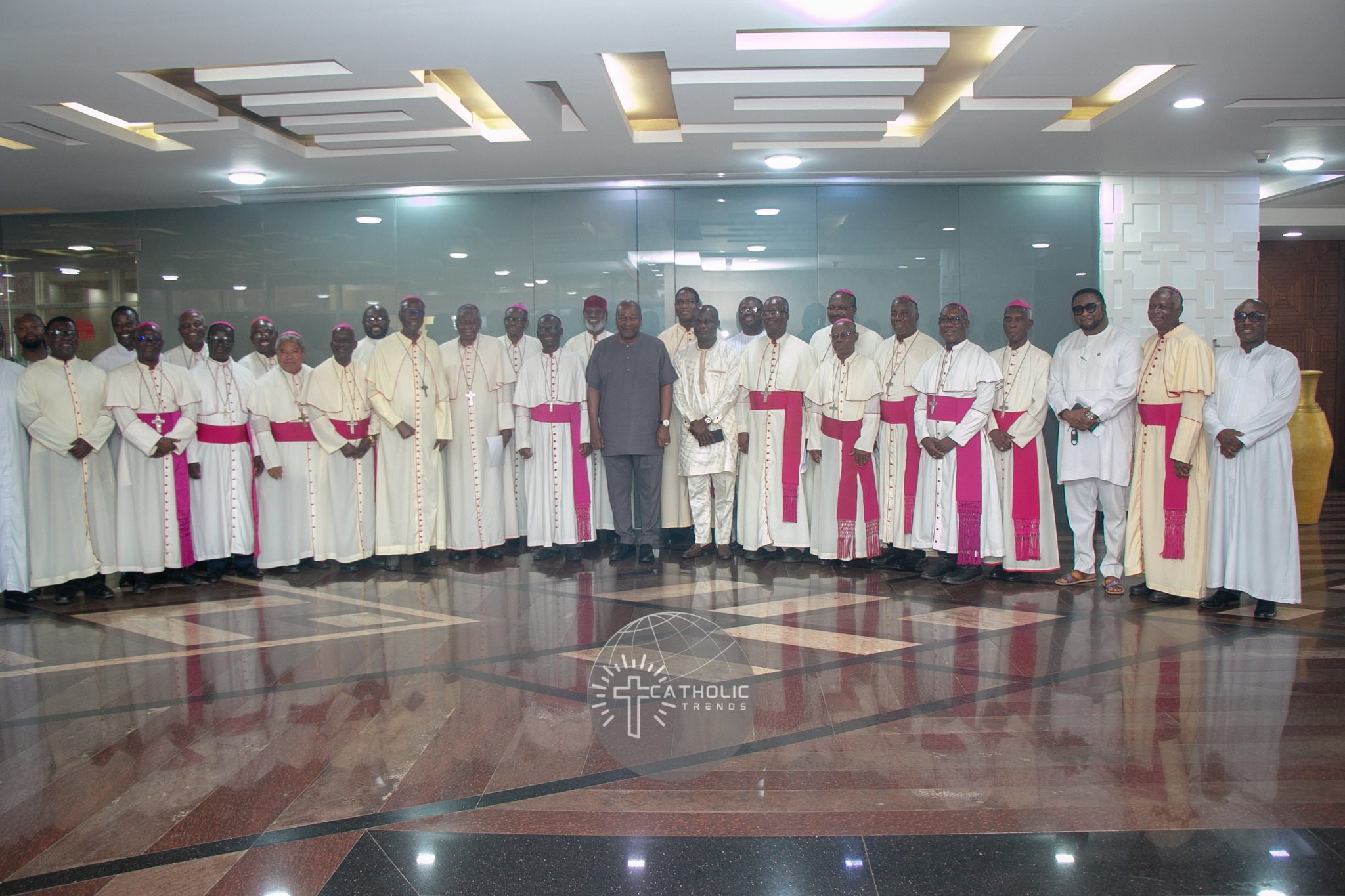
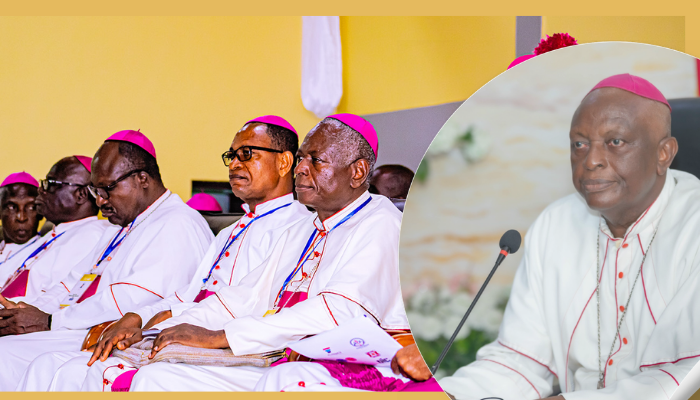
The Ghana Catholic Bishops’ Conference has called for urgent and coordinated action against drug trafficking and abuse, warning that the problem has become a serious national concern with consequences for the country’s institutions, families and young people.
In a press statement issued on Monday, September 21, 2026, the bishops said the scale of recent drug seizures and allegations of official complicity required a response that goes beyond treating narcotics solely as a criminal matter.
“The drug menace is no longer a distant threat. It is a serious national concern and a profound moral crisis that cannot be treated merely as a routine criminal matter,” the bishops said.
The statement follows the seizure by French customs authorities on September 10 of nearly 3.9 tonnes of cocaine at Dunkirk, reportedly concealed in a container of plastic waste that had arrived from Ghana.
The cocaine was estimated to have a street value of €225 million, with part of the consignment reportedly destined for Antwerp, Belgium.
Four Ghanaians were arraigned before the High Court in Accra on September 16 over alleged conspiracy to export narcotic drugs without a licence and exportation of narcotic drugs. They were remanded to reappear on October 13.
The bishops stressed that they respected the judicial process and that the accused remained presumed innocent until proved guilty. However, they said the scale of the alleged shipment raised serious questions about how it could have moved through legitimate commercial channels.
“Investigations must establish how such a consignment left Ghana through legitimate commercial channels,” the statement said. They commended the Narcotics Control Commission (NACOC) and other agencies, and urged continued cooperation with French authorities to establish the full extent of the alleged network.
The bishops also welcomed the formation of an inter-agency task force by the government to tackle the trafficking of narcotic drugs through Ghana’s ports, airports and borders.
They noted that the Dunkirk seizure should be viewed against a wider pattern of drug-related incidents linked to Ghana. They referred to several cases cited in a September 18 memorandum by more than 40 Members of Parliament seeking the recall of Parliament from recess.
These included a 3.3-tonne cocaine haul found under sand in a tipper truck at Pedu Junction in Cape Coast, another cocaine consignment intercepted on the Takoradi–Cape Coast highway, suspected cocaine found in sacks of gari at a Tema Harbour warehouse, and methamphetamine concealed in a charcoal shipment that was intercepted by Australian customs.
The bishops also cited figures from NACOC, which they said showed that intelligence-led operations had resulted in 217 arrests and 165 prosecutions, with more than 8.5 tonnes of assorted narcotic drugs and 45.4 million tramadol tablets intercepted during the period under review.
The statement also raised concerns about drug abuse among young people and the possibility of drug money influencing public institutions.
“We are equally troubled by the domestic face of this menace: drug abuse among young people, the corrosive effect of drug money on our institutions, and the temptation it poses to persons in positions of trust, whether in commerce, the security services or, we say with sorrow, within the Church herself.”
The prelates pointed to the March 2026 arrest of nine public officers over a large consignment of undeclared tramadol at Tema Port. According to the statement, those arrested included five Customs officers and personnel from NACOC, Port Security, the Energy Commission and the Ghana Standards Authority.
They said the fight against drug trafficking must include anyone who abuses public trust to facilitate the movement of illicit substances.
They further expressed concern about cases where people allegedly involved at the lower levels of trafficking are prosecuted while those financing or organising the networks remain unidentified.
“A pattern in which couriers are prosecuted while the networks that finance them escape scrutiny is the failure any credible national response must overcome.”
They called on the government to strengthen cooperation among the Police Service, NACOC, Customs, port authorities, the judiciary and schools. The bishops also urged stronger cooperation with INTERPOL and Europol in investigating transnational networks and locating wanted persons.
“Investigations must follow the money and identify the networks, businesses and financial arrangements that sustain the trade, and every public official reasonably suspected of complicity should be investigated regardless of rank.”
They further called for stronger prevention and treatment programmes, expanded rehabilitation services and action to address poverty and unemployment.
The bishops welcomed Parliament’s oversight role following the memorandum calling for ministers and state agencies to account for the effectiveness of security and clearance procedures at Ghana’s ports and airports.
The memorandum proposes that the Ministers for the Interior, Transport and National Security, together with NACOC, the Ghana Ports and Harbours Authority, the Ghana Revenue Authority, the Ghana Immigration Service and the National Intelligence Bureau, be summoned.
The bishops described the proposed parliamentary scrutiny as “a legitimate and necessary step”. They urged that any parliamentary sitting take place without delay and called for cooperation from the institutions involved.
They also stressed that the issue should be approached without partisan point-scoring. They added that the Church, families and wider society also had responsibilities in addressing drug abuse while calling on Catholic parishes, schools and youth organisations to increase drug-prevention education, mentorship and pastoral support.
They also urged priests, consecrated persons, catechists and lay leaders to address the issue in preaching and catechesis. For families, the bishops called for greater attention to children and young people.
“The family remains essential for the formation of conscience, character and responsibility.” They also urged families not to abandon young people struggling with drug use, but to encourage them to seek professional help. Addressing young people directly, the bishops said: “do not be deceived by the temporary gains promised by the drug trade. Choose life.”
They encouraged young people to build their futures through “honest work, faith, education, virtue and service”. The bishops said drug trafficking was a moral issue because it exploits human vulnerability and places profit above human dignity.
At the same time, they distinguished between those involved in trafficking and people struggling with addiction, saying the latter need support alongside appropriate responses. “Nor can the suffering of those struggling with addiction be treated merely as a criminal matter. They need medical, psychological, social and spiritual assistance, and the opportunity to rebuild their lives.”





Discussion about this post