


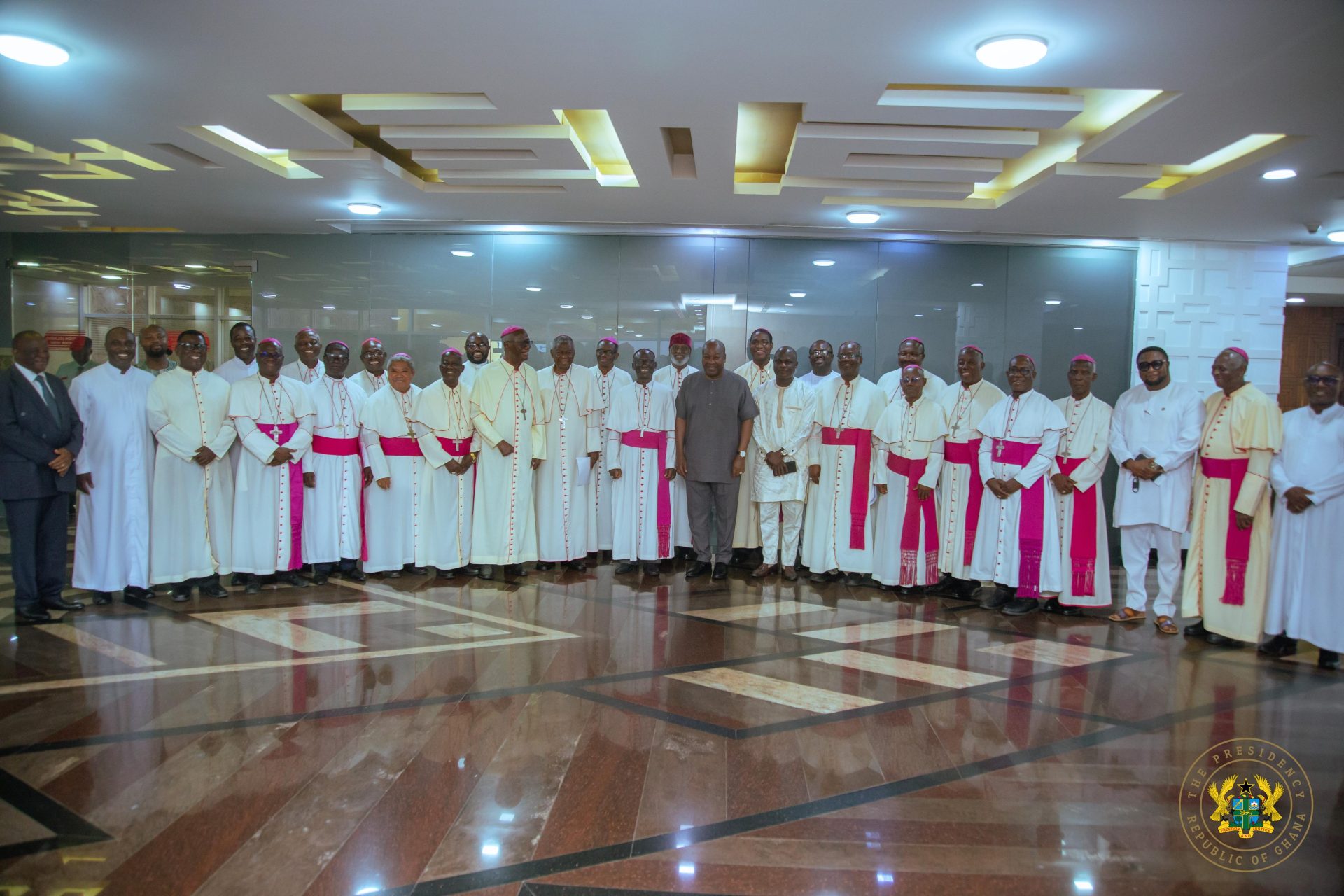
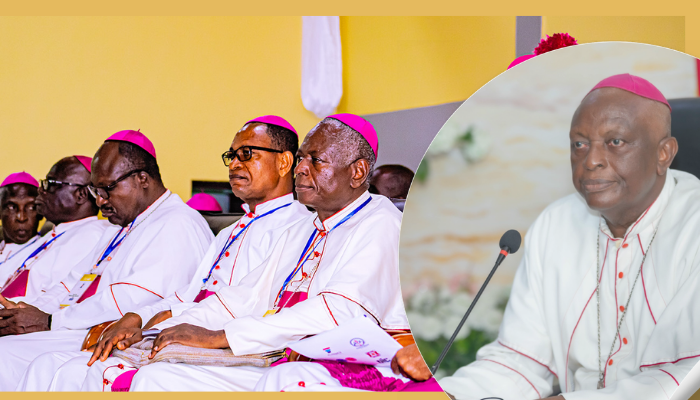
The Ghana Catholic Bishops’ Conference has strongly rejected attempts to downplay Ghana’s ongoing LGBTQ debate, insisting that issues concerning family, identity and morality “cannot be trivialised” in national discourse.
In a pastoral and public statement released on April 10, the bishops responded to recent remarks by John Dramani Mahama and government spokesperson Felix Kwakye Ofosu, who reportedly described LGBTQ-related matters as not a national priority and, in some instances, a “waste of time.”
While acknowledging the country’s pressing socio-economic challenges, the bishops cautioned against dismissing moral questions that shape the foundation of society.
“No question that touches the structure of human identity, family life, and social continuity can be trivial,” the statement said. “Nations do not live by bread alone. They are sustained also by the invisible architecture of values.”
The bishops argued that framing the debate as secondary to economic concerns creates a false dichotomy between development and moral responsibility.
“It is analytically unsound to frame a choice between economic progress and moral coherence. The two are not rivals but companions,” they stated.
According to the Conference, strong family systems remain central to national development, contributing to social stability, improved educational outcomes, and long-term economic growth.
Beyond addressing public rhetoric, the bishops also turned their attention to the legislative process surrounding the Human Sexual Rights and Family Values Bill. They recalled earlier assurances by the President to assent to the bill if duly passed through constitutional processes.
“Should Parliament complete its deliberations and pass the Bill, we urge the President to honour this assurance,” the statement emphasised.
The Conference, however, acknowledged that aspects of the bill have generated public concern, urging that any final legislation reflect both the moral convictions of Ghanaians and constitutional protections for human dignity.
Reaffirming the Church’s teaching, the bishops underscored two principles they say must remain inseparable: the dignity of every human person and the protection of the family as a social institution.
“No individual, regardless of sexual orientation or identity, may be subjected to violence, hatred, or unjust discrimination,” they stated.
“To affirm dignity does not require the redefinition of marriage. To defend marriage does not require hostility.”
They described the family, understood as a union between a man and a woman, as a foundational unit of society and a “seedbed of civic responsibility.”
The bishops further urged political leaders, civil society, and religious bodies to engage the issue with seriousness and respect, warning against dismissive rhetoric.
“No enduring moral question can be dismissed without cost,” the statement noted.
“Words can either build a republic of trust or fracture it into suspicion.”
They stressed that the tone of national discourse is as important as its content and called for dialogue marked by “intellectual seriousness, mutual respect, and moral clarity.”
Framing the debate within a broader national context, the Conference described Ghana as standing at a critical juncture where economic aspirations intersect with moral identity.
“The choices we make now will echo beyond policy cycles into the moral memory of generations yet unborn,” the bishops said.
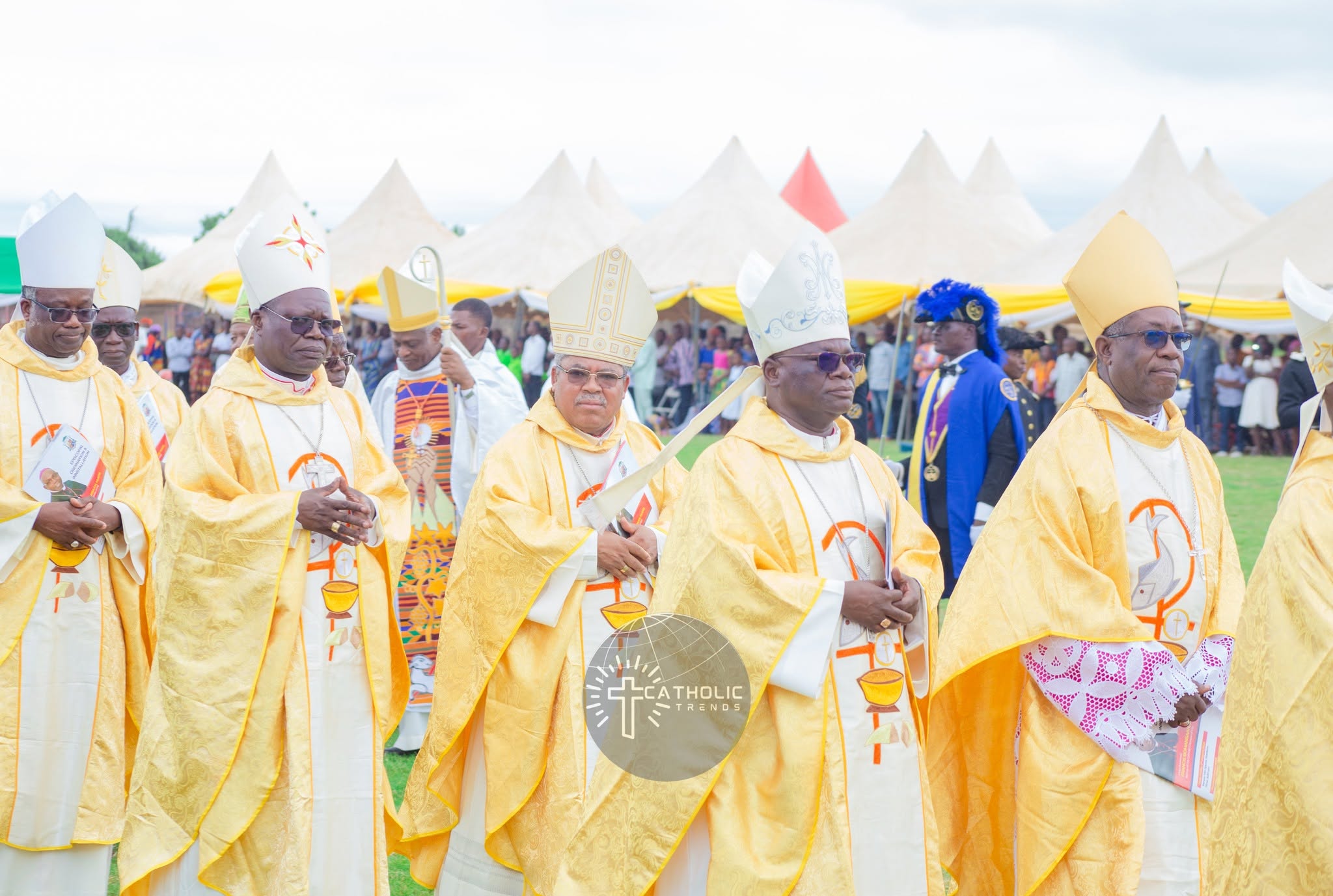
The statement, signed by Most Rev. Matthew Kwasi Gyamfi, President of the Conference, concluded with a call for wisdom, justice, and unity, entrusting the nation to prayer as it navigates the ongoing debate.






Discussion about this post