


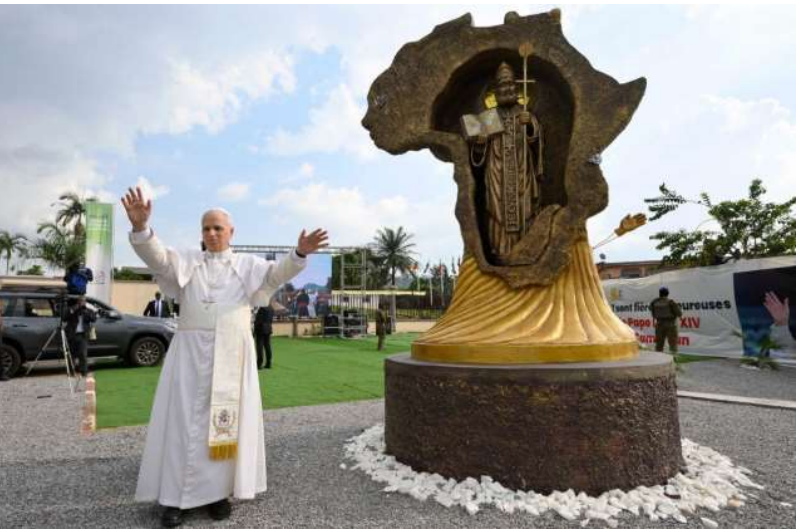
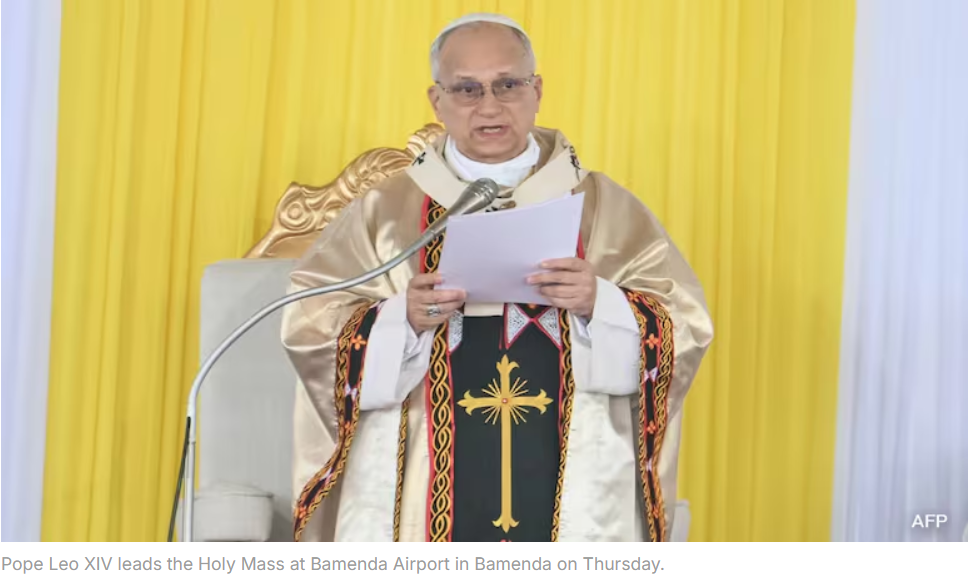
The Holy Father’s historic pastoral visit to Africa from 13 to 23 April 2021, is rich in symbolism. It was his first ordinary apostolic journey (excluding visits to Turkey and Libya, which were of a different nature). Choosing Africa as the starting point for his pastoral visits was an intentional gesture to pay tribute to the Church in Africa for two main reasons.
Firstly, through this visit, the Holy Father aimed to honour the ancient roots of African Christianity. By visiting Africa, particularly North Africa (Hippo, now Annaba, in Algeria), Pope Leo XIV emphasised that Christianity was rooted in Africa long before it became the dominant religion in Europe. Western Christianity, at its origins, draws from traditions that are fundamentally African. Africa is not peripheral to Western Christianity; it is part of its foundational history.
Many major Western Christian traditions, including the Latin liturgy and theologians such as Tertullian, Cyprian, and Saint Augustine of Hippo, originated in North Africa. Their works form the backbone of Western Christian
theology. Africa is truly a land of Christian roots, with the Greek tradition also developing there, especially in Egypt (Alexandria) and Ethiopia.
Secondly, with this visit, the Holy Father wished to highlight the rapidly growing demographic region of Africa as a centre of spiritual energy and wisdom capable of enriching the entire Catholic Church. While early Christianity has deep roots in North Africa, the current Catholic Church is experiencing remarkable growth in sub-Saharan Africa, represented during this visit by Angola, Cameroon, and Equatorial Guinea. This journey made clear that Africa is no longer merely a ‘missionary field’, but a vibrant and central heartland of global Catholic faith.
This visit was seen as an invitation from the Holy Father to the Church in Africa, especially Sub-Saharan Africa, to follow in the footsteps of the ancient Church in North Africa by engaging in missionary aid to the West, where the Church is diminishing in number and facing the effects of secularism. This invitation was received with joy, as it not only reminds us of the Lord’s command, ‘Go and make disciples of all nations…’ (Matthew 28:19-20), but
also serves as an act of gratitude, particularly to Europe, which evangelised Sub-Saharan Africa.
The Holy Father was warmly received across Africa. During his visit to four countries, Pope Leo XIV addressed the Church in Africa and all Africans, delivering a message rooted in peace, interreligious dialogue, and solidarity
with the poor. By visiting nations facing significant challenges, from poverty to political instability, the Holy Father highlighted the exploitation of Africa’s resources and emphasised the urgent need for ethical development. He
condemned both local despots and foreign exploitation, calling for a more just and responsible approach to Africa’s growth.
The Holy Father also invited African youth to reject corruption and the pursuit of quick gains, urging them to become architects of resilience and builders of a better future. This visit reinforced the understanding that the vibrant Church in Africa is not merely a consumer of theology but a creator of its own future,
contributing her rich values of faith, family, solidarity, and hospitality to the universal Church.
We are grateful for the Holy Father’s enriching visit to our continent. Nothing will be the same in Africa after this visit. We believe it will inspire renewed efforts in evangelisation, social justice, and the empowerment of African
Catholics to witness to the Gospel values in their daily lives. It will also encourage us to honour the Christian name through solidarity with the poor, fulfilling obligations toward the State, supporting local development initiatives, and engaging in responsible political action, while rejecting injustice, corruption, and illicit wealth.
The Church in Africa, at every level, took this occasion to express her spiritual solidarity and unconditional support for the Holy Father’s ministry, especially in these challenging times. She prayed that he might remain steadfast in his mission to strengthen faith, promote unity, and uphold peace, dignity, and sincere dialogue among nations. His visit to Africa also provided a meaningful opportunity to celebrate his first
anniversary as the successor of Saint Peter.
The Church across the continent gathered in prayer, offering heartfelt wishes for abundant blessings, strength,
and prosperity in his Petrine mission. Africa will be forever grateful to God and to the Holy Father for the blessing of this visit.






Discussion about this post