


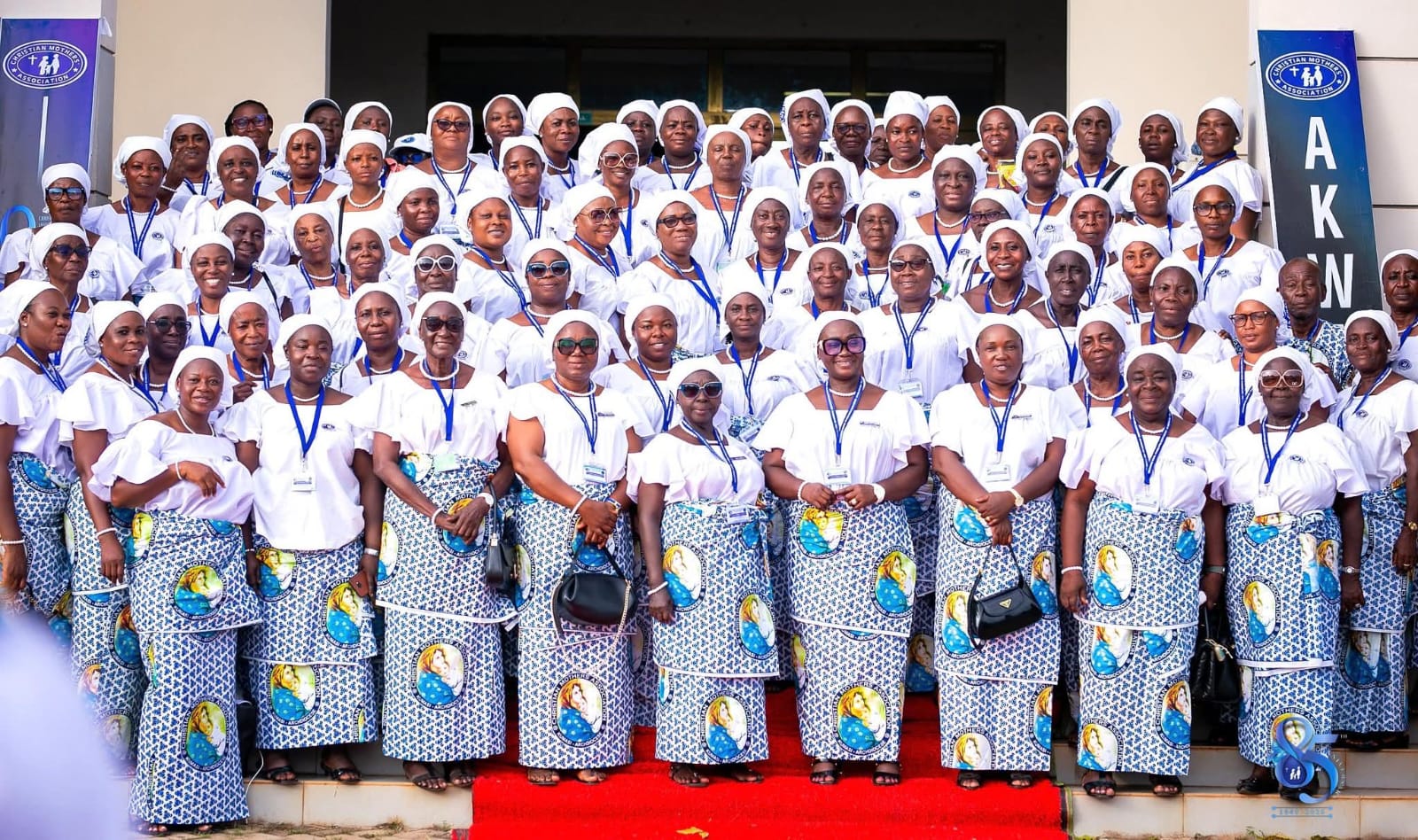
Beloved Mothers of the Christian Association, throughout the Church’s history, the Blessed Virgin Mary has been honoured as a vessel uniquely prepared by God for His saving plan. Scripture also speaks of vessels set apart for honour (cf. 2 Tim 2:20-21).
Every vessel can be empty or filled, and the image invites us to ask what we allow to occupy our hearts. Mary, however, is unique: by a singular grace of God, she was preserved from original sin from the first moment of her conception and remained free from personal sin. The Church therefore calls her “full of grace” (Lk 1:28) and the Immaculate One.
The Biblical Question It Poses to Every Mother:
Though the theme is expressed as an imperative rather than a plea, it invites every mother to examine her heart: What is filling my vessel? To receive more fully the life of grace, we must allow God to purify whatever is contrary to His will. It is like taking a gas cylinder to be filled: if it is already filled with something other than the gas we need, it must first be emptied and prepared. What, then, must we surrender to God so that our hearts may be receptive to His grace?
This does not mean that we can empty ourselves of sin and then earn God’s grace by our own strength. Grace is first and always God’s free gift. Our response is one of repentance, humility, faith and cooperation with the Holy Spirit. We therefore ask God to empty our hearts of sin, resentment and whatever prevents us from receiving His love, so that we may become vessels receptive and ready to be filled anew by the Holy Spirit.
One of the Challenges to the Refilling Exercise:
It is rather unfortunate when Catholic women, who are called to be Christian witnesses and builders of the family and parish community, allow themselves to be divided, spark unnecessary conflicts and disputes among themselves or within women’s groups, engage in unhealthy competition over offertory and other parish or diocesan activities, or carry bitterness arising from domestic difficulties.
As mothers, wives, consecrated members of the Church’s associations, and women of faith, they are called to build communion, not division. At the same time, the Church does not ask a woman to endure abuse silently. Domestic violence is contrary to human dignity and Christian charity, and those who suffer abuse should seek appropriate pastoral, professional and, where necessary, legal help.
Unhealed Wounds:
Growing up, we may have seen some of our mothers struggle with quick tempers or a lack of self-control, and we may have attributed such behaviour to menopause. While hormonal changes can affect a person’s experience, we should not reduce every emotional difficulty to menopause. Unhealed psychological wounds and prolonged emotional pain can also leave deep scars, painful memories and patterns of behaviour. Where appropriate, professional counselling and other forms of legitimate assistance can help a person to understand and address these wounds. Such healing, together with prayer and the sacraments, can remove obstacles that make it difficult for us to live freely as children of God.
Unforgiveness:
People respond to pain in different ways, and many women endure suffering quietly and with remarkable strength. Yet endurance should not be confused with healing. A person can carry an injury in the heart for many years while appearing outwardly strong.
Christian forgiveness does not deny the reality of the wrong that was committed, nor does it mean remaining in an unsafe situation. Rather, forgiveness is a decision, aided by God’s grace, to surrender vengeance to God and to seek freedom from hatred and resentment.
Consider, for example, a newly married couple in which the husband repeatedly speaks harshly to his wife. She may remain silent about her hurt instead of addressing the matter appropriately, and the accumulated pain may eventually contribute to a serious breakdown in the marriage.
This does not mean that her silence caused the abuse; rather, it illustrates how unaddressed wounds can deepen over time. Healthy Christian marriage requires truth, respect, communication, repentance and forgiveness. “Be kind to one another, tenderhearted, forgiving one another, as God in Christ forgave you” (Eph 4:32).
Let us also acknowledge that many people, women and men alike, remember hurtful experiences vividly, even after many years. Instead of allowing such memories to become a permanent storehouse of resentment, the Christian is invited to bring them honestly before God, seek reconciliation where possible and safe, and ask for the grace to forgive. Forgiveness is not approval of evil; it is a Christian path toward freedom and peace.
What It Means to Be Full of Grace:
Biblically, the expression “full of grace” in the Angel Gabriel’s greeting to Mary (Lk 1:28) is much richer than simply saying that someone has found favour. The Church understands Mary’s being “full of grace” as a sign of the singular fullness of divine grace given to her for her unique vocation as the Mother of the Son of God.
The Catechism teaches that Mary is “full of grace” and that her holiness is entirely the work of God’s grace, to which she freely responded in faith and obedience. Grace, therefore, is not a wage we earn; it is God’s gratuitous gift that transforms us and enables us to live as His children.
For every Christian mother, the practical question is: Am I cooperating with God’s grace? We cannot claim to be full of grace while deliberately nourishing hatred, malice, persistent unforgiveness or serious sin. Christian growth requires conversion and perseverance in virtue.
The Akan wisdom, “W’abomu na ɛkyerɛ w’adwuma” (the outcome of the work shows the quality of the reception/preparation), reminds us that what we receive and how we respond bear fruit in our lives. Likewise, “Amfo na ɛkyerɛ ne ntoaso” (the manner in which something begins and is carried forward influences its continuity) reminds us of the importance of faithful beginnings and perseverance. Our Christian life, however, must always rest first on God’s grace, not merely on human effort.
Mother Mary and the Angelic Greeting:
The Gospel does not tell us Mary’s exact age at the Annunciation, so we should not state as a fact that she was sixteen. What Scripture does tell us is that she was a virgin betrothed to Joseph and that the Angel Gabriel was sent by God to announce that she would conceive and bear the Son of the Most High by the power of the Holy Spirit (Lk 1:26-35). Her situation was extraordinary and would naturally have raised difficult questions, but the Gospel presents Mary not as someone condemned by God, but as the woman specially chosen and graced by Him.
The Angel’s greeting is therefore fundamental: “Hail, full of grace, the Lord is with you” (Lk 1:28). Before Mary fully understood how God’s promise would be accomplished, she received the assurance, “Do not be afraid, Mary, for you have found favour with God” (Lk 1:30).
The greeting “full of grace” points to God’s unique action in Mary. She is not full of grace because she earned God’s favour by human merit; rather, God freely prepared her for her vocation, and Mary responded with complete faith.
The Annunciation reaches its beautiful moment when Mary gives her free consent to God’s plan: “Behold, I am the handmaid of the Lord; let it be to me according to your word” (Lk 1:38). She did not possess every answer, but she trusted the One who was calling her.
The Second Vatican Council teaches that Mary embraced God’s saving will with a full heart and freely cooperated through her faith and obedience. Her “yes” is therefore a model for every Christian mother: grace calls for a free and faithful response.
Seven Ways to Be Full of Grace as a Christian Mother:
- Do a sincere self-examination and assessment of your heart. Ask yourself what has occupied your interior life and whether anything has made it difficult for you to welcome and cooperate with the Holy Spirit. It may be malice in your heart, resentment toward a child, bitterness carried from a painful relationship, unresolved conflict, pride, jealousy or another attachment that quietly governs your decisions. In prayer, ask the Lord to reveal what needs healing and conversion.
- Having identified your sins and, where appropriate, the wounds that need attention, gather courage and approach the Sacrament of Reconciliation. Confession is not merely an emotional release; it is a sacrament in which Christ, through the ministry of the priest, offers pardon and reconciliation. Bring your sins honestly before God’s mercy and receive the peace that comes from His forgiveness. Where psychological wounds are also present, sacramental reconciliation and professional counselling can complement one another; one should not be presented as a substitute for the other.
- Where appropriate and where there is a genuine need, seek professional counselling or another qualified form of help. A trained professional can assist you in understanding emotional wounds, unhealthy patterns and fears that may have gripped you. Seeking help is not a sign of weak faith. God can work through prayer, the sacraments, wise spiritual guidance, medicine and sound professional care.
- To grow in the fullness of grace, cultivate a living relationship with the Holy Spirit through prayer, the Sacraments and participation in the life of the Church. The Holy Spirit is given to us in Baptism and strengthened in a particular way through Confirmation; the Eucharist continually nourishes our communion with Christ. Prayer meetings and other Catholic prayer gatherings can help us rekindle our faith and zeal, but these experiences should always lead us more deeply into Christ and His Church. A mother who lives this faith becomes a powerful witness in the “domestic church”—the Christian family, where the faith is first learned and lived.
- As a mother, if you want to grow in grace, cultivate a deep and authentic devotion to Mary, our Mother in the order of grace, and spend quality time praying the Holy Rosary. The Church teaches that Marian devotion must always lead us to Christ; it is not a replacement for the worship due to God alone. A well-known Catholic expression says, “To Jesus through Mary.” Imitate Mary’s journey of faith in Scripture, paying particular attention to her humility, obedience, charity, purity, perseverance and her union with Christ in His suffering. Meditation on the Seven Sorrows of Mary can help us learn how to remain faithful amid suffering.
- There is no doubt that silence has an important place in the Christian life. A mother who wishes to be full of grace should learn the value of prayerful silence, discernment and discretion. Sometimes it is wiser to entrust one’s plans to God in prayer before announcing them to everyone. Many good intentions can be weakened by unnecessary talk, gossip or premature disclosure. Mary is presented in the Gospel as one who treasured and pondered God’s works in her heart (cf. Lk 2:19, 51). Christian silence, however, is not cowardice or the refusal to speak against injustice; it is the disciplined wisdom of knowing when to speak, when to listen and when to pray.
- Lastly, as Christian mothers, one practical way to make the home a place where grace is welcomed is to establish a family prayer altar or prayer corner and, where appropriate, practise the enthronement of the Sacred Heart of Jesus in the home. Invite Christ to be the centre, King and Lord of the family. Pray together, read Sacred Scripture, participate faithfully in Sunday Mass, receive the Sacraments worthily, bless your children, and teach them the faith by word and example. The family is rightly called the “domestic church”: the first school of Christian life, prayer, forgiveness, service and charity.
Let us be precise about Marian devotion. The proper Catholic expression is devotion to the Immaculate Heart of Mary, while the Sacred Heart belongs properly to Jesus. The Church encourages consecration or entrustment of individuals and families to the Immaculate Heart of Mary, always understanding this devotion in relation to Christ and never as worship.
Mary leads us to Jesus, as she did at Cana: “Do whatever he tells you” (Jn 2:5). Thus, entrusting ourselves to Mary’s Immaculate Heart ultimately deepens our union with the Sacred Heart of her Son.
Devotion to the Immaculate Heart of Mary is not restricted to members of a particular confraternity or association. Any Catholic who wishes to honour Mary as Mother and to grow in discipleship may practise approved Marian devotions, provided that these devotions remain ordered toward Christ and are lived in harmony with the Church’s faith and sacramental life. The Church’s devotion to Mary is distinct from the adoration given to God alone.
Conclusion:
Beloved Mothers, Fathers, Christian Daughters and, by extension, all Catholics, let us never be afraid to take the Blessed Virgin Mary as our Mother and to cultivate a strong, consistent and Christ-centred devotion to her. Let us use these seven pastoral approaches as practical invitations to conversion: examine the heart, seek sacramental reconciliation, obtain appropriate help for wounds, pray and live in the Holy Spirit, deepen our Marian devotion, value prayerful silence and make our homes true domestic churches.
In this way, we can increasingly become vessels open to God’s grace—not because we can earn His grace, but because we humbly cooperate with the grace He freely gives us.
May Mary, the humble Handmaid of the Lord and Mother of the Church, teach every Christian mother to say her own faithful “yes” to God. May she lead every family to Jesus Christ, and may the Holy Spirit renew our hearts so that our homes, parishes and communities may become living witnesses of the Gospel. May the Lord fill us with His grace and make us instruments of His love, peace, forgiveness and holiness.
Thank you very much, and may God richly bless you.
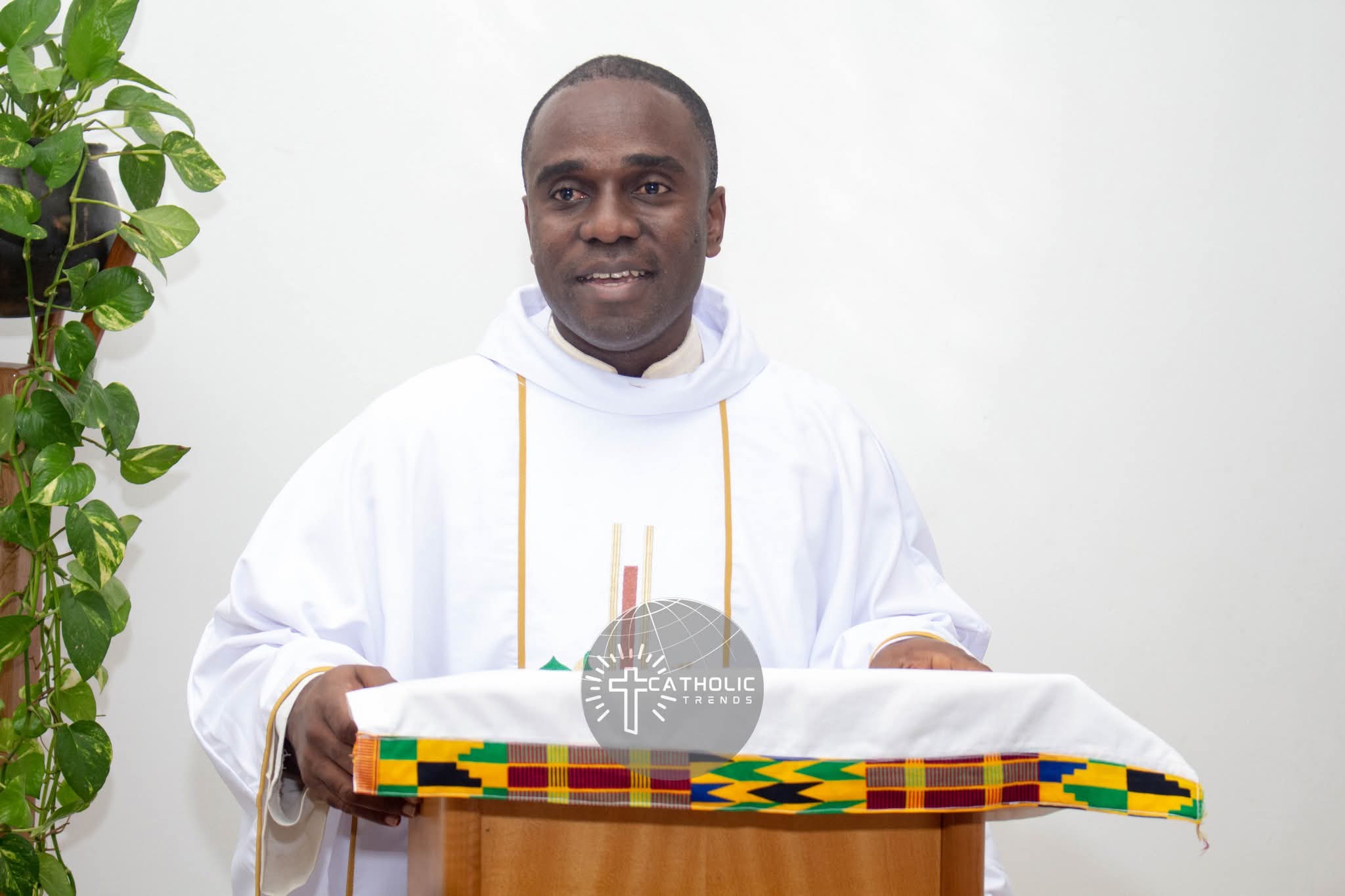
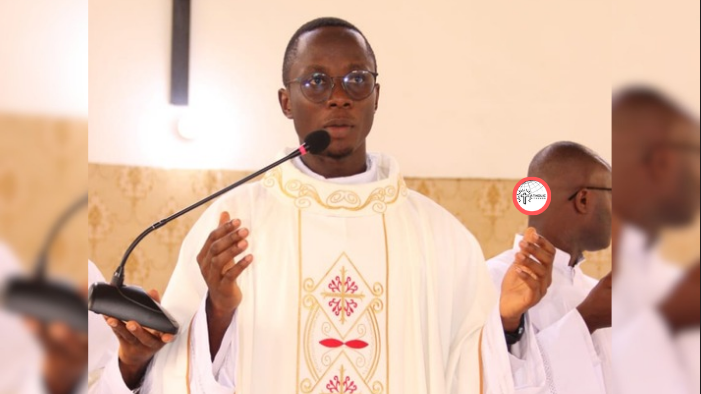
By: Rev. Fr. Albert Kyei Danso
Chaplain, Holy Family Ghanaian Catholic Community Church, Italy

![[Opinion] The Catholic national and diocesan communication office in Africa in the 21st century](https://catholic-trends.com/wp-content/uploads/2026/02/Catholic-Trends-15.png)





Discussion about this post