


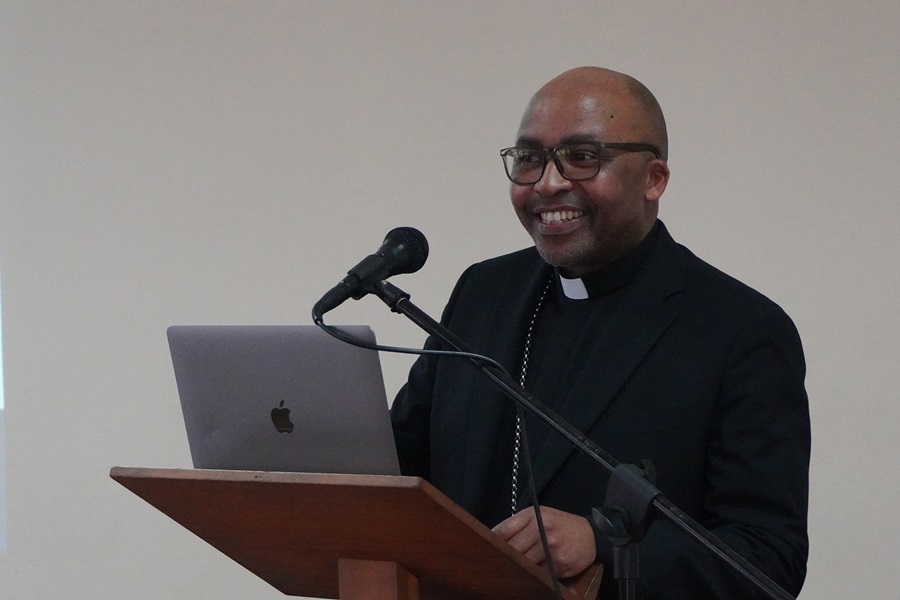
The appeal was made in a statement issued on November 11, 2026, by Bishop Thulani Victor Mbuyisa, CMM, Liaison Bishop of the SACBC Commission for Justice and Peace, following the country’s 2026 local government elections.
The bishops called on political parties to use the next five years to address structural weaknesses in municipal governance, which they identified as contributing to persistent failures in essential service delivery.
The Conference commended the Electoral Commission of South Africa (IEC), electoral officials, political parties, election observers and others who contributed to what it described as largely peaceful elections.
It also thanked approximately 14.9 million citizens who voted, representing a turnout of 52 per cent, compared with 45.9 per cent in 2021.
The bishops noted that the increased participation may reflect growing public expectations that electoral accountability would lead to meaningful action on persistent municipal service delivery challenges, including unreliable water and electricity supplies, inadequate sanitation, deteriorating roads and infrastructure, irregular refuse collection and neglected public recreational facilities.
However, they argued that these failures go beyond administrative shortcomings.
“A closer examination of these service delivery failures reveals that they are not merely operational or administrative shortcomings, but symptoms of deeper structural problems rooted in failures of ethical municipal governance,” the statement said.
Calling for what Pope Francis describes as “a moral renewal of politics” in his encyclical Fratelli Tutti (No. 154), the bishops urged political parties to make formal commitments to addressing ten structural factors undermining municipal governance.
They include the infiltration of municipal procurement, construction projects and service contracts by criminal syndicates, often through collusion with municipal officials.
The Conference also identified unstable coalition governments, characterised by frequent changes of mayors, political disputes and shifting alliances, as a major obstacle to effective municipal administration.
Other concerns include persistent corruption and financial misconduct, failure to act on Auditor-General’s findings, weak municipal accountability structures and inadequate protection for whistleblowers who expose corruption and maladministration.
The bishops further raised concerns about political patronage and nepotism in the appointment of municipal officials, arguing that appointments based on political connections rather than professional competence undermine municipal capacity.
They also identified weak accountability of elected councillors to residents, declining public participation in municipal decision-making, financially unsustainable municipalities, poor long-term infrastructure planning and ineffective government intervention in failing municipalities.
The Conference urged political parties preparing to enter coalition agreements to make ethical municipal governance a central condition of their arrangements.
“Some political parties will soon be signing their coalition agreements. We ask that your party insist that the terms of coalition agreements include a commitment on the part of all coalition partners to ethical municipal governance, a commitment to address these structural barriers to the common good and effective service delivery,” the statement said.
It further called for the ten commitments to be incorporated into municipal Integrated Development Plans (IDPs) and translated into measurable targets through Service Delivery and Budget Implementation Plans (SDBIPs).
According to the bishops, this would enable communities to monitor progress and hold political leaders accountable for their commitments.


Discussion about this post