


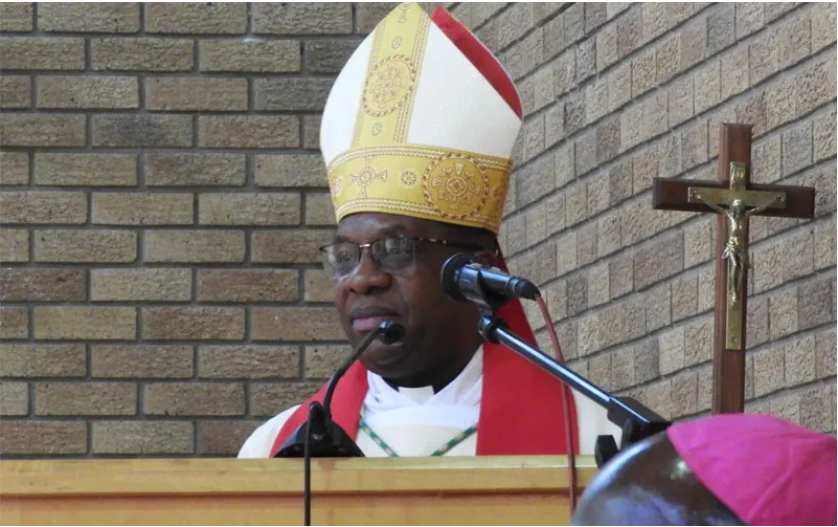
The Archdiocese of Pretoria has taken decisive and severe canonical action against a group of parishioners accused of public scandal, sacrilege, and open defiance of ecclesiastical authority, warning that penalties as serious as interdict, suspension, and even excommunication now loom if they refuse to submit to a corrective process.
In a Canonical Decree issued on 11 January 2026, Archbishop Dabula Anthony Mpako announced the establishment of a “Corrective and Rehabilitative Process Following Public Acts of Scandal and Ecclesial Disobedience” after repeated protests and actions described as unlawful, defamatory, and damaging to the Church.
According to the decree, on Sunday, 7 December 2025, “a group of approximately forty-two (42) parishioners unlawfully assembled in front of the Cathedral Church and conducted a public protest demonstration,” during which they were accused of “denouncing the diocesan Bishop for a legitimate pastoral decision” and “making false and defamatory public assertions regarding the reasons for the said decision.”
The Archbishop further noted that the group went beyond protest, actively stirring division within the Church by “inciting opposition, resistance, and hostility against the diocesan Bishop, causing public scandal and disturbance to ecclesial order.”
Even more troubling, the decree reveals that the protestors brought their actions into the sacred space of worship itself. Prior to the public demonstration, the same group allegedly “instrumentalized the celebration of Holy Mass by engaging in coordinated protest actions during the sacred liturgy, thereby gravely violating the sanctity of divine worship and the reverence owed to the Eucharistic celebration.”
After the protest, the damage reportedly escalated online. The decree states that the individuals “disseminated photographs and videos of the demonstration through social media platforms, further propagating false accusations and aggravating scandal among the faithful.”
Despite these events, the behaviour did not stop. The Archbishop records that the group later sent appeal letters “based on the same false and defamatory public assertions” and “incited and encouraged other parishioners to attach their digital signatures.” On 28 December 2025, some of the same individuals again staged another protest, showing what the decree describes as “contumacy and disregard for ecclesiastical authority.”
Canon Law Violations and Heavy Penalties
The Archbishop’s juridic assessment is unambiguous. The acts are described as “external, imputable, and public delicts under canon law” which seriously harmed “ecclesial communion,” “the good name of the Church,” and “the reverence owed to sacred worship.”
A wide range of canons are cited as violated, including those dealing with public scandal, disobedience, defamation, sacrilege, and incitement against Church authority. Of particular gravity is the warning that those who persist could face the Church’s most severe punishments.
Under the section “Canonical Penalties Incurred,” the decree lists possible sanctions, including Interdict, which entails “prohibition from receiving the sacraments and sacramentals,” suspension from ecclesiastical offices, and, in the most extreme cases, excommunication, reserved for those who “persist in the schismatic behaviour of inciting revolt against the lawful authority of the Bishop.”
The decree also warns of “Just Penalties for Sacrilege” due to the “sacrilegious use of the Mass.”
A Final Chance for Repentance
Despite the severity of the accusations, Archbishop Mpako emphasises that the Church’s ultimate aim remains healing and conversion. Citing canon law, he states that the process is undertaken “desirous of the conversion, reconciliation, and pastoral restoration of the offenders.”
Those involved are ordered to make a public retraction and apology, “retract the false accusations made publicly,” and “remove scandalous content from social media.” They will also face a period of ecclesial discipline, mandatory catechesis on obedience and episcopal authority, and acts of penance and prayer for unity.
The Archbishop makes it clear, however, that refusal will have consequences. “If any step is refused or neglected, the Ordinary will proceed to impose canonical penalties as warranted.”







Discussion about this post