


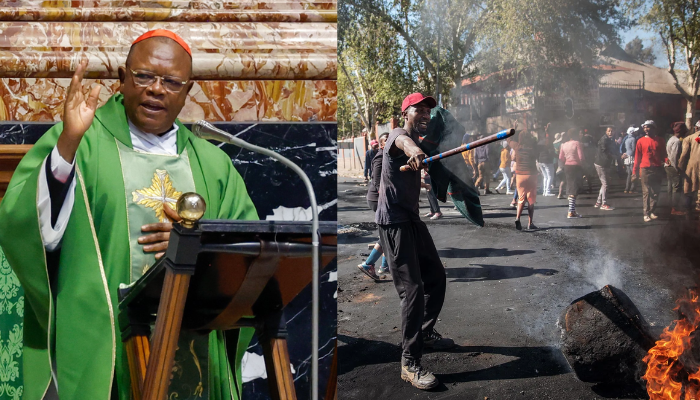
The Symposium of Episcopal Conferences of Africa and Madagascar has strongly condemned recent xenophobic violence targeting African nationals in South Africa, warning that the attacks represent a “serious violation of African principles and continental law” and a betrayal of the continent’s shared moral values.
In a statement issued from Accra on May 5, 2026, SECAM expressed deep concern over the incidents and extended solidarity to the Southern African Catholic Bishops’ Conference for its “prophetic stance” in defending migrants and victims of xenophobia.
“We are deeply concerned about the recent events in the Republic of South Africa, which have been marked by acts of xenophobic violence against nationals of other African countries,” the statement said.
SECAM also expressed sympathy to victims and their families, stressing that the crisis raises a fundamental moral question about human dignity and fraternity on the African continent. Quoting Scripture, the bishops reflected on the question from Genesis, “Am I my brother’s keeper?” (Gen 4:9)
They answered by reaffirming a core teaching of the Church, “Every person is created in the image and likeness of God… a truth that underpins the infinite dignity of every human being, regardless of their origin, nationality, tribe, culture or migration status.”
The bishops warned that violence against foreigners undermines not only human rights but also the ethical foundations of African unity. “Any violence directed against foreigners constitutes not only a grave violation of the human person but also a negation of the foundations of universal brotherhood and the Africa we want.”
While acknowledging the responsibility of migrants to respect the laws of host countries, SECAM insisted that state authorities must ensure protection and justice for all persons within their borders. Citing the Catechism of the Catholic Church, the statement noted that migrants are expected to respect the laws of their host nations, while also affirming that political authorities must safeguard the common good through just governance.
The bishops called on the Government of South Africa to take urgent action to halt violence, conduct impartial investigations, and prosecute perpetrators. They also urged the African Union to strengthen mechanisms for preventing xenophobic attacks and upholding continental human rights instruments.
SECAM further appealed for a rejection of hate speech and division, calling instead for a renewed commitment to African solidarity rooted in the philosophy of Ubuntu. “We call on people to reject all forms of violence, all rhetoric of hatred and stigmatisation… and to promote a culture of encounter, dialogue and African brotherhood.”
Drawing from the Gospel of the Good Samaritan, the statement urged Africans to see strangers not as threats but as brothers and sisters in need of care. “We are all called to rediscover an ethic of closeness, where the stranger is not perceived as a threat but recognised as a brother or sister of whom we are the guardians.”
In a strong closing appeal, SECAM reaffirmed its commitment to migrants and vulnerable people across the continent, insisting that Africa must remain faithful to its moral and spiritual identity. “You are not alone; we will never abandon you!”
The statement was signed by Cardinal Fridolin Ambongo, who called for a reconciled Africa “from Cairo to Cape Town,” united in dignity, solidarity and peace.








Discussion about this post