


Question by Efo Kofi Dzakpata Gbagbladza
My Lord, I recently came across a video in which Mr. Kwasi Pratt Jr. asserts that the wealth of the Catholic Church is largely the result of the exploitation of Africans, including Ghanaians, particularly during the period of the transatlantic slave trade.
I have attached the video, together with a link to the full version, for your kind reference. I would be most grateful if Your Lordship could kindly clarify this matter, especially with regard to the historical role of the Church during the slave trade and the manner in which the Church has acquired and developed its wealth over time. Thank you very much, My Lord, for your time and guidance.
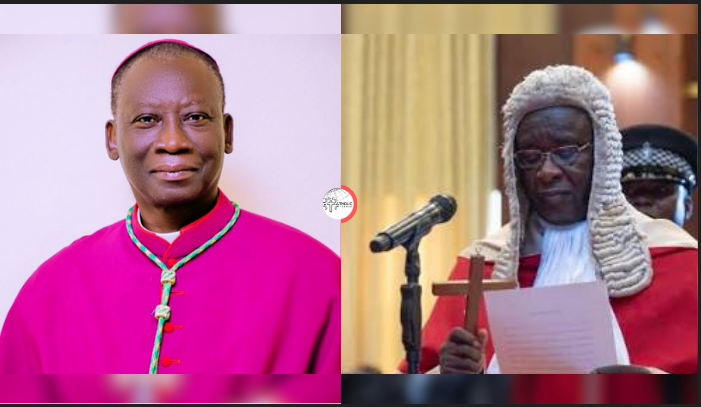
Answer by Most Rev. Joseph Osei-Bonsu
Summary of Mr Kwasi Pratt Jr’s Position
Before addressing the historical and theological issues raised, it is important to state clearly the position attributed to Mr Kwasi Pratt Jr. In the referenced video, he asserts that the considerable wealth accumulated by the Catholic Church over the centuries is largely attributable to the exploitation of African peoples, including Ghanaians, during the transatlantic slave trade.
This claim suggests that the Church, as an institution, actively participated in or materially benefited from the enslavement of Africans, and that the financial resources of the papacy and its global operations were built upon a foundation of forced labour, human trafficking, and colonial extraction.
Such an assertion raises serious questions concerning historical accuracy, moral responsibility, collective memory, and the integrity of Christian witness, particularly within the African context where the legacy of slavery continues to have profound resonance.
The present response seeks to examine this claim within a broad chronological, theological, and historical framework in order to arrive at a balanced and well-grounded conclusion.
Section 1: The Ancient World and Early Christian Foundations
A proper understanding of the relationship between the Catholic Church and slavery must begin in the ancient world, long before the emergence of the transatlantic slave trade. In the Graeco-Roman world, slavery was deeply entrenched and formed an integral part of social, economic, and political life.
It was a legally recognised institution, and its existence was widely taken for granted. Slaves were regarded as property under the law and could be acquired through war, birth, debt, or trade.
Christianity arose within this context. The early Church neither introduced slavery nor possessed the political authority to abolish it. Instead, it addressed the institution indirectly through its proclamation of the Gospel. The New Testament does not set forth an explicit political programme aimed at the immediate abolition of slavery. Rather, it articulates a profound theological vision of the human person grounded in creation and redemption.
All human beings are created in the image and likeness of God and therefore possess inherent dignity and worth. In Christ, social distinctions are relativised, as Saint Paul declares that there is neither Jew nor Greek, slave nor free, male nor female, for all are one in Christ Jesus (Galatians 3:28).
The Letter to Philemon provides a concrete example of this moral transformation. Saint Paul appeals to Philemon to receive Onesimus no longer as a slave, but as a “beloved brother”. Although Paul does not explicitly demand legal emancipation, he redefines the relationship in a way that undermines the moral logic of slavery. Over time, such teachings contributed to a gradual re-evaluation of the institution.
Early Christian communities embodied this vision. Enslaved persons were baptised, fully participated in the Eucharist, and shared in the life of the Church. In some cases, individuals of servile origin rose to leadership within ecclesial structures. These developments indicate a profound moral transformation, even though they did not immediately result in legal abolition. The Church’s influence at this stage remained primarily spiritual and ethical.
Section 2: Medieval Development and Moral Reflection
During the medieval period, roughly from the fifth to the late fifteenth century, theological reflection on slavery became more systematic. As Christianity became more firmly established in European society, theologians sought to integrate inherited social realities into a coherent moral framework.
Saint Augustine taught that slavery was not part of God’s original plan for humanity but a consequence of sin and the disorder introduced by the Fall. Saint Thomas Aquinas later refined this perspective by distinguishing between natural law, which affirms human equality and freedom, and positive human law, which may tolerate slavery as a contingent institution within a fallen world.
This approach did not justify slavery as intrinsically good; rather, it treated it as a regrettable condition requiring moral regulation. Canon law reflected this by condemning unjust enslavement and requiring humane treatment of enslaved persons. Their rights to marriage, family life, and sacramental participation were recognised and protected.
Religious orders such as the Mercedarians and Trinitarians were established to redeem captives, particularly in contexts of conflict between Christian and Muslim powers. These efforts demonstrate an increasing moral awareness of the human suffering associated with enslavement. Although slavery gradually declined in parts of Europe, it persisted in certain frontier and maritime contexts.
Section 3: The Fifteenth Century, Papal Bulls, and Early Expansion
The fifteenth century represented a decisive turning point in global history, marked by the expansion of European maritime exploration, particularly along the West African coast. In interpreting papal involvement during this period, it is essential to use the theological and political categories of the time, rather than later historical developments.
Pope Nicholas V issued the papal bull Dum Diversas in 1452 on the basis of what was described as Apostolic Authority (auctoritate apostolica), understood at the time as the highest jurisdictional power of the papacy. Within the prevailing worldview of the fifteenth century, the pope was regarded as possessing divinely grounded authority to guide Christian rulers, including, in certain circumstances, the capacity to grant rights and privileges connected to the defence, expansion, and propagation of the Christian faith.
Addressed to King Afonso V of Portugal, the bull, or the official and formal document issued by the Pope, granted specific permissions shaped by these assumptions. It authorised the Portuguese king to invade, search out, capture, and subjugate those described as “Saracens, pagans, and other unbelievers,” particularly in regions being explored along the African coast and beyond.
It also conferred rights over territories and political jurisdictions, including kingdoms, and included language permitting the reduction of such peoples to what is translated as “perpetual servitude.” These provisions were understood at the time within the framework of medieval just war theory and missionary expansion, rather than as part of a later-developed system of racialised or commercial slavery.
Within this context, the papacy viewed such authorisations as contributing to a broader mission of evangelisation and the extension of Christian influence. The bull supported Portuguese exploratory efforts during the Age of Discovery and was regarded as providing both spiritual endorsement and a form of temporal legitimacy over newly encountered lands.
It thus contributed to shaping patterns of European expansion and missionary activity through close cooperation between ecclesiastical authority and emerging colonial powers. At the same time, these provisions did not establish a universal or systematic doctrine of enslavement. Rather, they reflected the legal categories and historical assumptions of the period, which were later interpreted and extended by political authorities in ways that contributed to exploitative systems.
In contemporary perspective, the Holy See has clarified this historical legacy. In 2023, the Vatican formally repudiated the ideological construct commonly referred to as the “Doctrine of Discovery,” affirming that fifteenth-century documents of this nature are historical texts that were at times misused or manipulated for political purposes and do not form part of the Church’s enduring moral teaching.
This clarification underscores the distinction between historical context and the Church’s present, unequivocal affirmation of the dignity and equality of every human person.
Section 4: Early Modern Expansion and Doctrinal Clarifications
The early modern period witnessed the rise of the transatlantic slave trade, one of the most tragic systems of forced human displacement in history. Millions of Africans were transported to the Americas under brutal and dehumanising conditions.
In response, Church teaching became more explicit. In 1537, Pope Paul III issued Sublimis Deus, affirming that Indigenous peoples are fully human and must not be enslaved. However, implementation of this teaching was inconsistent, and some Catholic institutions became entangled in colonial economies dependent on enslaved labour.
In parts of the Americas, certain dioceses and religious orders did, at various times, own plantations that were worked by enslaved persons. A particularly troubling historical instance is the sale of enslaved individuals by the Jesuits in Maryland in 1838, an event that continues to be regarded with sorrow and moral concern. These realities must be acknowledged with honesty and historical integrity.
At the same time, it is important to recognise that not all within the Church were complicit in such practices; many actively opposed slavery and defended the dignity of the enslaved. Among them, Bartolomé de las Casas, stands out as a significant early advocate for the rights of Indigenous peoples, who later extended his moral reasoning to reject all forms of slavery.
Bartolomé de las Casas (1484-1566) was a Spanish Dominican friar, missionary, and historian, and is widely regarded as one of the earliest and most influential defenders of the dignity and rights of Indigenous peoples in the Americas during the period of Spanish colonisation.
Section 5: Nineteenth-Century Condemnation and Doctrinal Development
By the nineteenth century, papal teaching had developed into a clear condemnation of slavery. Pope Gregory XVI, in In Supremo Apostolatus (1839), denounced the slave trade and called for its abolition. Over time, the Church’s teaching moved towards an unequivocal rejection of slavery.
The Second Vatican Council described it as “infamous,” and the Catechism of the Catholic Church declares slavery intrinsically evil. The Church has also condemned modern forms of slavery, including human trafficking. In 2023, it formally repudiated the Doctrine of Discovery.
Section 5: The Economic Foundations of Papal Wealth
The question of whether the papacy itself derived its wealth from slavery requires careful historical clarification, as this is the core of Mr. Pratt’s assertion. The available evidence indicates that the central financial structures of the papacy were not built upon slavery or the slave trade.
From late antiquity through the early modern period, the popes governed the Papal States, a territorial entity in central Italy. The papacy’s income was derived primarily from landholdings, agricultural production, feudal dues, taxation, judicial revenues, and administrative governance.
Additional income came from donations, endowments, and ecclesiastical revenues such as benefices and contributions from dioceses across Europe. The Papal States functioned as a sovereign political entity, and its revenues supported the administrative, diplomatic, and charitable works of the Holy See.
These financial foundations were established long before the emergence of the transatlantic slave trade and therefore cannot be considered structurally dependent upon it. The medieval papacy derived its wealth from European sources, not from African or American plantations. The great cathedrals, artworks, libraries, and charitable institutions of the Church were funded primarily by European tithes, land rents, and donations from the faithful over many centuries.
Nevertheless, the Church operated within broader global systems in which slavery played a significant economic role. Catholic monarchies such as Spain and Portugal were heavily involved in the slave trade and maintained close relations with Rome.
Some ecclesiastical institutions in colonial territories benefited indirectly from slave-based economies, and it is possible that certain donations reaching the papacy originated from wealth generated in such contexts. For example, missionary dioceses in the Americas sometimes received support from colonial governments that also profited from slavery.
These connections represent indirect entanglements rather than structural dependence. They indicate historical proximity to systems of exploitation rather than foundational reliance upon them. To claim that the Church’s wealth is largely the result of slavery, as Mr. Pratt asserts, is not supported by the historical evidence. The primary financial foundations of the papacy predate and are independent of the transatlantic slave trade. Even where entanglements existed, they were not the primary source of the Church’s global wealth.
Section 7: Conclusion
A balanced assessment shows that although some Catholic individuals and institutions were historically involved in systems connected to slavery, this involvement was neither universal nor centrally directed by the papacy. Early papal documents must be interpreted within their historical context and were later misused.
The Church’s teaching has developed consistently towards affirming human dignity and rejecting slavery in all its forms. The claim that the Church’s wealth is largely derived from the exploitation of Africans is not supported by historical evidence. At the same time, the Church acknowledges its historical failures and continues to promote justice, reconciliation, and human dignity, particularly in Africa and throughout the world.
| For further explanations or enquiries, you may contact the author, Most Rev. Joseph Osei-Bonsu, Emeritus Catholic Bishop of Konongo-Mampong, on this number: 0244488904, or on WhatsApp (with the same number). |




Discussion about this post