


Question by Augustine Alirinbey Amangwon, Sandema:
Why are parish priests called pastors, and the other priests simply fathers?
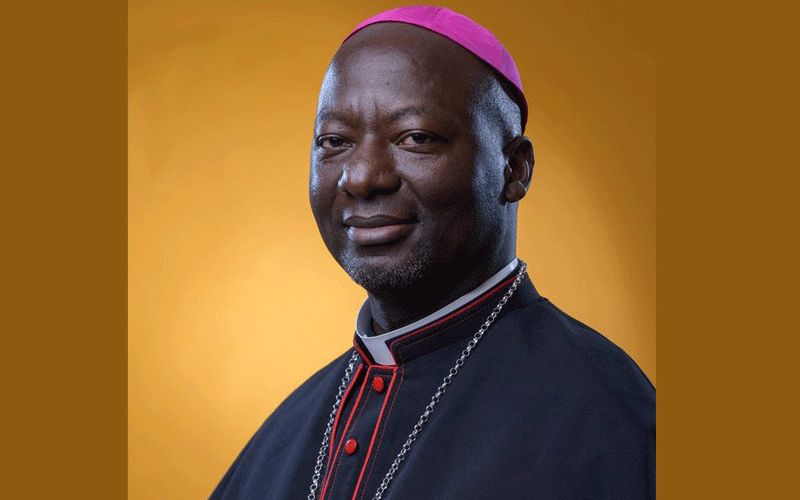
Answer by Most Rev. Joseph Osei-Bonsu:
- The Core Distinction
The terms “pastor” and “father” have different meanings and functions within the Catholic Church. They are not competing titles but complementary expressions that describe different aspects of the priesthood. One refers principally to a priest’s office or responsibility, while the other refers to his spiritual identity and relationship with the faithful.
The title “Father” answers the question: “Who is he to the faithful?” It is a form of spiritual and respectful address applied to priests generally because of their participation in spiritual fatherhood through the sacrament of Holy Orders. The title “pastor”, on the other hand, answers the question: “What office does he hold?” It refers specifically to the priest who has been entrusted by the diocesan bishop with the pastoral care of a parish.
This distinction is important because Catholic priesthood involves both sacramental identity and ecclesiastical responsibility. A priest always remains a priest because ordination imprints a permanent spiritual character upon him. However, particular offices and responsibilities within the Church may change.
A priest may serve as a parish priest for several years and later be transferred to another ministry, yet he remains “Father” in every circumstance because of his priesthood. Thus, all pastors are fathers, but not all fathers are pastors.
- “Father” = General Title of Respect and Spiritual Fatherhood
In the Catholic Church, every priest is ordinarily addressed as “Father” because every priest shares in the spiritual fatherhood that flows from the sacrament of Holy Orders. Through ordination, the priest becomes a spiritual guide and shepherd of the faithful, exercising a paternal role within the Christian community through preaching, teaching, celebrating the sacraments, and offering pastoral care.
The title therefore reflects not biological fatherhood but spiritual fatherhood. For this reason, whether a priest serves in a parish, a school, a seminary, a hospital, a chaplaincy, or another ministry, he is commonly and respectfully addressed as “Father”.
The practice has deep roots in Christian tradition. In the early Church, bishops were especially regarded as spiritual fathers of their local Churches. Indeed, the Bishop of Rome was originally called papa, meaning “father”, from which the English word “Pope” later developed. Over time, the language of spiritual fatherhood was extended more broadly to priests because of their pastoral and sacramental ministry among the faithful.
The New Testament itself provides a basis for spiritual fatherhood. St Paul wrote to the Corinthians: “For though you have countless guides in Christ, you do not have many fathers. For I became your father in Christ Jesus through the gospel” (1 Cor. 4:15). In another context, St Stephen referred to Abraham as “our father Abraham” (Acts 7:2). St John also addressed members of the Christian community affectionately as “my little children” (1 John 2:1).
These passages help Catholics to understand that Christ’s words, “Call no man your father on earth” (Matt. 23:9), were not intended as an absolute prohibition of the term “father”, but rather as a warning against pride, vanity, and the misuse of titles for self-exaltation. Otherwise, the New Testament itself would appear to contradict Christ’s teaching by using the term “father” in several legitimate spiritual and familial contexts.
The theology of spiritual fatherhood holds that the priest becomes an instrument through whom God communicates spiritual life to the faithful, especially through baptism, the Eucharist, reconciliation, preaching, and pastoral guidance. Just as a natural father nourishes, teaches, protects, disciplines, and guides his family, so the priest is expected to care for the spiritual welfare of the faithful entrusted to him.
For this reason, the title “Father” is used in ordinary conversation and personal address. Catholics speak of “Father Joseph”, “Father Mensah”, or simply “Father”. The title expresses respect, familiarity, and the spiritual relationship between priest and people.
- “Pastor” = Specific Pastoral Office
The title “pastor” has a more precise and juridical meaning within the life of the Church. The word comes from the Latin pastor, meaning “shepherd”. It refers specifically to a priest who has been canonically entrusted by the diocesan bishop with responsibility for the care of a parish community.
A pastor is therefore not merely a priest who celebrates Mass in a parish. Rather, he is the priest officially appointed by the bishop to shepherd a particular parish in the bishop’s name. He exercises the cura animarum, that is, the care of souls, for the faithful entrusted to him.
The image of the shepherd is deeply rooted in Sacred Scripture. In the Old Testament, God himself is presented as the shepherd of Israel: “The Lord is my shepherd” (Ps. 23:1). Through the prophet Ezekiel, God declared that he himself would shepherd his people, seek the lost, bring back the strayed, bind up the injured, and strengthen the weak (Ezek. 34:11-16).
The prophets also spoke of the leaders of Israel as shepherds who were responsible for caring faithfully for God’s people. In the New Testament, Christ identified himself as “the good shepherd” who lays down his life for the sheep (John 10:11). The priest, especially the pastor of a parish, shares in this pastoral mission of Christ by guiding, nourishing, and caring for the faithful entrusted to him.
According to the Code of Canon Law, the pastor is responsible for teaching, sanctifying, and governing the parish community under the authority of the diocesan bishop.
His duties ordinarily include celebrating Mass and the sacraments, preaching the Gospel, providing catechetical instruction, preparing the faithful for marriage and the sacraments, visiting the sick, supervising parish organisations, overseeing finances and administration, and ensuring the overall spiritual welfare of the parish. The office of pastor therefore involves both spiritual and administrative responsibilities. He acts not merely as an individual priest but as the canonical head of the parish entrusted to him.
In practical terms, the pastor is responsible for ensuring that parish life functions properly. He must see that the liturgy is celebrated reverently, that the sacraments are available to the faithful, that catechesis is properly organised, and that the material resources of the parish are administered responsibly. In many places, he also oversees parish schools, youth programmes, charitable works, and pastoral councils.
Not every priest, however, is a pastor. Some priests serve as assistant priests, chaplains, seminary formators, teachers, diocesan officials, missionaries, or hospital chaplains. These priests remain fully priests and are therefore addressed as “Father”, but they are not pastors unless they have been formally appointed to the pastoral care of a parish.
- All Pastors Are Fathers, But Not All Fathers Are Pastors
The distinction between the two titles may therefore be summarised very simply. “Father” refers to the priest’s sacramental identity and spiritual relationship with the faithful, while “pastor” refers to a particular office or responsibility within the Church.
A priest may therefore be both “Father” and “pastor” simultaneously. For example, one may say: “Father Mensah is our pastor.” In this statement, “Father” refers to his priesthood and spiritual fatherhood, while “pastor” refers to his office as the priest entrusted with the parish. Thus, every pastor is called “Father” because every pastor is a priest.
However, not every priest is a pastor because not every priest is entrusted with a parish. The two expressions therefore complement rather than contradict each other. This distinction also explains why a priest who retires from active parish ministry continues to be addressed as “Father” even after he ceases to be a pastor. Priesthood remains permanent, whereas pastoral assignments may change according to the needs of the diocese and the decisions of the bishop.
- What About Other Priests?
Many priests serve the Church in ministries other than the pastoral leadership of a parish. Some are parochial vicars, also known in certain places as assistant priests, associate pastors, or curates. These priests assist the pastor in parish ministry and cooperate with him in pastoral work, but they do not possess the canonical authority of the pastor himself.
They celebrate Mass, hear confessions, preach, teach catechism, visit the sick, and perform many of the same sacramental duties as the pastor. Nevertheless, they exercise these ministries under the authority of the pastor and the bishop. For this reason, they are called “Father”, but they are not ordinarily called “pastor”.
Other priests may serve in specialised ministries. Some are chaplains in hospitals, prisons, schools, universities, or the armed forces. Others teach in seminaries or Catholic universities. Some work in diocesan administration or missionary apostolates. Retired priests also continue to be addressed as “Father” because their priestly ordination remains permanent, even after retirement from active ministry.
Religious priests belonging to congregations and societies, such as the Society of Jesus, the Society of the Divine Word, or the Salesians, are likewise called “Father” because they are priests. Some of them may serve as pastors of parishes, while others may work in schools, missions, retreat centres, or academic institutions. Thus, the title “Father” belongs to the priest by virtue of ordination, whereas the title “pastor” belongs only to the priest who holds that particular office.
- Why the Confusion in Everyday Speech?
Part of the confusion arises from differences in language and local ecclesiastical customs. In the United States, Catholics commonly use the term “pastor” for the priest in charge of a parish. In Britain, Ireland, and in most parts of Ghana, however, the more common expression is “parish priest”, following the British ecclesiastical tradition inherited during the missionary period.
Consequently, Catholics in Ghana ordinarily speak of “our parish priest” rather than “our pastor”. Nevertheless, the underlying canonical office is the same. The priest referred to as “pastor” in the United States is essentially the same as the “parish priest” in Ghana or Britain.
Different countries also use different historical terms. In France, for example, the priest in charge of a parish is traditionally called the curé. Despite these linguistic differences, the pastoral and canonical reality remains identical. The faithful ordinarily continue to address priests personally as “Father”, even when those priests hold the office of pastor or parish priest. Thus, one may speak of “Father John, our parish priest”, or “Father Mensah, our pastor”.
- In Practice
In practical usage, therefore, the two titles emphasise different dimensions of the priesthood. The title “Father” emphasises the priest’s spiritual fatherhood and his pastoral relationship with the faithful. It expresses respect, familiarity, guidance, and pastoral care. For this reason, Catholics ordinarily use the title in personal address and everyday conversation.
The title “pastor”, by contrast, emphasises the priest’s official pastoral office as the one entrusted with responsibility for a parish community. It highlights not simply his ordination but also his canonical appointment and leadership responsibilities within the parish.
Thus, when Catholics say, “Father Mensah is our parish priest” or “Father Mensah is our pastor”, they are referring to two complementary realities. He is “Father” because he is a priest sharing in the spiritual fatherhood of Christ, and he is “pastor” or “parish priest” because the bishop has entrusted that parish community to his pastoral care. The two titles are therefore not opposed to one another. Rather, each helps to illuminate a different aspect of the priest’s ministry within the life of the Church.
| For further explanations or enquiries, you may contact the author, Most Rev. Joseph Osei-Bonsu, Emeritus Catholic Bishop of Konongo-Mampong, on this number: 0244488904, or on WhatsApp (with the same number). |






Discussion about this post