


Questions by Taabavi
Your Lordship, I humbly seek clarification on the following matters
- In the Catholic Church, are a man and woman considered truly married if only the traditional marriage rites, such as the payment of bridewealth, have been performed?
- At what point does the Church consider a married couple to be divorced?
- When a man and woman living together desire to receive Baptism and later have their marriage blessed in the Church, are they required to complete the traditional marriage rites first before beginning catechetical instruction for Baptism?
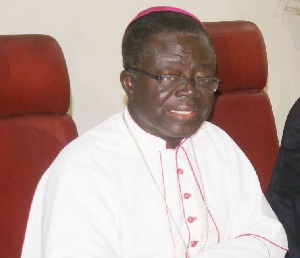
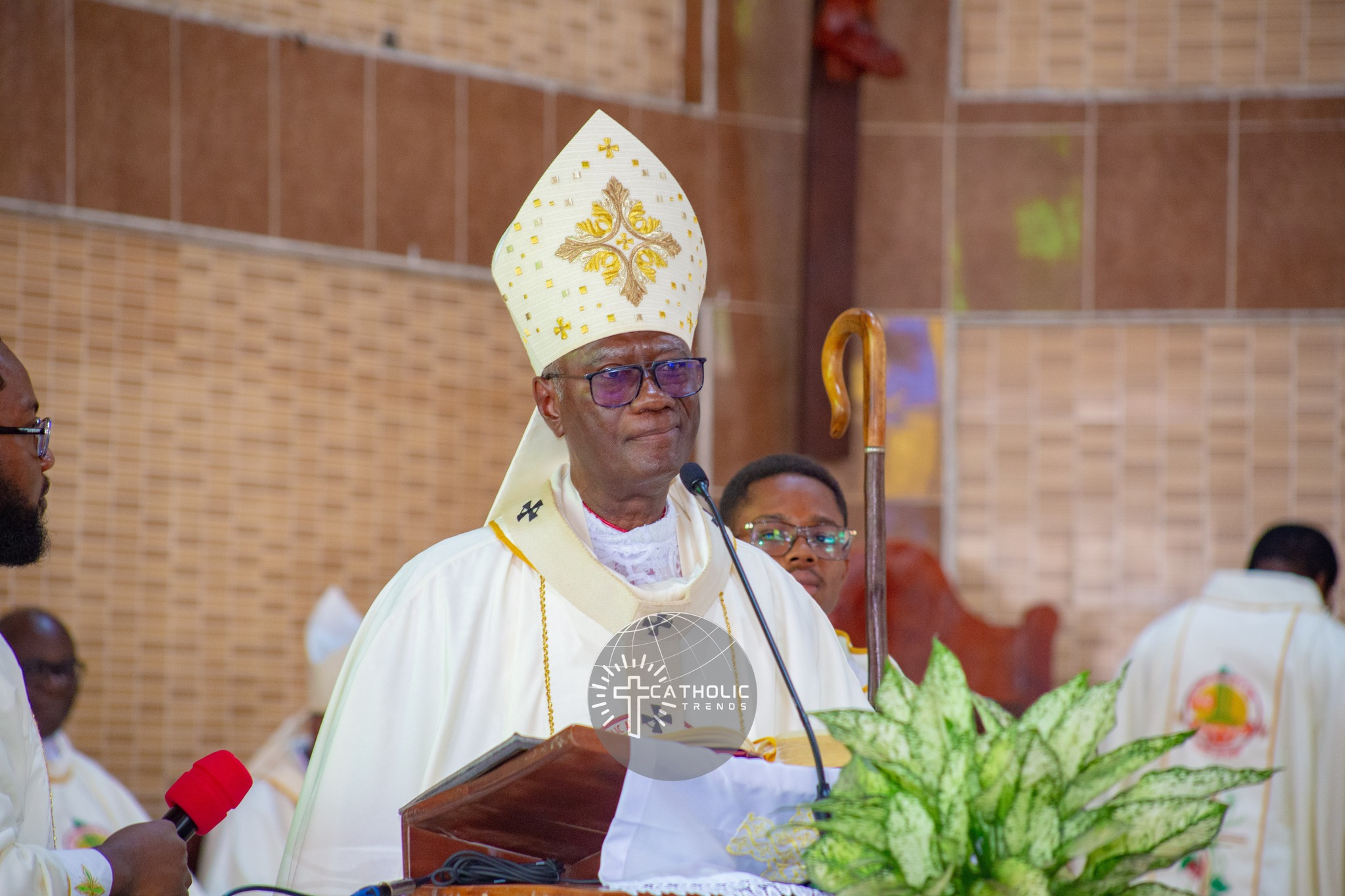
Answers by Most Rev. Joseph Osei-Bonsu
Dear Taabavi, thank you for these important and deeply pastoral questions. They concern matters that frequently arise in Ghanaian society, where customary marriage practices intersect with Catholic teaching and canon law. I offer the following clarifications in the light of Catholic doctrine, while taking account of our local cultural context.
1. Are a man and woman considered truly married if only the traditional marriage rites have been performed?
The Catholic Church teaches that marriage is a sacred covenant established through the free and mutual consent of a man and a woman. For a marriage to be recognised as valid, certain essential conditions must ordinarily be fulfilled: the parties must be free to marry, they must freely and knowingly exchange consent, and the marriage must be celebrated according to the form required by the Church.
For Catholics, this proper form—known as the canonical form—normally requires that marriage be celebrated before a bishop, priest, or deacon duly authorised by the Church and in the presence of at least two witnesses (Canon 1108 §1). Consequently, traditional marriage rites alone, including the payment of bridewealth, family ceremonies, or the exchange of customary gifts, do not by themselves constitute a valid sacramental Catholic marriage.
At the same time, the Church distinguishes between what is socially and culturally recognised and what is canonically valid. In Ghanaian culture, traditional marriage rites carry profound meaning because they signify family consent, communal recognition, and the blessing of both families.
The Church therefore deeply respects these customs. Indeed, for two unbaptised persons, a customary marriage may constitute a valid natural marriage, provided genuine consent exists and no impediment is present. Such unions are presumed binding and lifelong. However, where one or both parties are Catholic, the Church ordinarily requires observance of canonical form for the marriage to be recognised as valid in the eyes of the Church.
Where a couple are already united through a customary or civil marriage and later desire ecclesial recognition, the Church may grant a convalidation. Convalidation is the canonical process through which an existing union is regularised and recognised as a valid marriage in the eyes of the Church.
Through this process, the couple renew their matrimonial consent according to the Church’s requirements, provided they are free to marry and satisfy the conditions necessary for a valid Catholic marriage.
Many people ask why numerous parishes in Ghana still insist that traditional marriage rites be completed before a church wedding. This expectation does not arise from universal Church law but rather from a pastoral adaptation within the local Church.
The Catholic Church universally does not require bridewealth, or dowry or customary rites as a condition for sacramental marriage. Nevertheless, in Ghana and many parts of Africa, marriage is understood not simply as a private arrangement between two individuals but as a union involving families and communities. Traditional rites symbolise acceptance, responsibility, and the blessing of the extended family.
In recognising the richness of this cultural heritage, bishops in Ghana have generally encouraged or required customary rites before church marriage. This reflects the Church’s commitment to inculturation, that is, integrating what is good and noble in local customs into Christian life.
The Church also seeks to preserve family harmony and avoid disputes relating to inheritance, kinship obligations, or the social recognition of marriage. The issue is not merely sexual intimacy but also ecclesial order and obedience. Catholics are expected to marry according to the sacramental discipline of the Church. Thus, entering marriage outside the Church’s recognised form raises questions not only of morality but also of fidelity to the Church’s sacramental life.
Nevertheless, pastoral flexibility exists. Where serious family conflict, financial hardship, or unusual circumstances make traditional rites impossible, a parish priest may seek permission from the bishop for the church marriage to proceed without them. Such situations are considered individually and pastorally.
Therefore, while traditional marriage alone does not ordinarily constitute a sacramental Catholic marriage, the Church in Ghana rightly values it and normally expects it to precede a church wedding unless serious reasons justify an exception.
2. At what point does the Church consider a married couple to be divorced?
The Church’s teaching on marriage is rooted in the teaching of Jesus Christ, who emphasised the permanence and indissolubility of marriage. For this reason, the Catholic Church does not recognise divorce in the sense of dissolving a valid sacramental marriage.
A valid marriage between baptised persons, once ratified and consummated (ratum et consummatum), endures until death. A marriage is ratified when two baptised persons validly exchange matrimonial consent according to the Church’s requirements.
It is consummated when the spouses freely engage in the marital act proper to marriage, thereby completing and sealing the marital covenant. Once a sacramental marriage has been both ratified and consummated, no merely human authority—not even the Church—has the power to dissolve it.
This means that although civil courts may grant a civil divorce, such a divorce does not terminate the sacramental bond in the eyes of the Church. Civil divorce may regulate legal matters such as custody, property, inheritance, or financial obligations, but it does not free a Catholic to remarry in the Church while the other spouse remains alive.
The Church does recognise, however, that civil divorce may sometimes be necessary. Situations involving abuse, grave moral danger, persistent infidelity, severe conflict, or the welfare of children may justify separation and even civil divorce for legal protection. Yet separation does not dissolve the marriage bond. Even when spouses no longer live together, they remain husband and wife in the eyes of the Church.
The Church also provides for what is commonly called an annulment, more properly known as a declaration of nullity. This is not Catholic divorce. Rather, it is a canonical process through which the Church investigates whether a valid marriage ever came into existence from the outset.
The ecclesiastical tribunal carefully examines matters such as whether genuine consent was freely given, whether emotional or psychological incapacity affected marital commitment, whether coercion or deception undermined consent, or whether a prior impediment existed, such as an earlier valid marriage.
If the tribunal concludes that an essential requirement for valid marriage was absent from the beginning, the marriage may be declared null. In such a case, the Church is not dissolving a marriage but recognising that a valid sacramental bond never existed. The parties may then be free to marry in the Church, provided no other impediment remains.
In summary, the Church does not regard a couple as sacramentally divorced simply because civil authorities have granted a divorce. The marriage bond ordinarily remains until death unless the Church determines that no valid marriage existed from the outset.
3. Must a cohabiting couple complete traditional marriage rites before beginning catechism for Baptism?
The simple answer is no. A man and woman living together who wish to become Catholic are not required to complete traditional marriage rites before beginning catechetical instruction for Baptism. They may begin the catechumenate immediately. Nevertheless, their marital situation ordinarily needs to be regularised before they receive the sacraments.
The Church does not require the payment of bridewealth or customary marriage ceremonies as conditions for entering catechism. According to Catholic teaching, Baptism may be administered to adults who freely request it, receive proper instruction, and sincerely desire to live according to the Gospel. Canon 865 §1 teaches that an adult seeking Baptism must express the intention to receive it, be sufficiently instructed in the faith, and demonstrate a willingness to embrace Christian living.
At the same time, because Baptism initiates a person into a life of discipleship, the Church expects candidates to move towards conformity with Christian teaching. Thus, where a couple are living together outside a recognised marriage, the Church gently accompanies them towards regularising their union.
If the couple are already joined by a civil or customary marriage, the Church ordinarily considers the relationship stable and capable of recognition. Provided there are no impediments, the marriage may later be convalidated, that is, regularised according to canonical form.
Where both parties were originally unbaptised and had already entered a valid customary marriage, that union is ordinarily regarded as a natural marriage. Upon the Baptism of both spouses, the marriage automatically becomes sacramental. In such situations, a completely new marriage ceremony may not be necessary, although pastoral recognition within the Church may still take place.
Where the couple are simply cohabiting without any form of marriage, the Church ordinarily encourages them either to marry properly or, where marriage cannot yet occur, to live chastely while preparing for Baptism.
If children are involved or difficult circumstances exist, pastors accompany the couple patiently and compassionately, helping them gradually to regularise their relationship. Strictly speaking, traditional rites are not a prerequisite for catechism or Baptism under universal Church law. A parish may therefore begin catechetical instruction immediately.
Nonetheless, many dioceses in Ghana encourage customary rites during the period of formation because they foster family harmony, social responsibility, and public commitment. Such rites often help prevent disputes concerning inheritance, family recognition, and the status of children.
Where financial hardship, family opposition, or exceptional circumstances make traditional rites impossible, a parish priest may seek permission from the bishop to proceed without them.
In practice, the Church ordinarily welcomes the couple into catechesis, examines their marital circumstances, guides them towards regularising their union, investigates any prior marital bonds where necessary, and prepares them for the reception of the sacraments. Frequently, Baptism and marriage regularisation occur close together.
In all these matters, the Church seeks to act as a wise and compassionate mother—firm in doctrine yet patient in pastoral care. She neither dismisses African cultural traditions nor compromises the dignity of Christian marriage. Rather, she strives to harmonise what is noble in local customs with fidelity to the Gospel, guiding her children patiently towards the fulness of Christian life.
| For further explanations or enquiries, you may contact the author, Most Rev. Joseph Osei-Bonsu, Emeritus Catholic Bishop of Konongo-Mampong, on this number: 0244488904, or on WhatsApp (with the same number). |





Discussion about this post