


Question(s) by Augustine Alirinrey Amangwon Aninangbil, Christ the King Parish, Sandema, Navrongo–Bolgatanga Diocese:
My Lord Bishop, I would be very grateful for your clarification and guidance regarding the following matter.
Background
A video that was shared widely on social media showed a Nigerian religious sister claiming that some priests sexually abuse or harass members of religious communities. She also said that, in some cases, Church authorities have not dealt with such accusations openly and honestly. This has given the impression that wrongdoing is sometimes hidden rather than properly investigated and correctly addressed. These claims have renewed public discussion about priestly celibacy and whether it might have any connection to the scandals of sexual misconduct that have affected some members of the clergy and religious life.
Question
Given the scandals of sexual misconduct involving some priests, consecrated women, and religious brothers, should the Catholic Church reconsider its rule of celibacy for priests of the Latin Rite? Should the Church allow those who are called to ordained ministry to marry while continuing their pastoral work? More specifically, is there any proof that required celibacy leads to such misconduct? Or are these scandals mostly the result of personal moral failure and the misuse of power, rather than the rule of celibacy itself? Furthermore, would allowing priests to marry help to reduce such scandals and make accountability stronger? Or does the Church have sound theological, spiritual, and pastoral reasons for keeping the rule of priestly celibacy in spite of these challenges?
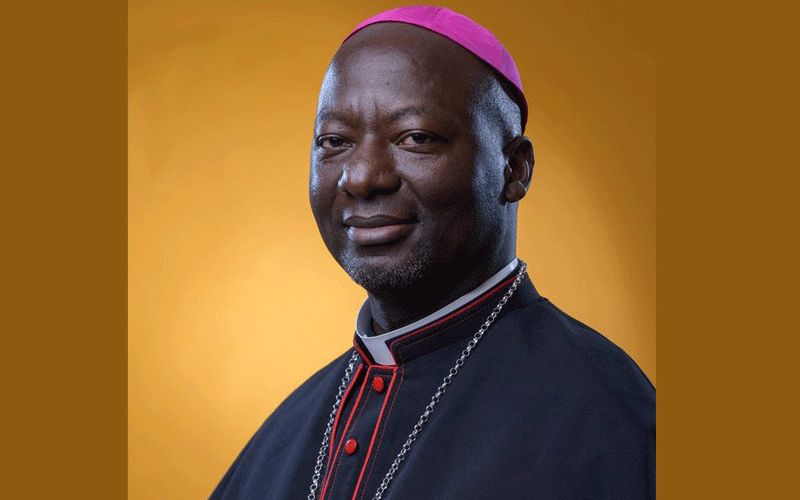
Answer by Most Rev. Joseph Osei-Bonsu:
The recent public discussion surrounding allegations of sexual misconduct involving some members of the clergy and religious life has renewed questions about the discipline of priestly celibacy in the Catholic Church. In response to these concerns, this article examines whether celibacy contributes to such scandals, explores the theological and pastoral reasons for its retention, and considers the reforms necessary to strengthen accountability and safeguarding within the Church.
- Should the Church Reconsider Mandatory Celibacy?
An important distinction must first be made: priestly celibacy in the Latin Rite is a discipline, not a dogma. It is grounded in Church law and tradition rather than in revealed, unchangeable doctrine. Unlike the restriction of priestly ordination to men, celibacy could, in principle, be reformed. The Church clearly has the authority to revisit this rule.
Historical and contemporary evidence supports this flexibility. Married Protestant and Anglican ministers who convert to Catholicism may, in certain circumstances, be ordained as Catholic priests while remaining married. Eastern Catholic Churches — fully in communion with Rome — have long ordained married men to the priesthood. Early Church history also suggests that married clergy existed before mandatory celibacy became firmly established as the Latin norm around the eleventh century.
More recently, the 2019 Synod of Bishops for the Amazon region recommended ordaining viri probati — mature, proven married men — to address severe priest shortages in remote areas. Pope Francis did not adopt this recommendation, but the fact that such a discussion took place at a formal synodal level confirms that the question remains open to legitimate theological and pastoral reflection.
The real question, therefore, is not whether the Church can revisit celibacy, but whether doing so would be wise and pastorally beneficial, and on what theological and practical grounds such a decision should rest.
- Does Celibacy Cause Sexual Abuse?
The available evidence does not support a direct or simple cause-and-effect relationship between celibacy and sexual abuse. Abuse is understood broadly as the deliberate misuse of power, authority, trust, or vulnerability causing physical, emotional, psychological, sexual, or financial harm. It typically operates through patterns of secrecy, manipulation, and unequal power relationships rather than as isolated incidents.
Research consistently shows that sexual abuse occurs across many institutions and contexts where marriage is the norm — including Protestant communities, secular organisations, and the general population. This fact alone dismantles the assumption that celibacy is the primary driver of misconduct. The roots of abuse are more accurately located in psychological immaturity, misuse of authority, poor formation, inadequate oversight, and cultures of secrecy.
The landmark John Jay Report, commissioned by the United States Conference of Catholic Bishops and conducted by John Jay College of Criminal Justice, examined clergy abuse cases from 1950 to 2002. It remains the most comprehensive study of its kind. Its central finding was that clergy sexual abuse resulted from a complex combination of factors: abuses of power, inadequate psychological screening, deficient priestly formation, institutional cultures of secrecy, and failures in handling perpetrators. Critically, the report did not identify celibacy as a primary cause. Rather, it linked abuse more fundamentally to dynamics of power, exploitation, and opportunity.
The report also rejected simplistic explanations based on homosexuality, while acknowledging that many victims were adolescent males. Married clergy in other denominations and married people in the general population have also committed similar abuses, confirming that marriage is not a reliable preventative.
One important nuance deserves acknowledgement: celibacy, when combined with poor emotional formation, isolation, or insufficient support, can contribute to arrested psychosexual development in some individuals. This is not a flaw in celibacy itself but a failure in the formation and support systems meant to help priests to live this demanding vocation in a healthy and integrated way. The scandal of covering up abuse is likewise fundamentally an institutional problem — one of governance failures, lack of transparency, and misplaced institutional self-protection — rather than a consequence of celibacy.
- The Theological Case for Celibacy
Three theological foundations underpin the Church’s commitment to priestly celibacy:
Eschatological Witness: The celibate priest is a living sign of the Kingdom of God, where, as Christ teaches in Matthew 22:30, people neither marry nor are given in marriage. By freely choosing celibacy, the priest points beyond earthly attachments to the ultimate communion with God that awaits humanity. His life becomes prophetic — a visible anticipation of eternal life.
Spousal Love: The priest is sacramentally configured to Christ the Bridegroom, whose total self-giving love for the Church models priestly ministry. Celibacy is therefore not simply the absence of marriage but a positive vocation to love broadly and universally. The celibate priest is called to become a spiritual father to the people entrusted to his care, expressing pastoral charity through sacramental ministry, accompaniment, and service.
Pastoral Freedom: Freed from the responsibilities of family life, the celibate priest is more fully available to his community. Saint Paul’s words in 1 Corinthians 7:32 — that the unmarried man is anxious about the affairs of the Lord — capture this availability. Celibacy enables priests to respond more readily to pastoral emergencies and the many demands of parish ministry.
These theological foundations are substantial. For this reason, many contemporary reformers do not advocate abolishing celibacy entirely but rather making it voluntary — allowing those genuinely called to this gift to embrace it freely, rather than imposing it universally on all candidates regardless of personal vocation. The Church understands celibacy as a charism — a grace-filled gift that, when freely embraced and properly supported, enables profound pastoral dedication. To reduce it merely to sexual abstinence is to misunderstand its deeply evangelical and spiritual meaning.
- Formation, Accountability, and Reform
The central problem underlying sexual misconduct within the Church is not priestly celibacy itself but deficiencies in formation, accompaniment, emotional support, and accountability. Increasingly aware of this reality, the Church has undertaken significant reforms aimed at fostering healthier, more responsible priestly ministry. In accordance with the Vatican’s Ratio Fundamentalis Institutionis Sacerdotalis, seminaries now place far greater emphasis on holistic human formation, including emotional maturity, relational health, psychological well-being, and the capacity to maintain healthy boundaries.
Celibacy is therefore understood not as an escape from human intimacy but as a mature and integrated expression of spiritual fatherhood. At the same time, the Church has strengthened transparency and accountability mechanisms. Pope Francis’ 2019 apostolic letter Vos Estis Lux Mundi introduced clearer universal procedures for reporting abuse and investigating allegations, especially those involving bishops and religious superiors, while increasing accountability for failures to act responsibly.
The Church’s position is equally unequivocal regarding misconduct: there can be no compatibility between authentic priestly identity and the abuse of power, conscience, sexuality, or trust. Rather, a priest’s celibate commitment ought to make him a source of safety, trust, and spiritual refuge for the vulnerable.
These reforms have also included more rigorous psychological screening of seminarians, honest and integrated formation in human sexuality, independent accountability structures, mandatory reporting systems, and victim-centred pastoral care.
The establishment of the Pontifical Commission for the Protection of Minors further demonstrates the Church’s recognition that safeguarding requires ongoing institutional vigilance. Moreover, both Pope Benedict XVI and Pope Francis have repeatedly identified clericalism — an unhealthy culture of superiority, entitlement, and exemption from accountability — as one of the deeper causes of abuse and concealment, making its eradication as essential as any structural reform
Conclusion
Required celibacy is not the cause of sexual misconduct scandals, and relaxing or abolishing it would not automatically resolve the crisis. The deeper causes are abuses of power, cultures of secrecy, poor formation, weak accountability, and institutional failures — problems that arise wherever authority exists without transparency and adequate safeguards.
While the Church could, in principle, permit optional celibacy, especially in regions facing severe priest shortages, such a change would not in itself solve the abuse crisis. The more urgent reforms are structural and cultural: stronger formation, rigorous psychological screening, robust safeguarding systems, transparency, accountability, and genuine pastoral support for clergy.
When lived with maturity, integrity, and proper support, celibacy remains a deeply valuable gift that enables priests to dedicate themselves wholly to Christ and to the service of God’s people. Above all, victims and survivors of abuse must be met with compassion, justice, transparency, and decisive action. Concealment must be firmly rejected, and clericalism — the root culture that enabled so much harm — must be decisively dismantled.
| For further explanations or enquiries, you may contact the author, Most Rev. Joseph Osei-Bonsu, Emeritus Catholic Bishop of Konongo-Mampong, on this number: 0244488904, or on WhatsApp (with the same number). |





Discussion about this post