


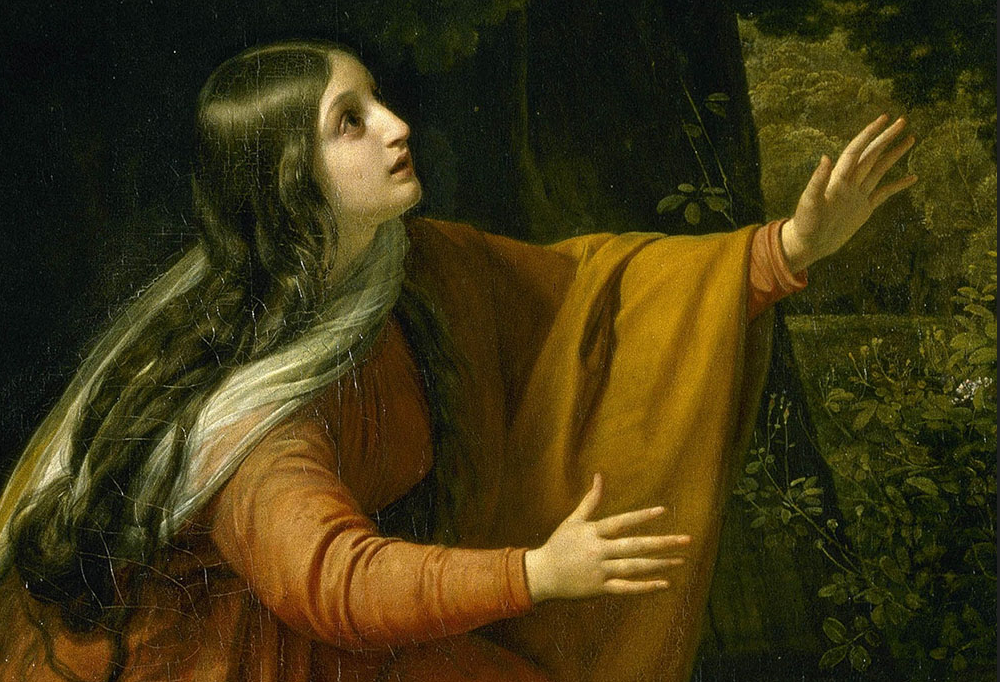
Question by Mary Magdalene Owusu, Kumasi:
My Lord, in a few days’ time, on 22 July, the Church celebrates the Feast of Saint Mary Magdalene. I have often heard it said that she was a prostitute who repented and changed her way of life. Indeed, I have heard priests preach in this vein during Mass on her feast day. Is this actually true? Does Sacred Scripture identify Mary Magdalene as a prostitute, or is this a later tradition that has, over the centuries, come to be widely accepted as fact?
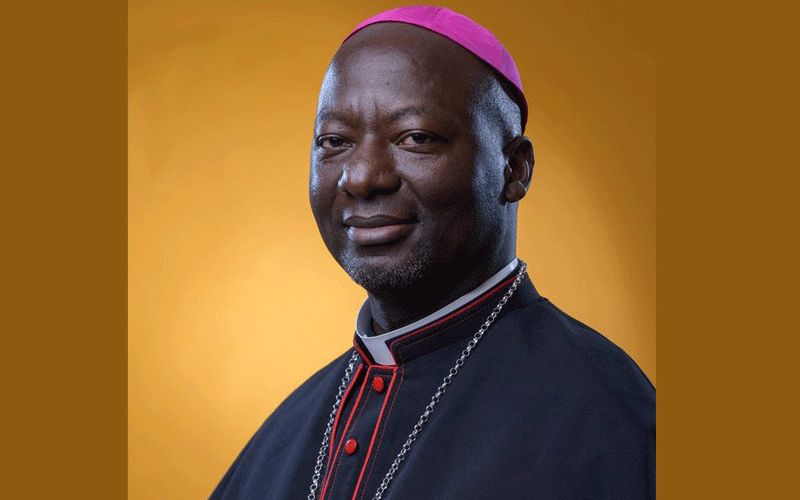
Answer by Most Rev. Joseph Osei-Bonsu:
1.Introduction
Few figures in the Gospels have been as widely misunderstood as Mary Magdalene. For centuries, Western Christian preaching, art, literature, and popular imagination have portrayed her as a repentant prostitute, a depiction so deeply ingrained that many assume it comes directly from Sacred Scripture.
It is therefore not uncommon to hear preachers present her as the classic example of the repentant sinner whose life was transformed by an encounter with Jesus. Yet this familiar image is not the one found in the New Testament.
A careful reading of Scripture, together with an examination of the development of Christian tradition, reveals that the New Testament never describes Mary Magdalene as a prostitute.
Rather, it presents her as a woman whom Jesus healed from severe demonic affliction, a devoted disciple who accompanied and supported his ministry, remained faithful at the foot of the cross, witnessed his burial, and became the first person to encounter the risen Christ.
She was also the first commissioned to proclaim the Resurrection to the apostles, earning her the ancient title Apostola Apostolorum—the “Apostle to the Apostles.”
How, then, did the image of Mary Magdalene as a repentant prostitute become so widespread? This article examines the biblical evidence, traces the historical development of the tradition that merged three distinct women of the Gospels into a single figure, and considers how modern biblical scholarship and the Catholic Church have clarified her true identity.
In doing so, it seeks to restore Mary Magdalene to her rightful place in the Gospel narrative as one of Christ’s most faithful disciples and the first witness and herald of his Resurrection.
- What the Bible Says About Mary Magdalene
Mary Magdalene, also known as Mary of Magdala, derived her name from Magdala, a prosperous town on the western shore of the Sea of Galilee near Tiberias. She is mentioned twelve times in the New Testament, making her one of the most prominent women in the Gospel narratives.
She is first introduced in Luke 8:2–3, immediately following Luke’s account of the unnamed sinful woman. Luke describes her simply as “Mary, called Magdalene, from whom seven demons had gone out,” a description repeated in Mark 16:9.
This reference has frequently been misunderstood. The expulsion of seven demons does not imply that Mary had led a morally corrupt or sexually sinful life. Throughout the Gospels, demonic possession is presented as a condition of profound spiritual, physical, or psychological suffering requiring Christ’s healing power, rather than as evidence of personal wickedness.
Moreover, the number seven frequently symbolises completeness or fullness in biblical language, suggesting that Mary’s affliction had been particularly severe before Jesus restored her.
Luke further records that Mary Magdalene, together with Joanna, Susanna, and several other women, travelled with Jesus and the Twelve and supported their ministry from their own resources (Luke 8:1–3). This seemingly minor detail carries considerable significance.
It reveals that women were active participants in Jesus’ public ministry and that Mary Magdalene was likely a woman of independent means who freely placed her possessions at the service of the Gospel.
The Gospels consistently portray Mary Magdalene as one of Christ’s most devoted followers. All four Evangelists record that she remained at the foot of the cross during the crucifixion, when many of the male disciples had fled in fear (Matthew 27:55–56; Mark 15:40–41; Luke 23:49; John 19:25).
She witnessed his burial (Mark 15:47), carefully noted the location of the tomb, and returned before dawn on Easter morning with other women intending to complete the burial rites. Upon finding the tomb empty, she informed the disciples. According to John’s Gospel (20:11–18), the risen Christ appeared first to Mary Magdalene and entrusted her with announcing the Resurrection to the apostles.
For this reason, the early Church honoured her with the title Apostola Apostolorum—the “Apostle to the Apostles.”
These are the facts that Scripture records concerning Mary Magdalene. Notably, nowhere does the New Testament describe her as a prostitute, an adulteress, or even as a notorious sinner. Every biblical reference portrays her as a woman healed by Christ, transformed by his grace, devoted to his mission, and steadfast in her loyalty to him.
- The “Sinful Woman” of Luke 7
The misunderstanding concerning Mary Magdalene originates in Luke 7:36–50. In this account, Jesus accepts an invitation to dine in the house of Simon the Pharisee. During the meal, an unnamed woman, described simply as “a sinner,” enters carrying an alabaster jar of perfume. She weeps at Jesus’ feet, bathes them with her tears, wipes them with her hair, kisses them repeatedly, and anoints them with expensive perfume.
Several features of this narrative merit careful attention. First, Luke never identifies the woman by name. Second, he never specifies the nature of her sins. Although later tradition frequently assumed that she was a prostitute, the Gospel itself makes no such claim. The Greek word used here simply means “a sinner” and provides no indication of any particular category of sin.
More significantly, the purpose of this account is theological rather than biographical. Jesus employs the woman’s extraordinary love as evidence that she has received abundant forgiveness. Her actions serve as an illustration of the transforming power of God’s mercy.
Jesus contrasts her generous love and humble repentance with Simon’s cold reception, concluding that “the one to whom little is forgiven loves little” (Luke 7:47). The emphasis therefore falls not on the woman’s past but on the greatness of God’s forgiveness.
Luke’s literary structure also argues strongly against identifying this unnamed woman with Mary Magdalene. Immediately after concluding the story, Luke introduces Mary Magdalene for the first time (Luke 8:2–3) as a new individual. Had he intended his readers to understand that the sinful woman and Mary Magdalene were the same person, it would have been natural for him to indicate as much. Instead, he clearly presents Mary Magdalene as an entirely distinct figure.
- Mary Magdalene Is Not Mary of Bethany
A second source of confusion is the identification of Mary Magdalene with Mary of Bethany, the sister of Martha and Lazarus, who anoints Jesus shortly before his Passion (John 12:1–8). The Gospels, however, distinguish these women clearly.
Mary of Bethany resided in Bethany, a village near Jerusalem in Judea, whereas Mary Magdalene originated from Magdala in Galilee and is consistently portrayed in the Synoptic Gospels as a Galilean disciple. Their family backgrounds, geographical origins, and roles within the Gospel narratives are entirely distinct. Nothing in the New Testament suggests that they were the same person.
- How the Tradition Developed
If the Bible never identifies Mary Magdalene as a prostitute, how did this belief become so widespread? The association developed gradually within the Western Church from approximately the sixth century onward. Over time, three distinct women mentioned in the Gospels came to be merged into a single figure: the unnamed sinful woman of Luke 7:36–50, Mary of Bethany, and Mary Magdalene.
The decisive step occurred in A.D. 591, when Pope Gregory the Great preached Homily 33, in which he identified these three women as one person. Gregory interpreted the “seven demons” expelled from Mary Magdalene as symbolising the fullness of vice and associated her with the sinful woman of Luke 7.
Although he never explicitly described her as a prostitute, later medieval preaching, devotional literature, religious drama, and sacred art gradually transformed her into the archetypal penitent prostitute. Legends concerning her beauty, wealth, and supposed missionary activity in southern France further reinforced this image until it became firmly established throughout much of Western Christianity.
Another factor may also have contributed to the misunderstanding. In later Jewish writings, the town of Magdala acquired a reputation for moral corruption. Some therefore assumed that a woman from Magdala must herself have possessed a disreputable past. Such reasoning, however, is entirely speculative and finds no support in the biblical text.
- The Eastern Christian Tradition
Unlike the Western Church, the Eastern Churches never accepted this identification. Following early Christian writers such as Origen of Alexandria, the Greek Fathers consistently distinguished between the sinful woman of Luke 7, Mary of Bethany, and Mary Magdalene.
As a result, Eastern Christianity has always honoured Mary Magdalene as one of Christ’s greatest disciples, the faithful witness of his Passion and Resurrection, and “Equal to the Apostles.” Eastern liturgical tradition remembers her not as a repentant prostitute, but as the courageous disciple who remained faithful to Christ and was privileged to be the first witness of his Resurrection.
- Modern Biblical Scholarship and the Church
Modern biblical scholarship is virtually unanimous in regarding these three women as distinct individuals. Careful literary, historical, and textual analysis has demonstrated that the traditional identification lacks foundation in the canonical Gospels.
Reflecting this renewed understanding, the Roman Catholic Church revised the General Roman Calendar in 1969, clearly distinguishing Mary Magdalene from both Mary of Bethany and the unnamed sinful woman of Luke 7. Consequently, the Church no longer associates Mary Magdalene with prostitution, recognising that this interpretation belongs to later tradition rather than to Scripture.
In 2016, Pope Francis further underscored her importance by elevating her liturgical memorial to the rank of a Feast. At the same time, he reaffirmed her ancient title, Apostola Apostolorum (“Apostle to the Apostles”), thereby recognising her unique role as the first witness of the Resurrection and the first to proclaim the Easter message to the apostles.
- Conclusion
The New Testament presents Mary Magdalene not as a former prostitute but as a woman whom Jesus healed from profound demonic affliction, a generous supporter of his ministry, a faithful witness of his crucifixion and burial, and the first herald of his Resurrection. The biblical evidence consistently portrays her as a model of faithful discipleship rather than as an example of sexual repentance.
The popular image of Mary Magdalene as a repentant prostitute is therefore not based on Scripture. It arose from the gradual identification of three different women: the unnamed sinful woman of Luke 7, Mary of Bethany, and Mary Magdalene.
Although this interpretation shaped Western Christian preaching, art, literature, and popular devotion for centuries, it is not supported by the Gospels and is no longer reflected in the official teaching or liturgical practice of the Catholic Church.
Mary Magdalene should therefore be remembered as the Gospels themselves portray her: a woman transformed by Christ’s healing grace, a generous disciple who helped to sustain his ministry, a courageous witness who remained at the cross when many others fled, and the first messenger of the Resurrection.
Rather than being defined by a sin the Bible never attributes to her, she deserves to be honoured for her unwavering faith, her steadfast love for Christ, and her unique role in proclaiming the central event of the Christian faith—the Resurrection of the Lord.
| For further explanations or enquiries, you may contact the author, Most Rev. Joseph Osei-Bonsu, Emeritus Catholic Bishop of Konongo-Mampong, on this number: 0244488904, or on WhatsApp (with the same number). |





Discussion about this post