


Question by Wisdom K. Kumah, Sekondi-Takoradi Diocese
My Lord Bishop, I humbly seek your guidance on a liturgical practice I have long pondered. During solemn Benediction, the priest wears the humeral veil, covering his hands as he carries the Blessed Sacrament in the monstrance. Yet, when placing the Sacred Host into the monstrance, he uses his anointed hands directly.
At ordination, a priest’s hands are consecrated as a sign of their dedication to the sacred ministry, especially the reverent handling of the Eucharist. Still, the priest remains a sinner in need of God’s mercy. This leads me to ask: if the priest’s hands may touch the Consecrated Host, who is truly Christ, why must those same hands be veiled when carrying the monstrance that contains him?
In terms of holiness, is there a distinction between the Sacred Host and the vessel that holds him? What, therefore, is the theological and liturgical reasoning behind veiling the hands when carrying the Blessed Sacrament, but not when placing the Host in the monstrance? I would be deeply grateful for Your Lordship’s pastoral and theological enlightenment.
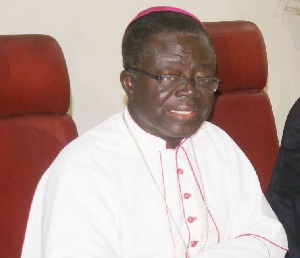
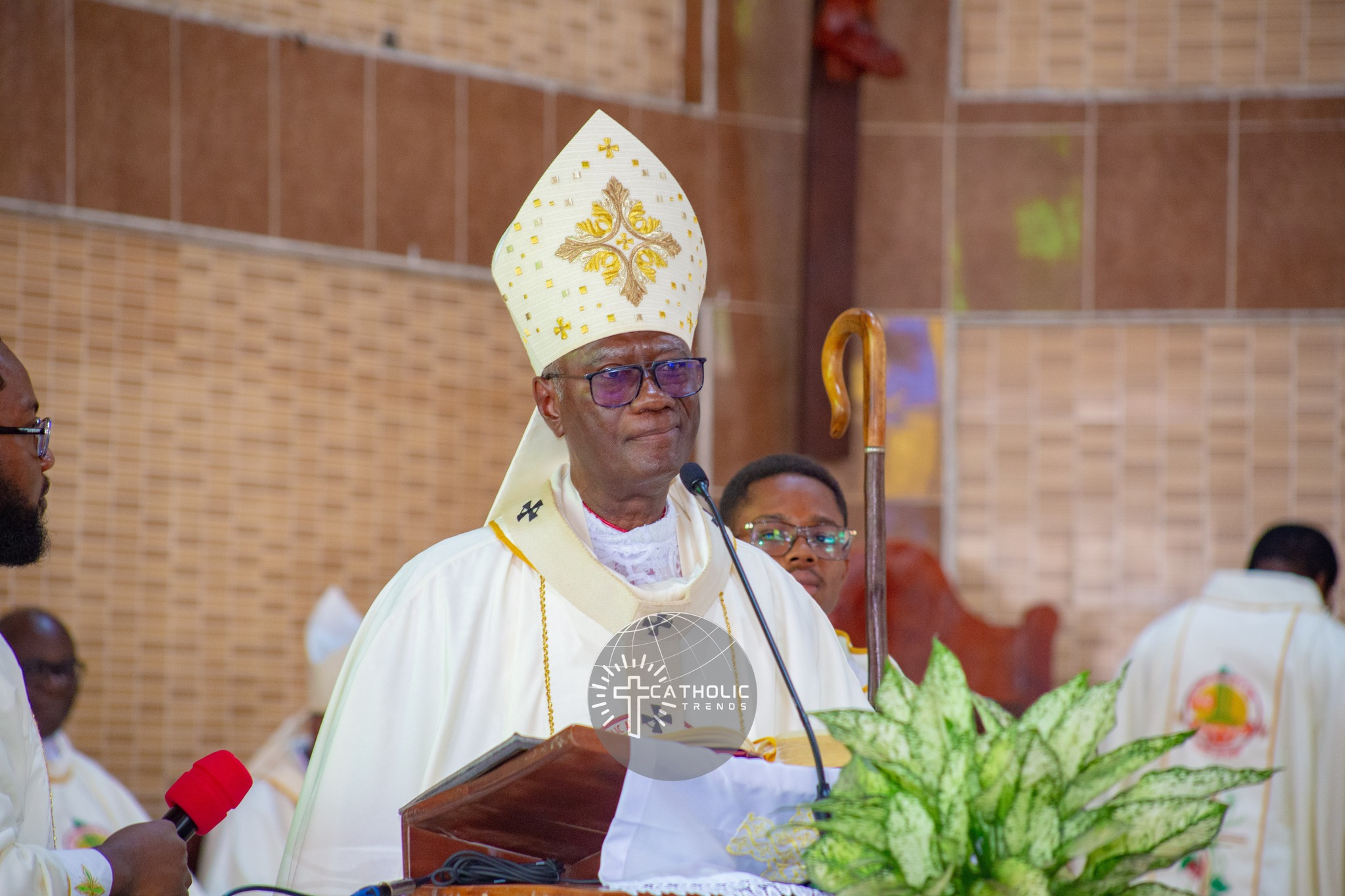
Answer by Most Rev. Joseph Osei-Bonsu:
Dear Wisdom, your question draws attention to an important distinction between the holiness of the Eucharist and the meaning of the liturgical gestures used in its exposition and Benediction. At first sight, it may seem strange that the priest uses his uncovered hands to place the Sacred Host in the monstrance but covers those same hands when carrying it. There is, however, no contradiction. The two gestures have different liturgical meanings.
The Holiness of the Eucharist
The consecrated Host is not merely a sacred object; it is Christ himself, truly, really and substantially present — Body, Blood, Soul and Divinity. The monstrance, by contrast, is a sacred vessel whose dignity comes from the Blessed Sacrament it contains. The humeral veil, a long rectangular cloth worn over the shoulders and arms when carrying or blessing the faithful with the Blessed Sacrament, likewise serves as a liturgical sign of reverence towards Christ present in the Eucharist.
The veil does not indicate that the monstrance or the priestly vestment is holier than the Eucharist. The Sacred Host is incomparably holier than the vessel that contains him or the vestment used in carrying him. Rather, the humeral veil expresses reverence and humility, especially by covering the minister’s hands as he bears the Eucharistic Lord before the faithful.
Why the Hands Are Uncovered When Placing the Host in the Monstrance
When the priest places the Sacred Host into the monstrance, he is handling the Blessed Sacrament directly in the exercise of his sacred ministry. His hands are uncovered because there is no liturgical requirement at that moment to cover them. The action is a deliberate and reverent handling of the Sacred Species in preparation for exposition.
It is important, however, not to understand the anointing of the priest’s hands at ordination as making them intrinsically holier than the hands of other Christians or as the source of his ability to consecrate the Eucharist. In the Latin Church, the essential sacramental sign of priestly ordination is the laying on of hands followed by the consecratory prayer. The anointing of the hands, where it is retained, is a significant traditional symbol of their dedication to priestly service.
Why the Hands Are Covered When Carrying the Blessed Sacrament
When the priest places the humeral veil over his shoulders and uses it to cover his hands while carrying the monstrance, the liturgical action has changed. He is no longer simply placing or handling the Host; he is bearing the Eucharistic Lord before the people and, in Benediction, presenting Christ to them as the one who blesses them.
The covering of the hands therefore expresses reverence and humility. It makes visible the fact that the priest is not presenting himself as the source of the blessing. Rather, he is the minister through whom the Church presents Christ, truly present in the Blessed Sacrament, to the faithful.
In this sense, the veil helps to direct attention away from the minister and towards Christ. The priest’s hands are covered not because they have suddenly become unworthy to touch the Eucharist, but because the liturgical gesture is emphasising the sacredness of the act of carrying and blessing with the Blessed Sacrament.
The Monstrance Is Not Holier Than the Eucharist
The distinction between the Eucharist and the monstrance is therefore important. The monstrance is a sacred object, but it is not the object of Eucharistic worship in itself. Its purpose is to hold and display the Blessed Sacrament for the adoration of the faithful.
One might compare it, in a limited sense, to a throne used to honour a king. The dignity of the throne does not come from the throne itself but from the person who occupies it. Likewise, the dignity and beauty of the monstrance serve to honour Christ, who is present in the Eucharist. The humeral veil reinforces this same principle. By covering his hands, the priest visibly presents himself not as the possessor of Christ but as his humble servant and minister.
The Deeper Meaning of the Two Gestures
The two actions therefore teach complementary lessons. The uncovered hands emphasise the priest’s reverent and legitimate handling of the Blessed Sacrament in preparation for exposition. The veiled hands emphasise his humility as he bears Christ before the faithful and gives Benediction.
There is consequently no suggestion that the priest’s hands are clean enough to touch the Eucharist at one moment but become unclean when carrying the monstrance. Nor does the veil imply that the monstrance is more sacred than the Host.
Rather, the Church uses different gestures to communicate different aspects of Eucharistic reverence. The priest’s hands are instruments of his sacred ministry; the monstrance is an instrument for displaying the Eucharistic Lord; and the humeral veil is a liturgical sign of reverence and humility. The Eucharist alone is Christ himself.
Pastoral Conclusion
Dear Wisdom, your question is a valuable one because it helps us to distinguish between the intrinsic holiness of the Eucharist and the symbolic meaning of liturgical objects and gestures. The humeral veil does not diminish the dignity of the priest’s hands, nor does it elevate the monstrance above the Blessed Sacrament. Rather, it expresses the humility of the minister and directs the attention of the faithful to the one who is truly present and who alone is the source of the blessing: Jesus Christ, our Eucharistic Lord.
| For further explanations or enquiries, you may contact the author, Most Rev. Joseph Osei-Bonsu, Emeritus Catholic Bishop of Konongo-Mampong, on this number: 0244488904, or on WhatsApp (with the same number). |







Discussion about this post