


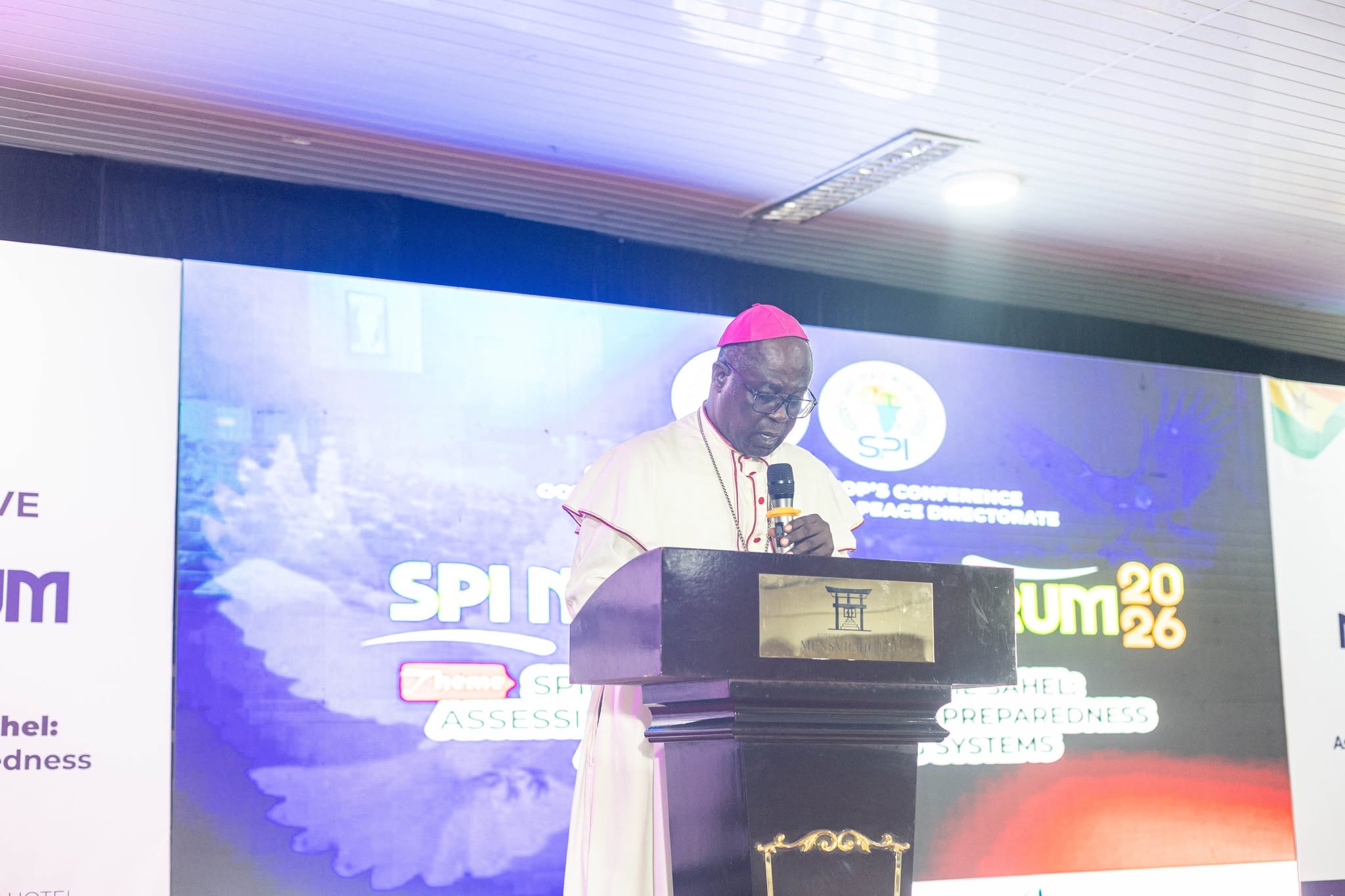
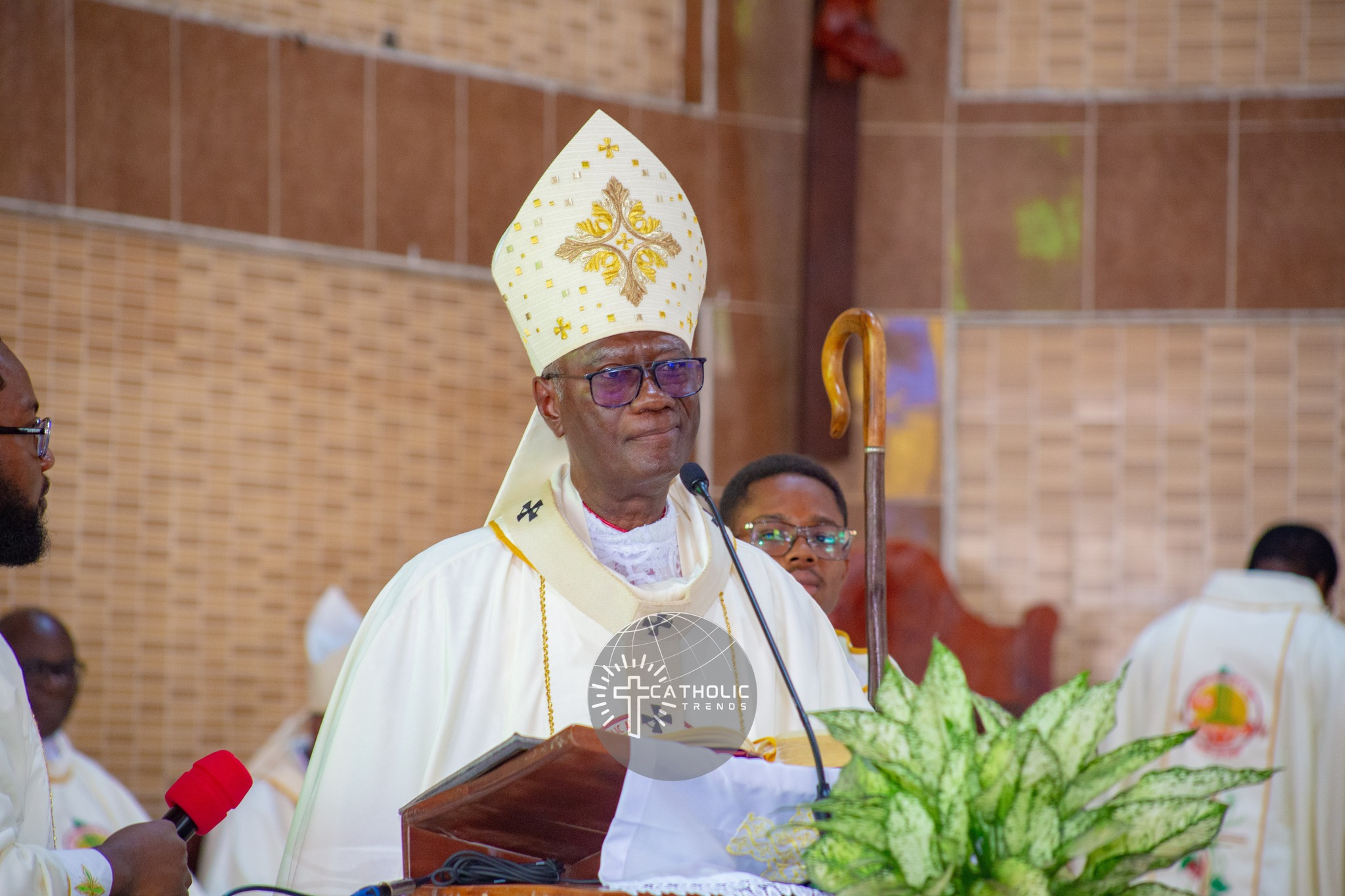
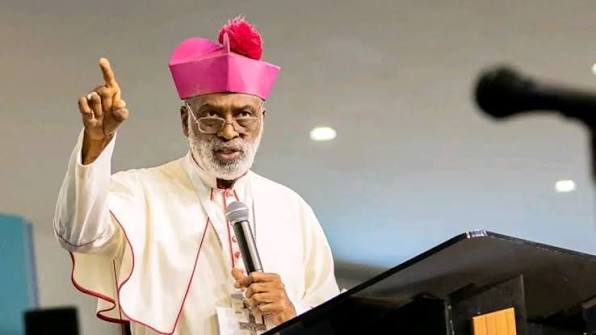
The Archbishop of Kumasi, Most Rev. Gabriel Justice Anokye, has directed priests in the Archdiocese to refrain from partisan political discussions, endorsements and criticisms in pastoral settings and on social media platforms associated with their priestly office.
The directive forms part of a new pastoral communique issued by the Archbishop on “Pastoral Neutrality and the Avoidance of Political Discussions, Political Prophecies, and Divisive Public Comments.”
In the communique dated September 4, 2026, Archbishop Anokye reminded priests of their responsibility to serve as ministers of unity and reconciliation, stressing that the Church’s mission must not be compromised by partisan political alignments.
He specifically directed priests to avoid partisan political discourse during Mass, homilies, catechesis and meetings of Church associations, as well as on social media platforms identified with their priestly office.
The Archbishop also warned priests against making political predictions or publicly presenting supposed “prophecies” concerning elections, political parties, leaders or national outcomes.
He further cautioned clergy against public comments, interviews or social media posts that could ridicule, polarise or associate the Church with partisan positions.
At the same time, Archbishop Anokye clarified that the directives do not prevent priests from teaching the social doctrine of the Church or speaking on justice, human dignity and the common good.
Such interventions, he said, must remain non partisan and directed towards the spiritual good of all the faithful.
The Archbishop cited provisions of the 1983 Code of Canon Law, the Catechism of the Catholic Church and the Church’s Directory for the Ministry and Life of Priests in outlining the basis for the directive.
He urged priests to remember that Catholics within the Archdiocese hold different political views but remain united through their baptism.
“Let us be ministers who gather, not scatter,” Archbishop Anokye said, calling for priestly obedience and cooperation to protect the credibility of the Church and promote the good of souls.
The full communique is reproduced below:
To: All Priests, Religious, and Christ’s Faithful, Catholic Archdiocese of Kumasi
From: The Metropolitan Archbishop of Kumasi
Date: 4 September 2026
Subject: On Pastoral Neutrality and the Avoidance of Political Discussions, Political Prophecies, and Divisive Public Comments.Dear Brothers and Sisters in Christ,
May the peace, love, and grace of our Lord Jesus Christ, the Supreme Shepherd of the Church, be with you all. I write to you with a heart filled with pastoral solicitude, yet profoundly burdened by recent developments within our beloved Archdiocese.Our priestly ministry is one of reconciliation, unity, and the proclamation of the Gospel. In these times when national discourse is often charged, I write to remind us all of the sacred character of our calling and of the need to guard that calling from anything that may compromise our eredibility as pastors of all the faithful.
1. The Nature of Our Ministry
Our call to the priesthood is fundamentally a call to imitate Christ, whose kingdom is ‘not of this world” (John 18:36). The Apostle Paul explicitly eminds us in 2 Corinthians 5:20 that we are “ambassadors for Chris,,tasked with he ministryof reconciliation,not of division. when a minister of the altar assumes a partisan political mantle, he contradicts the very nature of his calling.St. Paul further exhorts: “No one serving as a soldier gets involved in civilian affairs, but rather tries to please his commanding officer” (2 Tim 2:4). Our “commanding officer” is Christ., and our field of engagement is the vineyard of the Lord. True biblical prophecy, as seen in the Old Testament and fulfilled in the New Testament, is never a tool for political prediction or sensationalism; rather, it is a call to moral regeneration, jastice, and fidelity to God’s covenant (cf. Amos 5:24, Jeremiah 23:16-22). The exploitation of the prophetic office for political forecasting misleads the faithful and brings the Word of God into disrepute.
2. Doctrinal Provisions
The Magisterium of the Church has consistently maintained a clear boundary regarding political action. The Catechism of the Catholic Church (CCC 2442) explicitly clarifies that “it is not the role of the Pastors of the Church to intervene directly in the political structuring and organization of social life.’ This vital task belongs uniquely to the lay faithful.
Furthermore, the Congregation for the Clergy, in its Direciory for the Ministry and Life of Priests (No. 33), reminds us that the priest ‘must remain above any political party’ to guarantee his position as a minister of ecclesial communion. A priest is a father to all; by taking a public political stance, he alienates elements of his flock and fractures the visible unity of the Body of Christ.
3. Guidance of Canon Law
The 1983 Code of Canon Law provides strict legal boundaries to safeguard the transcendence of our ministry from secular political rivalries. I bring to your urgent recollection the following obligations:
Canon 285 $1 & $3: Clerics are directed to refrain completely from all those things that are unbecoming to their state, and are strictly forbidden to assume public offices which entail a participation in the exercise of civil power.
Canon 287 Ș1 & $2: Clerics must always foster that peace and harmony based on justice which is to be observed among people. Crucially, they are ‘not to have an active part in political parties.. unless, in the judgment of competent ecclesiastical authority, the protection of the rights of the Church or the promotion of the common good requires it.’ No such permission has been granted in this Archdiocese.
Canon 528 $1: “The parish priest is to strive to ensure that the message of the Gospel is communicated to all.’ This mission is best carried out when the pulpit, the confessional, and our public witness are not identified with any political party, candidate, or ideology.
Canon 768 $1 & $2: ‘The proclamation of the Gospel must be centered on what is necessary for the belief and salvation of humanity, fostering peace and justice.’ The pulpit, Church altars, and social media platforms operated under clerical titles must never be co-opted for partisan rhetoric or unauthorized spiritual prognostications.
Canon 823 $1 & $2: To preserve the integrity of faith and morals, the pastors of the Church have the “duty and right to be watchful so that no harm is done to the faith or morals of the Christian faithfal” This includes the auhority to demand that wrtings or pubic communications touching upon faith or morals be submitted to their judgment, and to condemn writings ļor public messages] which harm correct faith or good morals””.
4. Specific Directives
Therefore, until further notice, all priests of the Archdiocese of Kumasi are to observe the following:
a. Avoid Political Discussions in Pastoral Settings: Refrain from partisan political discussions, endorsements, or criticisms during Mass, homilies, catechesis, meetings of associations, and on social media plattorms identified with your priestly office.
b. Refrain from Political Prophecies: Do not make public declarations, predictions, or “prophecies””conceming dlections,politicl leaders, parties, or national outcomes, No individual has the right to independently declare a public prophecy as definitively coming from God.
Any prophecy in the Catholic Church, must be authenticated or approved by the competent Ecclesiastical authority before they are made public. Discernment of spirits requires that prophecy build up the Church (1 Cor 14:3) and not sow division among God’s people.
c. Avoid Comments that Undermine Pastoral Ministry: Any public comment, interview, or posting that seeks to ridicule, polarize, or align the Church with partisan positions erodes trust and hampers evangelization. Let our words be seasoned with grace (Col 4:6).
This does not prevent us from teaching on the social doctrine of the Church, forming consciences according to Gospel values, or speaking prophetically on issues of justice, human dignity, and the common good, as guided by the Magisterium. Such teaching must always be done in a non-partisan manner and for the spiritual good of all.
5. Conclusion
Brothers, the people entrusted to us are of different political persuasions, yet they are one in Baptism. Let us be ministers who gather, not scatter (Lk 11:23). I count on your priestly obedience and fraternal cooperation for the good of souls and for the credibility of the Church in Kumasi. May Mary. Queen of Apostles, and St. Joseph the Worker, intercede for us that we may serve with prudence, courage, and charity.
With my blessing and fraternal regards,Most Rev. Gabriel Justice Anokye ARCHBISHOP OF KUMASI





Discussion about this post