


Questions by Dominic Botchwey, St Peter Catholic Church, Abuakwa, Kumasi Archdiocese
My Lord, in most countries the episcopal conference elects its own president and officers, yet the leadership of the College of Cardinals appears to be arranged differently. I would be grateful for your guidance on four points.
First, what are the duties of the Dean of the College of Cardinals? Second, who chooses the Dean, and do the cardinals themselves have a say, as bishops do in their conferences? Third, what qualifies a cardinal to serve as Dean: is the office decided by seniority, or can any cardinal be chosen? Fourth, has a cardinal from Africa ever served as Dean?
Answers by Most Rev. Joseph Osei-Bonsu
In Brief
The Dean presides over the College of Cardinals as first among equals. He summons the cardinals when the Apostolic See is vacant, presides over the conclave if he is under 80, ordains the Pope-elect if he is not yet a bishop, and asks him whether he accepts election. The cardinals do elect their Dean, but only the cardinal bishops vote, and the Pope must approve the result. Seniority no longer decides the office; the Dean is elected from among the cardinal bishops themselves. An African has held the post: Cardinal Bernardin Gantin of Benin, Dean from 1993 to 2002.
Introduction
The Dean presides over the College of Cardinals, the body that assists the Pope and elects his successor. This answer covers his duties, the three orders of cardinals, how he is chosen, the history of papal approval, and Africa’s place in the office.
- The Dean and His Duties
The Dean is head of the College of Cardinals and presides over it; when he is impeded, the Vice-Dean takes his place. He has no power of governance over the other cardinals, being primus inter pares, “first among equals” (Canon 352 §1). He is always a cardinal bishop, that is, the holder of a suburbicarian diocese, one of seven ancient dioceses near Rome (listed in section 2); the word comes from the Latin suburbicarius, “lying near the city.” He also holds the title of Ostia alongside his other suburbicarian title (Canon 350 §4).
His chief duties arise when the Pope dies or resigns and the papal see is vacant. The Dean notifies and summons the cardinals, as laid down in the Apostolic Constitution Universi Dominici Gregis (1996). He presides over the conclave, the closed meeting of cardinal electors under 80 in the Sistine Chapel at which a new Pope is elected, provided he is himself under 80.
Once an election is made, he asks the Pope-elect whether he accepts and by what name he wishes to be called. If the Pope-elect is not yet a bishop, the Dean ordains him (Canon 355 §1). These duties are ceremonial and pastoral rather than jurisdictional, but they give the College a visible head when the Church is without a Pope.
Under Pope Francis’ motu proprio Rerum condicio (21 December 2019), a document issued on the Pope’s own initiative, the Dean serves a five-year term, renewable once. Previously the office was held for life or until resignation. An outgoing Dean becomes Dean Emeritus.
The present Dean is Cardinal Luis Antonio Tagle of the Philippines, aged 69, elected by the cardinal bishops and approved by Pope Leo XIV on 8 October 2026, with the Holy See announcing it the next day. He succeeds Cardinal Giovanni Battista Re, 92, now Dean Emeritus, who keeps the title of Sabina-Poggio Mirteto. Cardinal Tagle takes the title of Ostia while keeping that of Albano, and is the first Asian to lead the College.
- The Three Orders of Cardinals
Canon 350 §1 divides the College into the episcopal, presbyteral and diaconal orders. Each cardinal belongs to one order and is assigned a title or deaconry in Rome, signifying his association with the Church of Rome.
Cardinal bishops form the highest order. Those with a suburbicarian title are attached to Ostia, Albano, Palestrina, Frascati, Porto-Santa Rufina, Sabina-Poggio Mirteto and Velletri-Segni. Only they vote for the Dean, who is chosen from among them. Eastern Catholic patriarchs who are cardinals also belong to this order through their patriarchal sees, but they hold no suburbicarian title and so do not vote.
Cardinal priests form the largest order. They are mostly bishops who govern dioceses around the world, though some serve in the Roman Curia, and each is assigned a titular church in Rome. Cardinal Peter Kodwo Appiah Turkson, for example, was made a cardinal priest in 2003 while Archbishop of Cape Coast, and he remained in this order after moving to Rome in 2009 to work in the Curia.
Cardinal deacons are, for the most part, officials of the Roman Curia and therefore work chiefly in the Vatican. Each is assigned a titular deaconry. After a number of years, a cardinal deacon may be elevated to the order of cardinal priests. Neither cardinal priests nor cardinal deacons take part in electing the Dean. That election is restricted to the cardinal bishops who hold suburbicarian titles, regardless of age. This differs from a papal conclave, where only cardinals under 80 may vote, whatever their order.
- How the Dean Is Chosen
Under the 1983 Code of Canon Law, the Dean is neither appointed outright by the Pope nor determined by seniority. He is elected by the cardinal bishops and approved by the Pope (Canon 352 §§2–3, read with Canon 350 §1 and Rerum condicio).
When the office falls vacant, Canon 352 §2 gives the election to the cardinals who hold a suburbicarian title, and to them alone, who choose one of their own number. The Vice-Dean presides or, in his absence, the oldest of the electors. The name is then submitted to the Pope for approval. The Vice-Dean is chosen in the same way, with the Dean presiding and papal approval required (Canon 352 §3).
Three elements are essential: the electors are the cardinal bishops with a suburbicarian title; the person elected comes from their number; and the election takes full effect only when the Pope approves. Because there is no age limit, cardinal bishops over 80 may vote.
This answers the second and third questions. The cardinals do elect the head of their College, as bishops’ conferences do, but only the cardinal bishops vote and the Pope must approve. Any cardinal bishop with a suburbicarian title is eligible, and seniority no longer decides.
- Papal Approval and Its History
4.1 The nature of approval. The Pope does not nominate the Dean or replace the electors. He confirms the person elected, so the office is conferred by the vote of the cardinal bishops and completed by papal confirmation.
4.2 Seniority and its codification. For centuries the Dean was simply the cardinal bishop who had held a suburbicarian see longest, so the office followed from rank and no approval was needed. In 1914 Pius X detached Ostia from Velletri and established that the Dean holds Ostia together with his previous title, an arrangement still in force. The 1917 Code then made seniority binding, defining the Dean as the cardinal senior by promotion among the suburbicarian bishops, with no jurisdiction over the other cardinals.
4.3 The reform of Pope Paul VI (1965). On 26 February 1965, Paul VI allowed the cardinal bishops to elect the Dean and Vice-Dean from among themselves, subject to papal approval. It is commonly linked to the motu proprio Sacro Cardinalium Consilio, while a parallel document, Ad Purpuratorum Patrum Collegium (11 February 1965), dealt with the Eastern patriarchs who are cardinals. In practice the change came slowly: the cardinal bishops long continued to choose the senior among them, and genuine contests are a later development.
4.4 Consolidation. The 1983 Code gave this arrangement lasting form in Canon 352, replacing automatic seniority with election by the cardinal bishops, completed by papal approval. Recent Deans include Bernardin Gantin (1993), Joseph Ratzinger (2002, later Pope Benedict XVI), Angelo Sodano (2005), Giovanni Battista Re (2020) and Luis Antonio Tagle (2026). The last two were elected under the term-limited office created in 2019.
- Africa and the Office of Dean
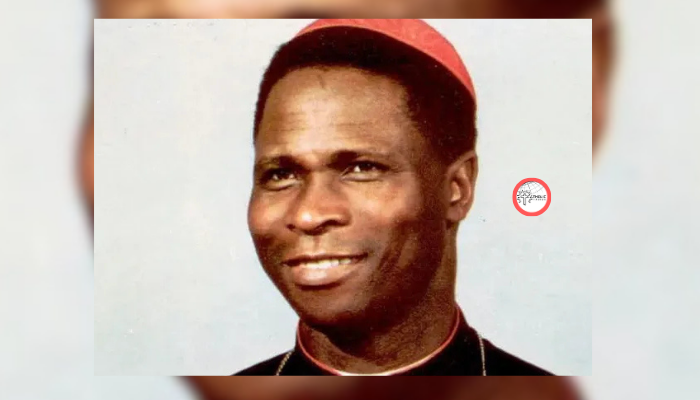
Yes, an African has served as Dean. Cardinal Bernardin Gantin of Benin held the office from 1993 to 2002. Paul VI made him a cardinal in 1977, and he became Cardinal-Bishop of Palestrina in 1986, which made him an elector of the Dean. He was also the first and only African to head the Vatican’s department for bishops, which he led from 1984 to 1998.
Because the office could then be held until death, his resignation was exceptional. He stepped down in 2002, at 80, when he ceased to be a cardinal elector, and returned to Benin. He died in Paris in 2008, and Pope Benedict XVI presided at his funeral Mass in St Peter’s Basilica on 23 May 2008. He is buried in Ouidah, Benin, in the chapel of the Saint Gall Major Seminary, and the Church is now advancing his cause for beatification.
Cardinal Gantin was the first African Dean and, until Cardinal Tagle, the only non-European. Africa has therefore had one Dean in the history of the College, and his example shows that the highest internal office of the College is open to every part of the universal Church.
- Summary
The Dean presides over the College as first among equals and has particular duties at a conclave. He is elected by the cardinal bishops from among their own number, and the Pope’s approval completes the election. Until Paul VI’s reform of 1965 the office passed by automatic seniority; the 1983 Code codified the new arrangement, and the 2019 motu proprio added a five-year term, renewable once, and the title of Dean Emeritus. Africa has been represented once, by Cardinal Bernardin Gantin (1993–2002).
| For further explanations or enquiries, you may contact the author, Most Rev. Joseph Osei-Bonsu, Emeritus Catholic Bishop of Konongo-Mampong, on this number: 0244488904, or on WhatsApp (with the same number). |




Discussion about this post