


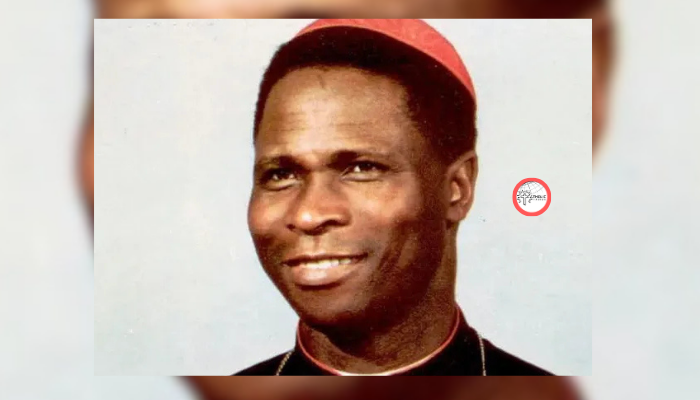
Until Cardinal Tagle, he was the only non-European. Africa has therefore had one Dean in the history of the College. Who is this man etched in the history of the Church?
Born in 1922 in Toffo, Benin, Bernardin Gantin was ordained a priest for the Diocese of Ouidah in 1951. He later studied at the Pontifical Urbaniana University and the Pontifical Lateran University, where he graduated in theology and canon law.
In 1960, he was appointed Archbishop of Cotonou. As president of the Episcopal Conference of Benin, he participated in three sessions of the Second Vatican Council and the first world assembly of the Synod of Bishops in 1967.
His service in the Vatican began in 1971, when he was appointed Adjunct Secretary of the Congregation for the Evangelization of Peoples. In 1976, he became president of the Pontifical Council for Justice and Peace. Pope St Paul VI created him a cardinal in 1977.
In 1984, Pope St John Paul II appointed Cardinal Gantin Prefect of the Congregation for Bishops, now known as the Dicastery for Bishops. He was the first African to hold the position.
In 1988, he was appointed President of the Pontifical Commission for Latin America. That same year, he signed the decree of excommunication against French Archbishop Marcel Lefebvre and four bishops Lefebvre had ordained without the Pope’s authorisation.
Cardinal Gantin reached another historic milestone in 1993 when he was elected Dean of the College of Cardinals, becoming the first African to hold the office.
He resigned as Dean in 2002, aged 80, when he ceased to be a cardinal elector, and returned to Benin. He died in Paris in 2008 and was buried in Ouidah.
On 23 May 2008, Pope Benedict XVI presided over Cardinal Gantin’s funeral Mass at St Peter’s Basilica in the Vatican.
In his homily, Benedict XVI recalled that the late cardinal “was the first African ecclesiastic to hold positions of great responsibility in the Roman Curia, and he always carried them out in his typical humble and simple style.”
The Pope also said Cardinal Gantin “was imbued with love for Christ; a love that made him kind and available to listen and dialogue with everyone; a love that impelled him to always seek, as he used to repeat, the essentials of life.”






Discussion about this post