Advert Advert Advert
ADVERTISEMENT
Wednesday, September 2, 2026
Catholic Trends
  • Home
  • News
    • Ghana
    • Africa
    • International
    • Health & Education
  • Articles
  • Prayers
  • Media
    • CT Radio
    • Video
  • Letters
  • Statements
No Result
View All Result
  • Home
  • News
    • Ghana
    • Africa
    • International
    • Health & Education
  • Articles
  • Prayers
  • Media
    • CT Radio
    • Video
  • Letters
  • Statements
No Result
View All Result
Catholic Trends
No Result
View All Result

Bishop Osei-Bonsu: Why do priests veil their hands when carrying the Blessed Sacrament?

Catholic Trends by Catholic Trends
September 1, 2026
in Article
Reading Time: 4 mins read
A A
0
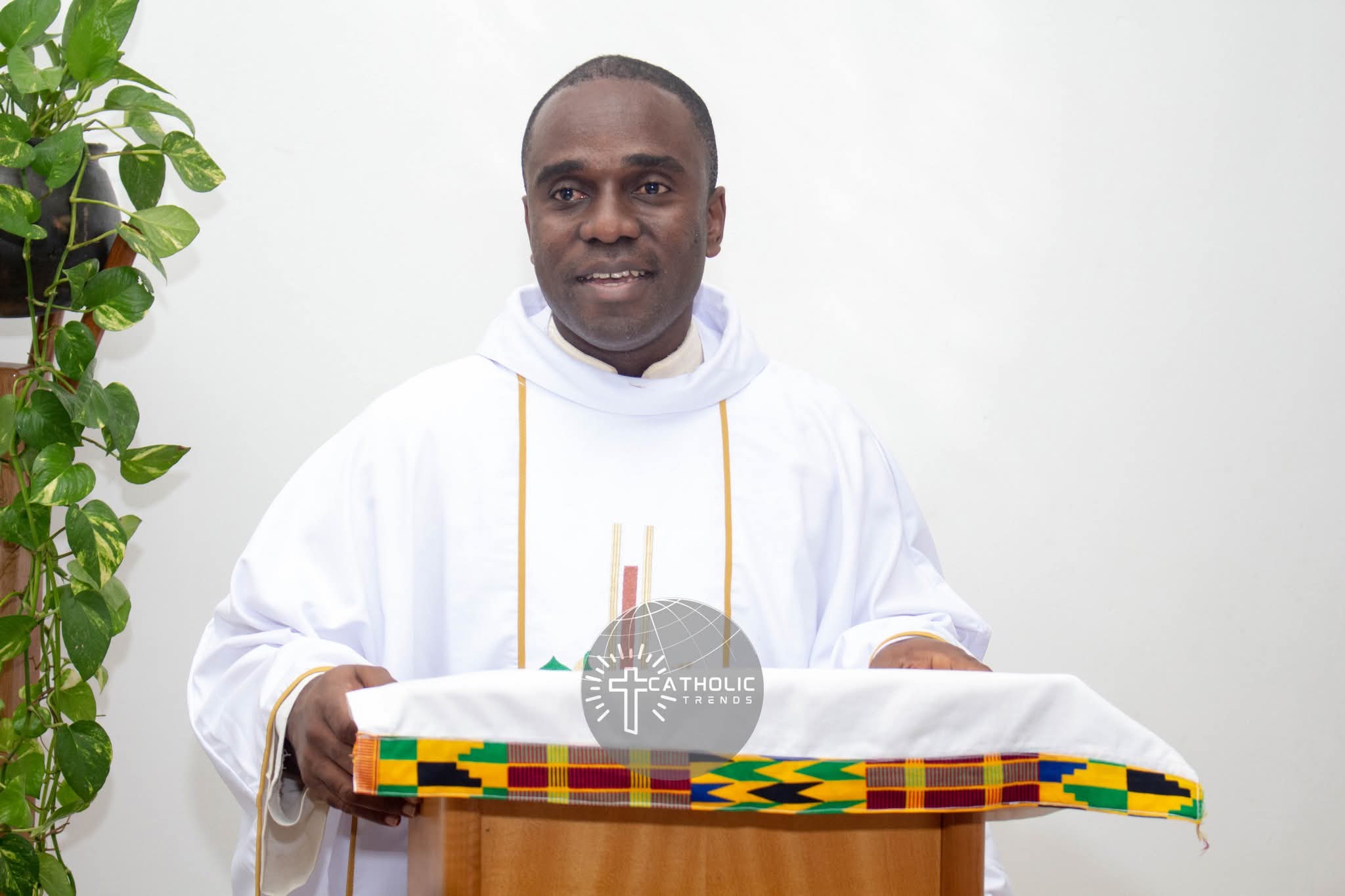
Most. Rev. Joseph Osei-Bonsu - Bishop Emeritus, Konongo-Mampong Diocese, Ghana

Most. Rev. Joseph Osei-Bonsu - Bishop Emeritus, Konongo-Mampong Diocese, Ghana

78
VIEWS
Share on FacebookShare on WhatsApp Share on X Share on Telegram
Catholic Trends WhatsApp Channel Catholic Trends WhatsApp Channel Catholic Trends WhatsApp Channel
ADVERTISEMENT

Question by Wisdom K. Kumah, Sekondi-Takoradi Diocese

My Lord Bishop, I humbly seek your guidance on a liturgical practice I have long pondered. During solemn Benediction, the priest wears the humeral veil, covering his hands as he carries the Blessed Sacrament in the monstrance. Yet, when placing the Sacred Host into the monstrance, he uses his anointed hands directly.

At ordination, a priest’s hands are consecrated as a sign of their dedication to the sacred ministry, especially the reverent handling of the Eucharist. Still, the priest remains a sinner in need of God’s mercy. This leads me to ask: if the priest’s hands may touch the Consecrated Host, who is truly Christ, why must those same hands be veiled when carrying the monstrance that contains him?

In terms of holiness, is there a distinction between the Sacred Host and the vessel that holds him? What, therefore, is the theological and liturgical reasoning behind veiling the hands when carrying the Blessed Sacrament, but not when placing the Host in the monstrance? I would be deeply grateful for Your Lordship’s pastoral and theological enlightenment.

Answer by Most Rev. Joseph Osei-Bonsu:

Dear Wisdom, your question draws attention to an important distinction between the holiness of the Eucharist and the meaning of the liturgical gestures used in its exposition and Benediction. At first sight, it may seem strange that the priest uses his uncovered hands to place the Sacred Host in the monstrance but covers those same hands when carrying it. There is, however, no contradiction. The two gestures have different liturgical meanings.

RelatedPosts

Insight with Bishop Osei-Bonsu : One Mass a day? Why some priests celebrate more

Insight with Bishop Osei-Bonsu : Should a priest take part in financial contributions during offertory collections and harvests?

Insight with Bishop Osei-Bonsu : Why would God let His own creation end in hell?

The Holiness of the Eucharist

The consecrated Host is not merely a sacred object; it is Christ himself, truly, really and substantially present — Body, Blood, Soul and Divinity. The monstrance, by contrast, is a sacred vessel whose dignity comes from the Blessed Sacrament it contains. The humeral veil, a long rectangular cloth worn over the shoulders and arms when carrying or blessing the faithful with the Blessed Sacrament, likewise serves as a liturgical sign of reverence towards Christ present in the Eucharist.

The veil does not indicate that the monstrance or the priestly vestment is holier than the Eucharist. The Sacred Host is incomparably holier than the vessel that contains him or the vestment used in carrying him. Rather, the humeral veil expresses reverence and humility, especially by covering the minister’s hands as he bears the Eucharistic Lord before the faithful.

Why the Hands Are Uncovered When Placing the Host in the Monstrance

When the priest places the Sacred Host into the monstrance, he is handling the Blessed Sacrament directly in the exercise of his sacred ministry. His hands are uncovered because there is no liturgical requirement at that moment to cover them. The action is a deliberate and reverent handling of the Sacred Species in preparation for exposition.

It is important, however, not to understand the anointing of the priest’s hands at ordination as making them intrinsically holier than the hands of other Christians or as the source of his ability to consecrate the Eucharist. In the Latin Church, the essential sacramental sign of priestly ordination is the laying on of hands followed by the consecratory prayer. The anointing of the hands, where it is retained, is a significant traditional symbol of their dedication to priestly service.

Why the Hands Are Covered When Carrying the Blessed Sacrament

When the priest places the humeral veil over his shoulders and uses it to cover his hands while carrying the monstrance, the liturgical action has changed. He is no longer simply placing or handling the Host; he is bearing the Eucharistic Lord before the people and, in Benediction, presenting Christ to them as the one who blesses them.

The covering of the hands therefore expresses reverence and humility. It makes visible the fact that the priest is not presenting himself as the source of the blessing. Rather, he is the minister through whom the Church presents Christ, truly present in the Blessed Sacrament, to the faithful.

In this sense, the veil helps to direct attention away from the minister and towards Christ. The priest’s hands are covered not because they have suddenly become unworthy to touch the Eucharist, but because the liturgical gesture is emphasising the sacredness of the act of carrying and blessing with the Blessed Sacrament.

The Monstrance Is Not Holier Than the Eucharist

The distinction between the Eucharist and the monstrance is therefore important. The monstrance is a sacred object, but it is not the object of Eucharistic worship in itself. Its purpose is to hold and display the Blessed Sacrament for the adoration of the faithful.

One might compare it, in a limited sense, to a throne used to honour a king. The dignity of the throne does not come from the throne itself but from the person who occupies it. Likewise, the dignity and beauty of the monstrance serve to honour Christ, who is present in the Eucharist.  The humeral veil reinforces this same principle. By covering his hands, the priest visibly presents himself not as the possessor of Christ but as his humble servant and minister.

The Deeper Meaning of the Two Gestures

The two actions therefore teach complementary lessons. The uncovered hands emphasise the priest’s reverent and legitimate handling of the Blessed Sacrament in preparation for exposition. The veiled hands emphasise his humility as he bears Christ before the faithful and gives Benediction.

There is consequently no suggestion that the priest’s hands are clean enough to touch the Eucharist at one moment but become unclean when carrying the monstrance. Nor does the veil imply that the monstrance is more sacred than the Host.

Rather, the Church uses different gestures to communicate different aspects of Eucharistic reverence. The priest’s hands are instruments of his sacred ministry; the monstrance is an instrument for displaying the Eucharistic Lord; and the humeral veil is a liturgical sign of reverence and humility. The Eucharist alone is Christ himself. 

Pastoral Conclusion

Dear Wisdom, your question is a valuable one because it helps us to distinguish between the intrinsic holiness of the Eucharist and the symbolic meaning of liturgical objects and gestures. The humeral veil does not diminish the dignity of the priest’s hands, nor does it elevate the monstrance above the Blessed Sacrament. Rather, it expresses the humility of the minister and directs the attention of the faithful to the one who is truly present and who alone is the source of the blessing: Jesus Christ, our Eucharistic Lord.

For further explanations or enquiries, you may contact the author, Most Rev. Joseph Osei-Bonsu, Emeritus Catholic Bishop of Konongo-Mampong, on this number: 0244488904, or on WhatsApp (with the same number). 


Tags: Blessed SacramentMost Rev. Joseph Osei-Bonsu
ShareSendTweetShare
ADVERTISEMENT
Previous Post

Catholic Bishops, Chief Imam push for tougher action, stronger parenting to curb indiscipline in schools

Related Posts

Insight with Bishop Osei-Bonsu : One Mass a day? Why some priests celebrate more

Insight with Bishop Osei-Bonsu : One Mass a day? Why some priests celebrate more

August 5, 2026
Most. Rev. Joseph Osei-Bonsu - Bishop Emeritus, Konongo-Mampong Diocese, Ghana

Insight with Bishop Osei-Bonsu : Should a priest take part in financial contributions during offertory collections and harvests?

June 19, 2026
Most. Rev. Joseph Osei-Bonsu - Bishop Emeritus, Konongo-Mampong Diocese, Ghana

Insight with Bishop Osei-Bonsu : Why would God let His own creation end in hell?

June 8, 2026

Discussion about this post

Daily Reading

Wednesday of the Twenty-second week in Ordinary Time

First Letter to the Corinthians 3,1-9.

Brothers and sisters, I could not talk to... you as spiritual people, but as fleshly people, as infants in Christ.
I fed you milk, not solid food, because you were unable to take it. Indeed, you are still not able, even now,
for you are still of the flesh. While there is jealousy and rivalry among you, are you not of the flesh, and behaving in an ordinary human way?
Whenever someone says, "I belong to Paul," and another, "I belong to Apollos," are you not merely human?
What is Apollos, after all, and what is Paul? Ministers through whom you became believers, just as the Lord assigned each one.
I planted, Apollos watered, but God caused the growth.
Therefore, neither the one who plants nor the one who waters is anything, but only God, who causes the growth.
The one who plants and the one who waters are equal, and each will receive wages in proportion to his labor.
For we are God's co-workers; you are God's field, God's building.

Psalms 33(32),12-13.14-15.20-21.

Blessed the nation whose God is the LORD,
the... people he has chosen for his own inheritance.
From heaven the LORD looks down;
He sees all mankind.

From his fixed throne he beholds
All who dwell on the earth,
He who fashioned the heart of each,
He who knows all their works.

Our soul waits for the LORD,
who is our help and our shield,
For in him our hearts rejoice;
In his holy name we trust.

Holy Gospel of Jesus Christ according to Saint Luke 4,38-44.

After Jesus left the synagogue, he entered... the house of Simon. Simon's mother-in-law was afflicted with a severe fever, and they interceded with him about her.
He stood over her, rebuked the fever, and it left her. She got up immediately and waited on them.
At sunset, all who had people sick with various diseases brought them to him. He laid his hands on each of them and cured them.
And demons also came out from many, shouting, "You are the Son of God." But he rebuked them and did not allow them to speak because they knew that he was the Messiah.
At daybreak, Jesus left and went to a deserted place. The crowds went looking for him, and when they came to him, they tried to prevent him from leaving them.
But he said to them, "To the other towns also I must proclaim the good news of the kingdom of God, because for this purpose I have been sent."
And he was preaching in the synagogues of Judea.


Copyright © Confraternity of Christian Doctrine, USCCB
To receive the Gospel every morning in your mailbox, subscribe here: dailygospel.org

Go to Daily Readings

Vatican News

  • Trending
  • Comments
  • Latest
Most. Rev. Joseph Osei-Bonsu - Bishop Emeritus, Konongo-Mampong Diocese, Ghana

Can Catholic Priests own property? Bishop Osei-Bonsu explains

April 21, 2026
Most Rev. John Bonaventure Kwofie, C.S.Sp. - Archbishop of Accra, Ghana

Accra Archdiocese revises stole fees, church dues from January 2026

January 6, 2026
Massive Clergy shake-up expected in Accra Archdiocese following priestly ordinations

Over 40 Priests reassigned as Accra Archdiocese announces 2025 pastoral appointments

August 1, 2025
Ghana Catholic Bishops file affidavit in Supreme Court over Wesley Girls’ religious rights dispute

Ghana Catholic Bishops file affidavit in Supreme Court over Wesley Girls’ religious rights dispute

March 21, 2026
Rev. Fr. Andrews Obeng, SVD named Provincial Superior of SVD Ghana–Liberia Province

Rev. Fr. Andrews Obeng, SVD named Provincial Superior of SVD Ghana–Liberia Province

Apostolic Nuncio begins five-day pastoral visit to Yendi Diocese

Apostolic Nuncio begins five-day pastoral visit to Yendi Diocese

Resolutions and recommendations of RECOWA 5th Plenary Assembly

2024 Advent Pastoral letter

Resolutions and recommendations of RECOWA 5th Plenary Assembly

Catholics known to be Freemasons to be denied Holy Communion – Archbishop of Accra directs

Most. Rev. Joseph Osei-Bonsu - Bishop Emeritus, Konongo-Mampong Diocese, Ghana

Bishop Osei-Bonsu: Why do priests veil their hands when carrying the Blessed Sacrament?

September 1, 2026
Catholic Bishops, Chief Imam push for tougher action, stronger parenting to curb indiscipline in schools

Catholic Bishops, Chief Imam push for tougher action, stronger parenting to curb indiscipline in schools

September 1, 2026
The Living Word: Why every creature echoes the voice of God

The Living Word: Why every creature echoes the voice of God

August 31, 2026
Msgr. Edmond Yawo Amekuse - Bishop Elect, Kpalime, Togo

“God trusts us despite our limits”: Togolese Catholic Bishop-elect says ahead of Episcopal Ordination

August 28, 2026

Reach Us

ADVERTISEMENT
  • Home
  • CT Radio
  • TV
  • Contact
  • About Us
  • Careers
  • Privacy Policy

© 2025 Trends Media Foundation LBG

No Result
View All Result
  • News
    • Ghana
    • Africa
    • International
    • Health & Education
  • Articles
    • Statements
    • Letters
  • Media
    • CT Radio
    • Video
  • Prayers
  • About Us
    • Contact

© 2025 Trends Media Foundation LBG