


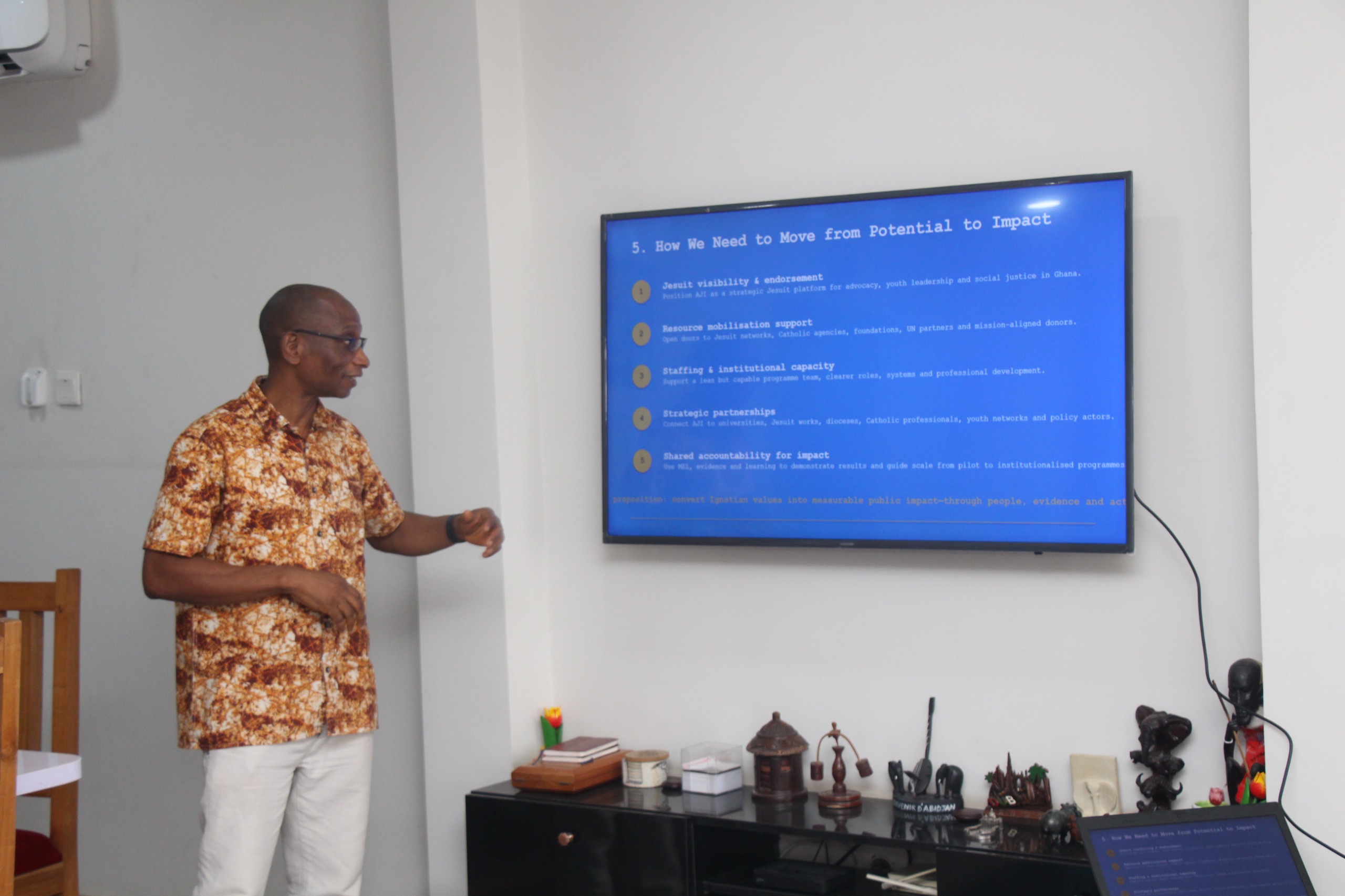
The Arrupe Jesuit Institute (AJI) in Accra-Ghana has outlined plans to strengthen its advocacy work and youth empowerment programmes as part of a renewed strategic direction aimed at increasing its impact on Ghanaian society.
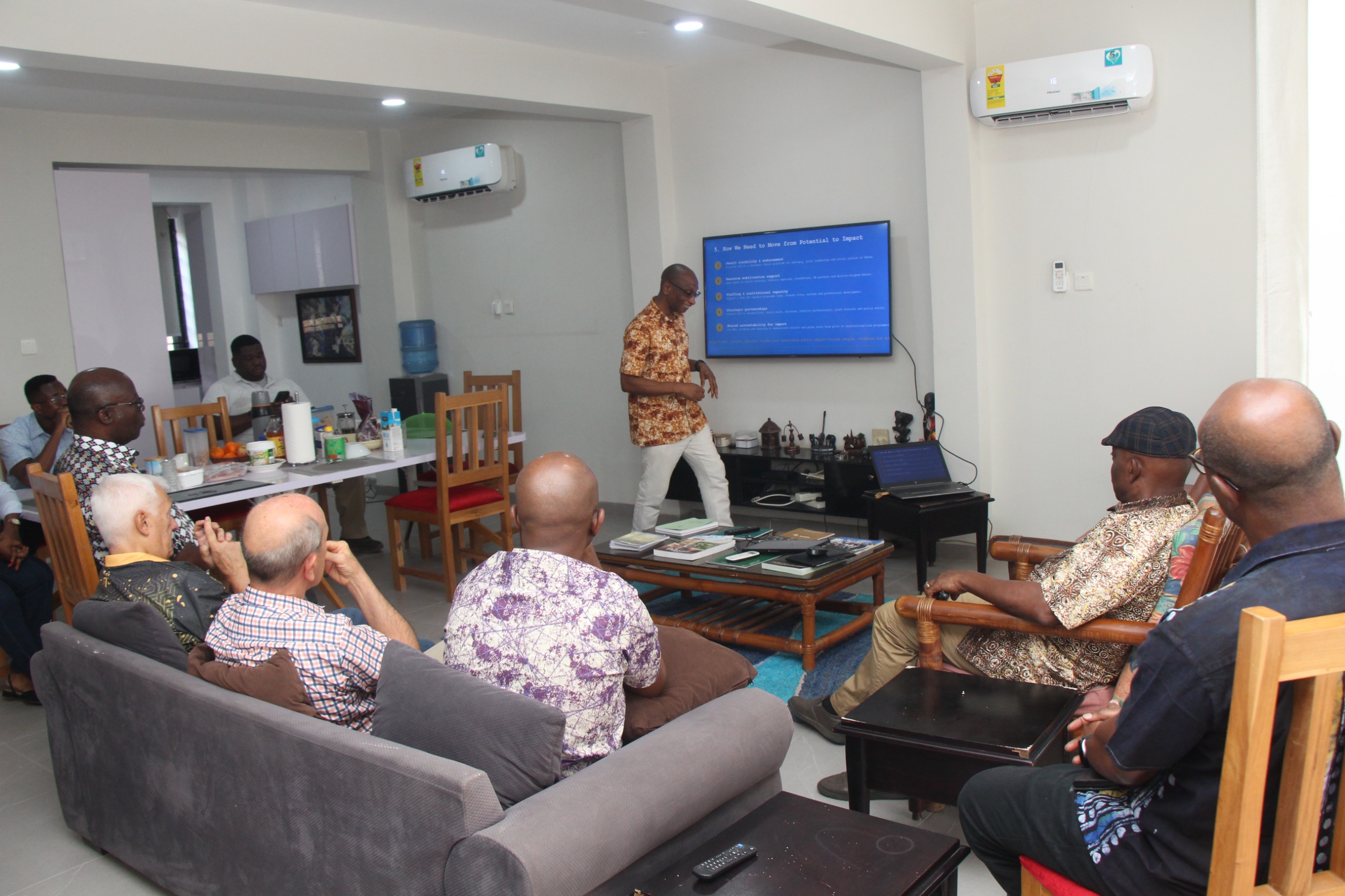
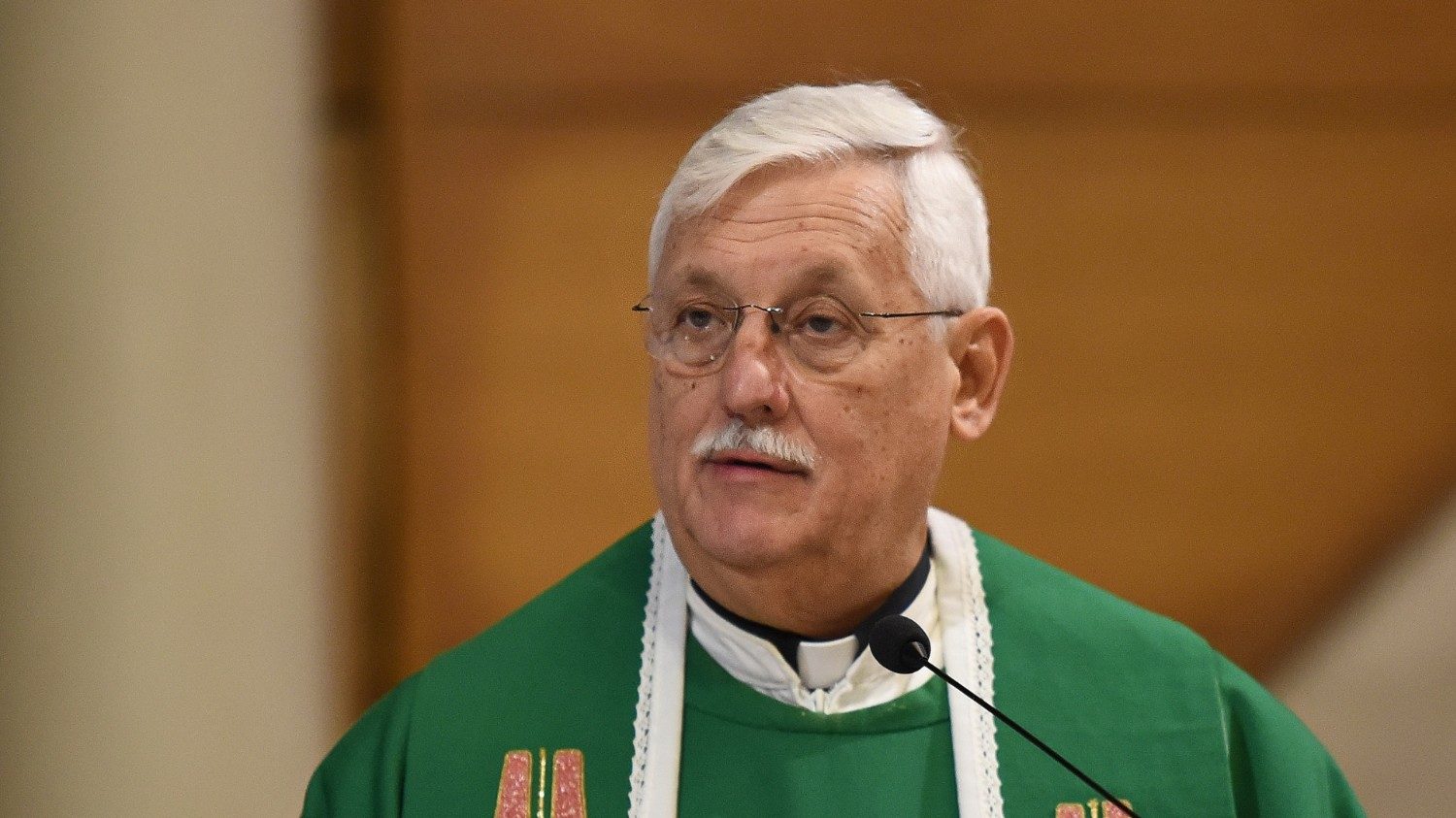
AJI Director Fr Bernard Jado, SJ, and Head of Programmes Miss Gifty Appea presented the plans to the Superior General of the Society of Jesus, Fr Arturo Sosa, SJ, during his visit to the Institute in Accra on October 13, 2026.
The briefing traced the Institute’s origins, reviewed its work and identified the priorities it intends to pursue under its 2026–2029 Strategic Plan.

Conceived as an initiative of the Society of Jesus’ North-West Africa Province in November 2018, AJI was established as a platform for research, formation and social action. Named after Jesuit priest Pedro Arrupe, the Institute seeks to identify and analyse challenges facing Ghanaian and African societies and propose solutions informed by Catholic Social Teaching.
Under its 2026–2029 strategic direction, AJI intends to focus its institutional efforts on two main areas: advocacy and youth empowerment. Its advocacy work will cover human rights, gender-based violence, child protection, safeguarding, the rights of refugees and migrants, education and environmental protection.
The Institute plans to pursue these priorities through policy dialogues, public advocacy campaigns, institutional training and thought leadership. It also aims to strengthen the link between research and public policy by translating evidence into policy briefs and creating opportunities for dialogue and influence.
Environmental advocacy is among the areas in which AJI has already established a presence. Through its Environmental Policy Dialogues with the Catholic Youth Network for Environmental Sustainability in Africa (CYNESA-Ghana), the Institute has engaged with issues including illegal small-scale mining, ecological responsibility and the vision of Pope Francis’ encyclical Laudato Si’.
Youth empowerment will be the second major focus. Planned activities include youth leadership development, ethical and civic formation, financial empowerment, livelihoods initiatives and youth-led community projects.
The Institute also intends to strengthen its alumni network and sustain engagement with young people beyond individual programmes. The presentation highlighted AJI’s existing work in research, formation and public engagement.
Its research has explored subjects including migration, integral ecology and Christianity in Africa, with the aim of examining structural injustices and informing possible alternatives.
Through its formation programmes, the Institute engages Catholic lay professionals and young people on Catholic Social Teaching, ethics and leadership. Its IYNIGO initiative provides a platform for youth empowerment, while its Faith in the Public Sphere programme creates space for dialogue on Christian witness, professional engagement and the common good.

These activities reflect the Institute’s broader mission of bringing faith, intellectual engagement and social action into conversation with the challenges facing contemporary society.
Fr. Jado also acknowledged the practical challenges that could affect the Institute’s ability to expand its work. He noted that limited and unpredictable programme funding, lean staffing and gaps in organisational systems constrain the continuity and scale of its activities.
He however noted that AJI is seeking to diversify its funding sources beyond individual projects while strengthening its staffing, governance, monitoring and evaluation, knowledge management and digital presence.
He also identified strategic partnerships as important to its next phase of development. Potential areas for collaboration include universities, other Jesuit institutions, dioceses, Catholic professionals, youth networks and policy actors.











Discussion about this post