


![[Article] The place of “secret societies” in the Catholic Church in Ghana and worldwide](https://catholic-trends.com/wp-content/uploads/2026/02/WhatsApp-Image-2024-09-20-at-07.08.39-700x375-1.jpeg)
In the formative years of many Ghanaian children, we were often taught certain cultural norms and practices by our mothers. One such saying is: “Aduane a, ammene w) wo Maame bukyia so) no, y3kyini!”—translated literally as, “Any food that wasn’t prepared or boiled from your mother’s kitchen was an abomination to eat!” Even if the food was delicious, this rule was steadfast.
The question arises: were our mothers simply trying to protect the family from unhealthy outside influences or were they trying to assert control over what the child could access? The answer, I believe, is simpler: it was a cultural safeguard against external, potentially harmful, influences.
This is the same way the Catholic Church’s stance on Freemasonry should be understood. Just as our mothers sought to protect us from potentially harmful external food, the Church seeks to protect its faithful from ideologies and practices incompatible with Catholic teachings.
As Catholics in full communion with the Church, we must adhere to the leadership of the Church, uphold the faith, and participate in its sacraments.
Freemasonry in the Catholic Church
The Church’s Position
The topic of Freemasonry has been an ongoing discussion within the Church. Under the leadership of Cardinal Ratzinger (later Pope Benedict XVI), the Congregation for the Doctrine of the Faith undertook an in-depth study of Freemasonry, examining its beliefs, practices, and history. The Church’s investigation was thorough and considered all theological perspectives to understand Freemasonry fully. Key questions that were explored include:
- What is Freemasonry?
- What are its core beliefs, principles, and practices?
- How did Freemasonry develop throughout Church history?
- How do its beliefs and practices align with or conflict with Catholic doctrine?
- Who is the founder of Freemasonry, and what are its philosophical foundations?
This rigorous examination culminated in the Church’s declaration on November 26, 1983, under Pope John Paul II. The declaration made clear that “Masonic principles are irreconcilable with the doctrines of the Church,” and membership in Freemasonry is prohibited for Catholics (Congregation for the Doctrine of the Faith, 1983). As the Church emphasized, Freemasonry is essentially a separate religion, with beliefs and practices that conflict with Catholicism.
This makes it impossible for a Catholic to participate in both Freemasonry and the Church without facing serious canonical consequences. Those who choose Freemasonry exclude themselves from the Church and, in some cases, may be barred from receiving the Eucharist. As Jesus said, “No one can serve two masters” (Matthew 6:24).
Catholic Secret Societies
Knights and Ladies of Marshall vs. Freemasonry
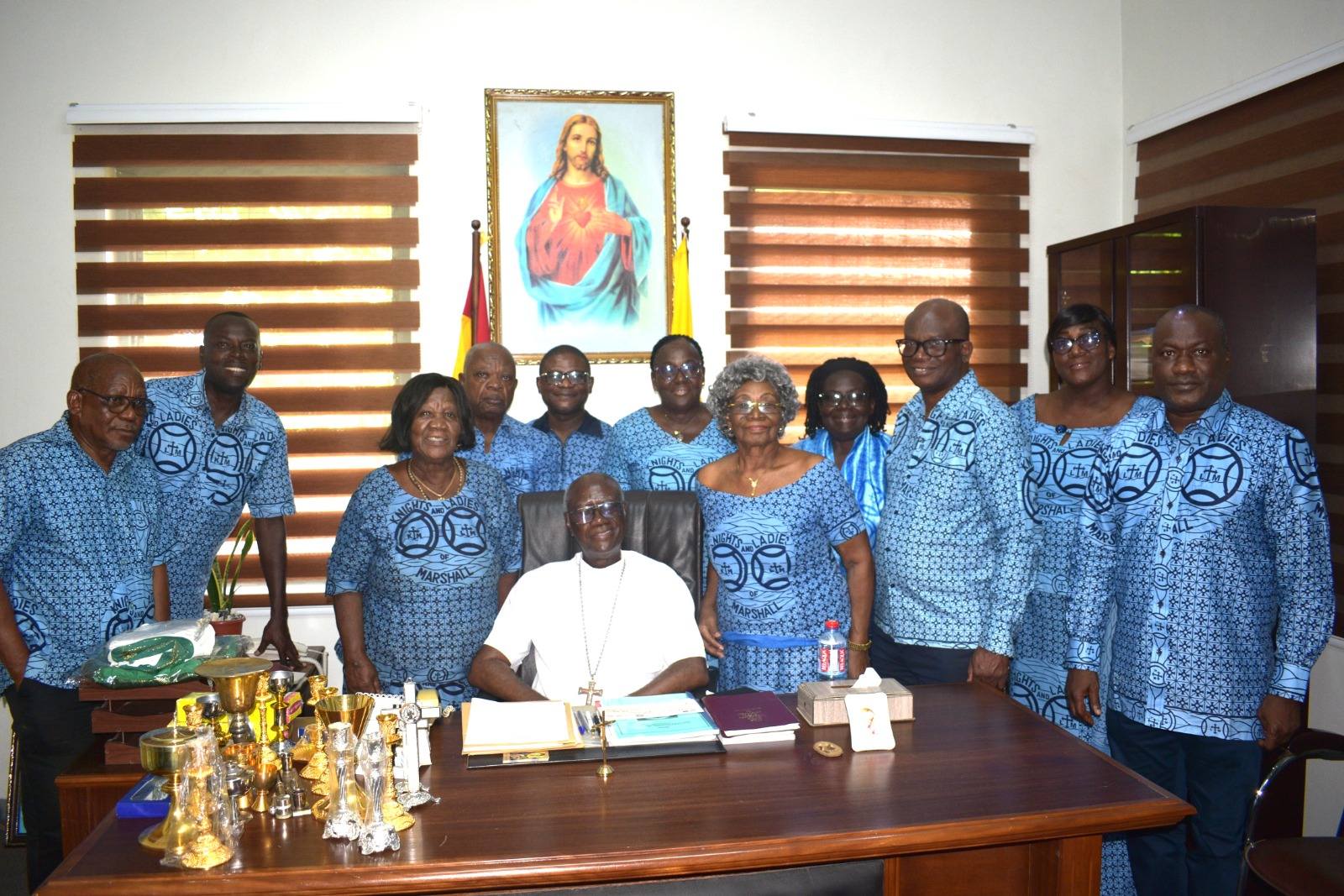
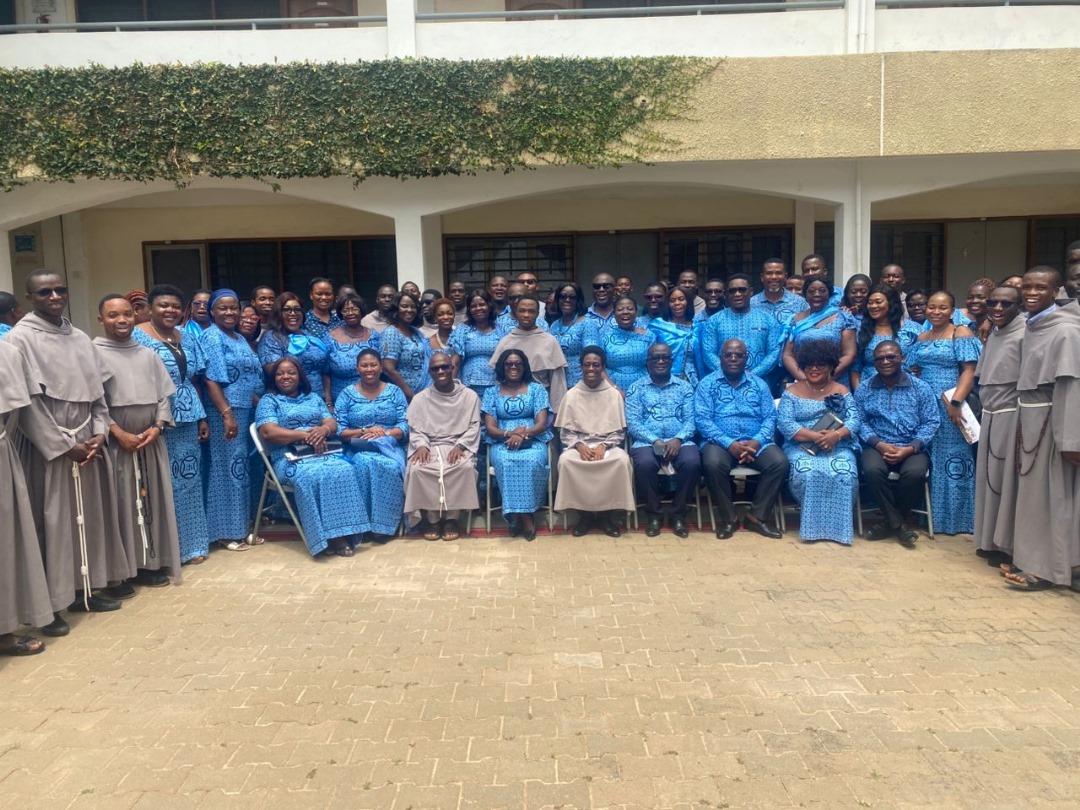
Many ask if Catholic societies such as the Knights and Ladies of Marshall or the Knights and Ladies of St. John International are analogous to Freemasonry. On the surface, these groups might appear similar due to their ceremonial regalia, secretive rituals, and hierarchical structure.
However, the differences are stark, rooted in the fundamental purposes and spiritual aims of these organizations.
The Knights and Ladies of Marshall trace their origins to Sir James Marshall, a chaplain who accompanied early missionaries to the Gold Coast (now Ghana).
He established a society to promote true Christian fraternity, support the Church, and assist in charitable works. Marshallans and St. John’s societies, although organized with some semblance of ritual, focus on Christian service, charity, and upholding the teachings of the Church. Their meetings often begin with the Rosary and include doctrinal study, ensuring that members deepen their Catholic faith.
In contrast, Freemasonry, founded in 1717 during the Enlightenment period, is a society built on its own religious and philosophical principles, such as integrity, friendship, respect, and service—values that, while positive, diverge from the Catholic understanding of fraternity.
Freemasonry’s ultimate goal is spiritual enlightenment through geometric principles and philosophical rituals, which are inherently incompatible with Catholic beliefs, especially with regard to salvation and the nature of God (Benedict XVI, 2005).
Key Differences Between Catholic Secret Societies and Freemasonry
Beliefs and Practices
Freemasonry operates as a religion with its own creeds, rituals, and beliefs, particularly focused on the advancement of individuals through their own spiritual journeys, which is incompatible with Catholic doctrine.
In contrast, Catholic societies like the Knights of Marshall and St. John International are explicitly Christian, grounded in the teachings of the Church, and have no independent religious creed.
Their mottos—such as “Unity,” “Charity,” and “Service”—emphasize Catholic virtues and social action in alignment with the teachings of Christ (Congregation for the Doctrine of the Faith, 1983).
Purpose and Mission
The Knights and Ladies of Marshall and the Knights and Ladies of St. John are both Catholic organizations that exist to promote Christian values, support the mission of the Church, and care for the poor and sick. Freemasonry, however, is primarily focused on elevating its members through personal spiritual development and building social connections, often through rituals that draw from non-Christian traditions (Benedict XVI, 2005).
Canonical Standing
While Freemasonry is officially banned for Catholics under the penalty of excommunication, the Church approves Catholic confraternities only after careful evaluation of their doctrines and practices. This distinction is crucial, as Catholics are invited to join these societies for spiritual growth and service to the Church, whereas Freemasonry’s independent religious and philosophical teachings create a theological conflict (Congregation for the Doctrine of the Faith, 1983).
Historical Roots and Development
The Knights of St. John, founded in the medieval period, began as a charitable organization in the Holy Land, caring for pilgrims and the sick. Over time, the order was reformed and spread globally, maintaining a strong Catholic identity.
The Knights and Ladies of Marshall similarly have a history rooted in Catholic evangelization in Africa, establishing charitable and fraternal practices. Freemasonry, by contrast, emerged in a different historical context, rooted in the Enlightenment’s quest for humanistic values and individual self-determination, rather than ecclesiastical service (Benedict XVI, 2005).
Conclusion
Protecting the Catholic Identity
The Catholic Church is clear in its teaching: membership in Freemasonry is incompatible with Catholicism. Catholics who engage in Freemasonry risk separating themselves from the Church. As Pope Francis aptly stated, “We are brothers” (Fratelli Tutti), emphasizing the importance of Christian fraternity.
The Catholic societies of the Knights and Ladies of Marshall and St. John International offer a true path of fraternal unity, guided by Catholic values and in service to the Church and its mission. As such, these societies are not only permissible but are also a vital expression of Catholic identity.
Catholics should be cautious of any attempt to merge or confuse these distinct organizations, as doing so could lead to theological confusion and harm the soul.
The Church, as a mother, always seeks what is best for her children and guides them away from harmful influences. Therefore, Catholics are advised to remain faithful to the authentic teachings of the Church, joining only those societies that support and promote Catholic doctrine, such as the Knights and Ladies of Marshall and St. John, and to avoid involvement with Freemasonry or any other organization that contradicts the faith.







Discussion about this post