


![[Reflection] Jubilee Year : Awaken and allow hope to flourish](https://catholic-trends.com/wp-content/uploads/2025/08/Screenshot-2025-08-12-192412.png)
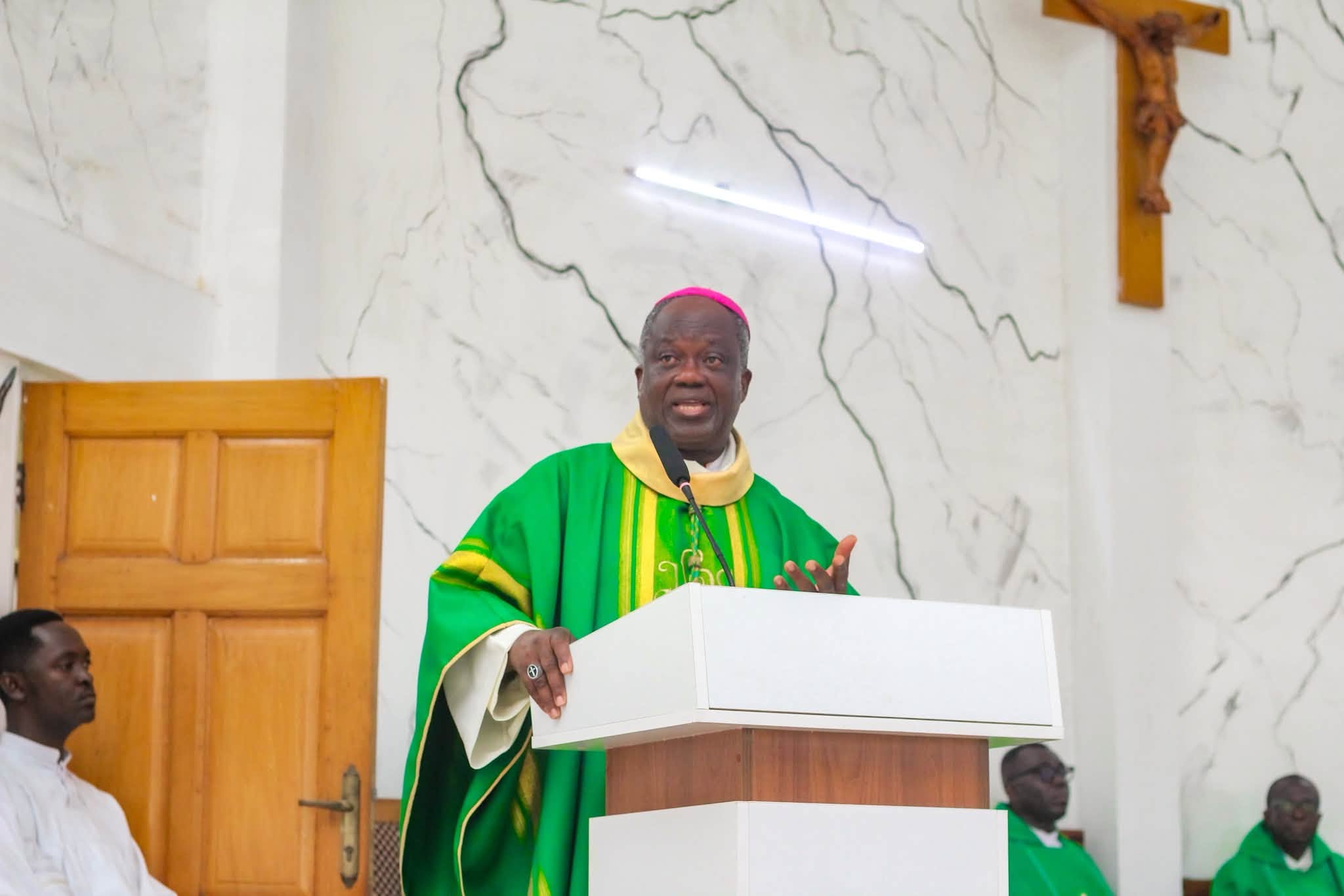
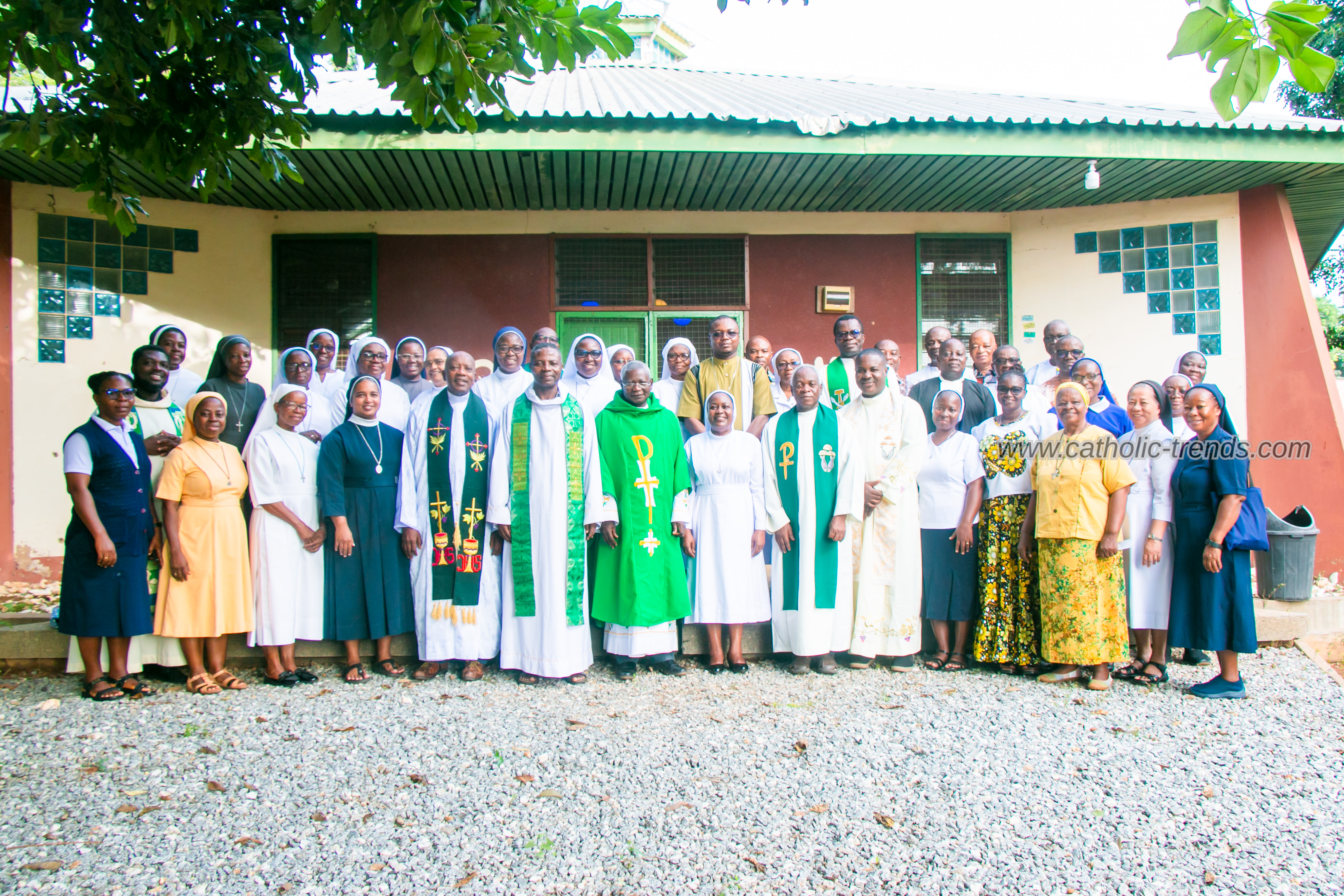
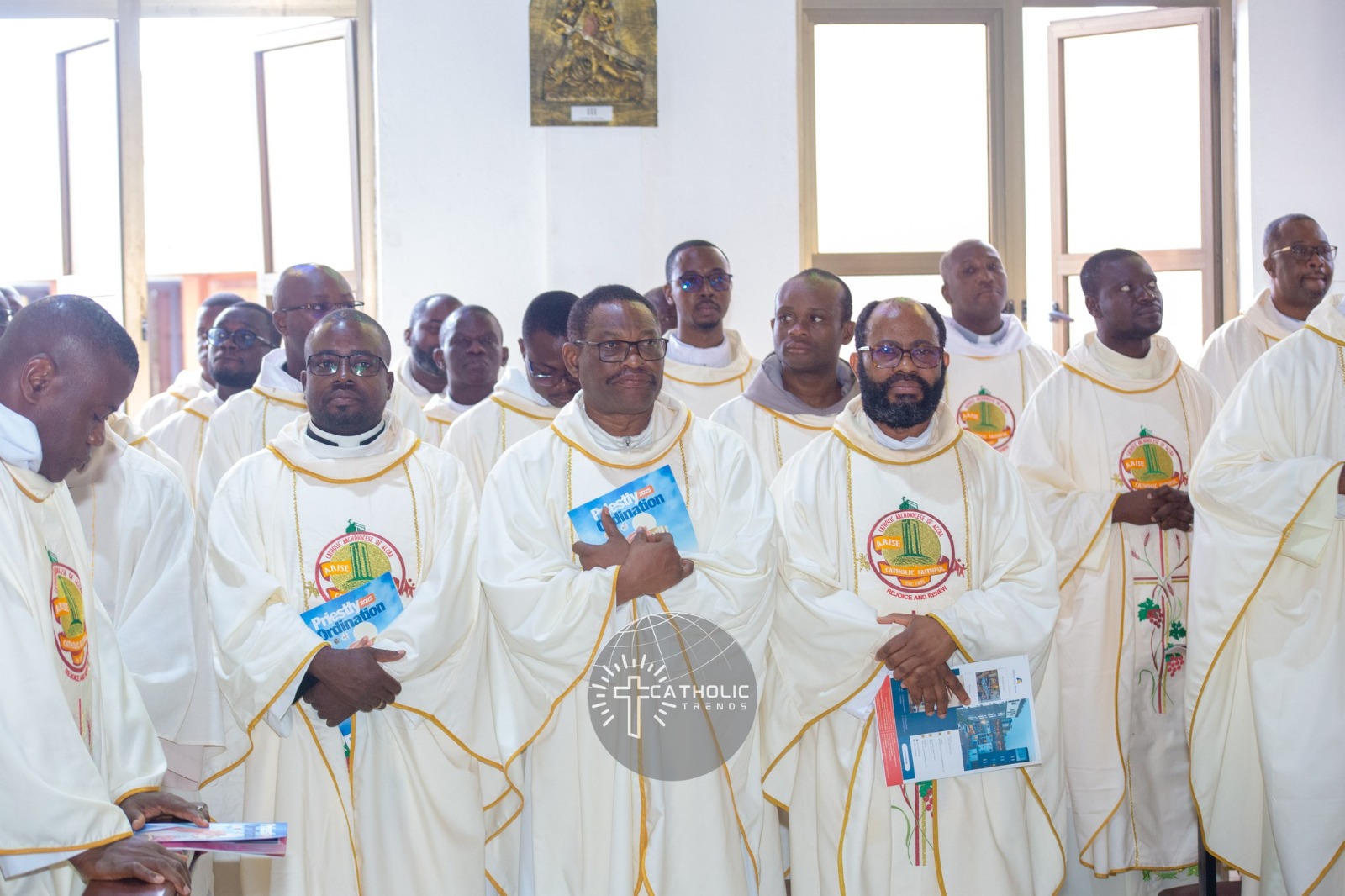
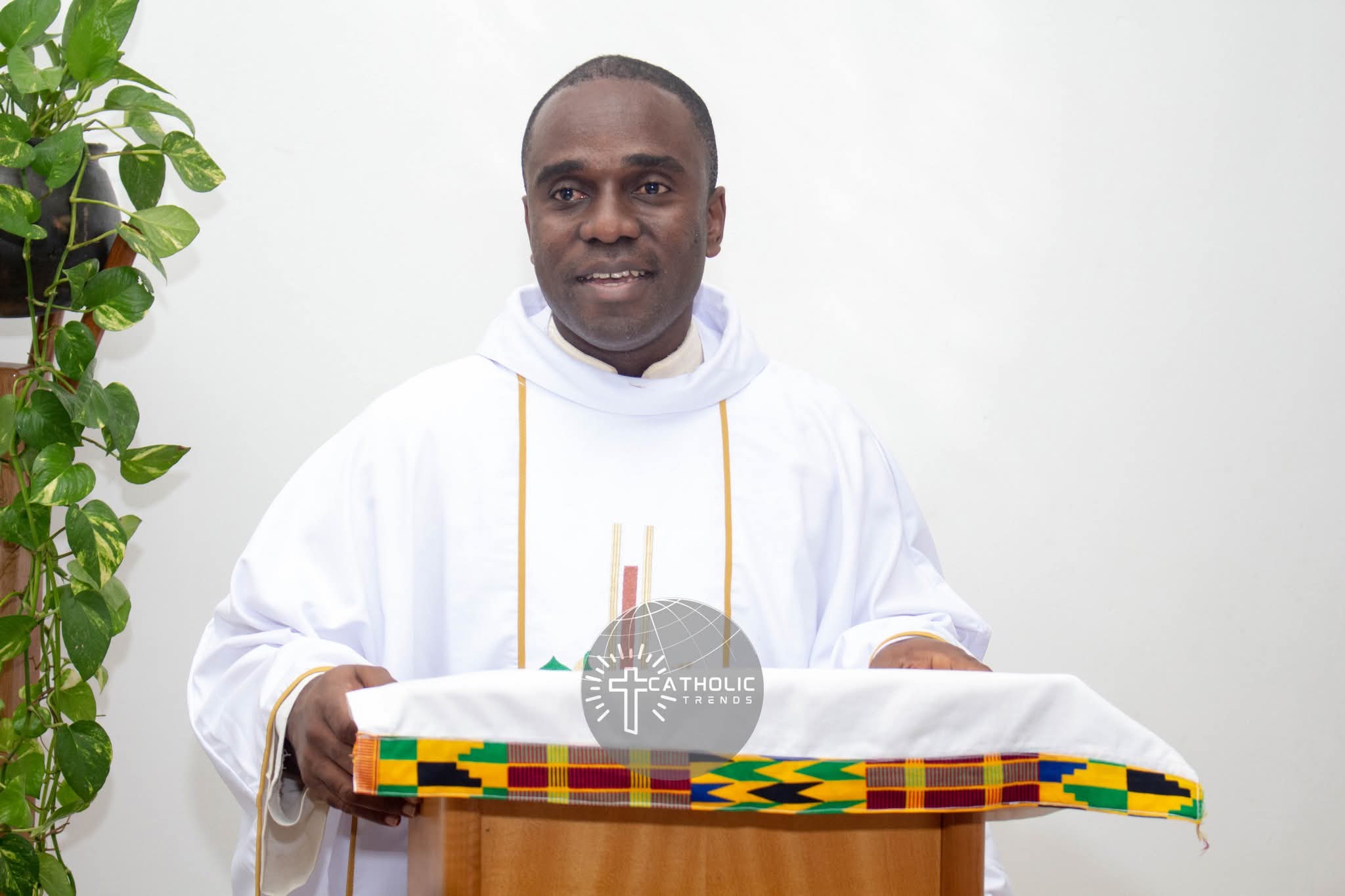
On Wednesday, 6th August 2025, Rev. Fr. Isaac Kyei shared a reflection with his brother priests
in the Catholic Diocese of Obuasi as they gathered for their monthly recollection at the Pope St. John Paul II Formation Center in Ofoase Kokoben, a reflection worth considering for our spiritual growth, especially in this Jubilee Year. Below is the full text of his reflection.
Luke 5: 4-7 reads, “When he [Jesus] had finished speaking, he said to Simon, “Put out into the
deep water and let down your nets for a catch.” Simon answered, “Master, we have worked all night long but have caught nothing. Yet if you say so, I will let down the nets.” When they had done this, they caught so many fish that their nets were beginning to break.”
If you discuss the topic of Christian hope in the presence of people who aren’t deeply rooted in
ecclesiastical language and thought, you’ll soon sense the alienating nature of such a topic. Talk about hope in God amidst despair, and you might be taken for a clown.
The Danish philosopher, theologian, and writer Søren Kierkegaard wrote a famous story of the
clown and the burning village, an allegory taken up again by Joseph Cardinal Ratzinger (Pope Benedict XVI) in his book Introduction to Christianity.
According to this story, a travelling circus in Denmark caught fire. The manager thereupon sent the clown, who was already dressed and made up for a performance, into the neighbouring village to fetch help, especially as there was a danger that the fire would spread across the fields of dry stubble and engulf the village itself.
The clown hurried into the village and requested the inhabitants to come as quickly as possible
to the blazing circus and help to put the fire out. But the villagers took the clown’s shouts simply for an excellent piece of advertising, meant to attract as many people as possible to the performance; they applauded the clown and laughed till they cried.
The clown felt more like weeping than laughing; he tried in vain to get people to be serious, to
make it clear to them that this was no joke, that he was not pretending, but he was in bitter earnest, that there was a fire. His supplications only increased the laughter; people thought he was playing his part splendidly – until finally the fire engulfed the village; it was too late for help, and both the circus and the village were burned to the ground.
This is an analogy of the pilgrim priest sent to herald hope on a journey plagued by difficulties,
evil, fear, and despair. It is demanded, therefore, that the priest sent to awaken and nurture hope must rise above these problems of evil, fear, and despair to be taken seriously by the other pilgrims on the same journey. Here, I refer to our parishioners, family members, and fellow priests. We will be judged and categorized, so to speak, by our roles and conduct.
Our roles must be clear: to preach hope, we must be self-critical enough to overcome the weight of unbelief amidst our own desire to believe, and weakness amidst our own will to be virtuous. Jesus could have been dismissed as a jester, but the seriousness of His message motivated Peter to try again. The spirit of unbelief could not resist the voice of the Lord. As priests, our voice is the voice of Christ; it must be eloquently powerful, resisting the world’s influence to bring about the obedience of faith among all people for the sake of Christ (cf. Rom 1:5-6).
There is the spirit which will attempt what seems hopeless. The night was past, and that was the
time for fishing. All the circumstances were unfavourable, but Peter said, “Let circumstances be what they may, if you say so, we will try again.” Too often, we wait because the time is not opportune. The assistant priest waits to be a parish priest before he can do his best. The parish priest wishes to be the bishop before he can do his best. The bishop wishes to be the cardinal and subsequently the Pope before he can do his best. If we wait for perfect circumstances, we’ll never begin. The words of hope are not merely informative but performative.
St. Thomas Aquinas defined Hope as the firm expectation of a good that is “possible and arduous
to attain.” Hope is a confident expectation that sustains us while we wait patiently for future fulfilment. The Hebrew words are often translated as “wait” in modern versions.”
In the Old Testament, a specific object of hope is sometimes identified, such as the return of exiles to the Promised Land (Jer 31:16-17). Hope also expresses reliance on the Lord. The Psalmist says, “And now, O Lord, what do I wait for? My hope is in you” (Ps 39:7). The pre-exilic prophets gave Israel corporate and nationalistic hope centered on the worldly restoration of the kingdom (Amos 9:11-14, Mic 4:1-3, 5:8). The exile deprived Judah of the monarchy,
Temple, and land that were visible connections to God. This catastrophe is presented in the Old Testament as one of the most theologically jarring crises. Yet, instead of despair, the theological response took the form of literature of hope. Ezekiel answers the doubt of his people and gives them hope with the famous metaphor of the valley of dry bones (Ezek 37:1-14).
This metaphor emphasizes the hope of return and new life for Israel, but only through God’s intervention.” In the New Testament (NT), our faith and hope are steadfast in God. It is evident from the Gospels and Acts that the presence, words, and deeds of Jesus the Messiah have fulfilled the eschatological kingdom promised in prophetic writings. The resurrection of Christ offers the greatest hope because it signifies Jesus’s glorification and the vindication of his ministry and preaching (Acts 2:32-36).
Through his resurrection, we are assured that the righteous and the socially oppressed will be rewarded both here and in heaven, while the unrighteous shall be condemned (Matt. 5:3-12; 8:11; 25:31-46; Lk. 6:35; 16:19-31; 23:43; Jn. 14:2-3). Those who aim for heaven never give up, no matter the hardships they face. Heaven must be our focus, sustaining us as we wait for the Lord. If heaven is not our goal as pilgrim priests, we will not find fulfillment and joy in our work. As priests leading the pilgrimage to the City of God, hope is essential for
our daily living.
We must hold onto Christian hope, for it is indispensable to our lives. Hope gives our lives purpose and adds meaning to our earthly existence. It’s often said that without hope, we begin to die. This is reflected in the tragic reality of suicide, which has various causes, but a lack of hope in God, “the unmoved mover,” is a significant underlying factor. To stop believing in God is to embark on a path that leads to emptiness and despair. In suffering, we must maintain a joyful hope. Sometimes, our hope must bear a heavy burden of misunderstanding,
contradiction, insult, and even persecution. Hold fast to the big hope which overcomes evil and reaches goodness.
Pope John Paul II maintained, “There exist in the human person sufficient qualities and energies, a fundamental ‘goodness’ (cf. Gen. 1:31), because he is the image of the creator, placed under the redemptive influence of Christ, who ‘united himself in some fashion with every man, “and because the efficacious action of the Holy Spirit ‘fills the earth’” (Wis. 1:7).
We are ontologically good because we were created in the image and likeness of God and
consecrated for the celebration of divine mysteries. We constantly supply arsenals for the evil one to attack us whenever we become hopeless in our attempt to overcome sin. The grace of God will help us to fight the battle against sin. A dint of hard work comes with hope. Simply put, priests of hope work hard to improve their personal and pastoral lives, even if we can’t be perfect. There’s a spirit that drives us to make an effort. As Jesus demonstrated, even when tired, Peter was willing to try again.
For us, the greatest disaster in our pastoral lives is giving up one effort too soon. Let’s develop the courage to persevere despite criticism, insults, slander, and even hatred when we’re doing something good in a licit and valid manner. Pope John XXIII said, “Christian hope lends great energy to commitment in the social field, because it generates confidence in the possibility of building a better world, even if there will never exist a
paradise on earth.”
We’re sent to build a better world and a better parish. We know this isn’t easy, which is why we
need to pray to God constantly and hold onto hope that our efforts won’t be in vain. You can’t afford to lose hope – it’s the engine of life. If it breaks, the repair will be costly.
Hope sustains the living and the dying. The object of hope is eternal happiness, which consists in
the possession of God. As St. Paul writes, “If for this life only we have hoped in Christ, we are of all people most to be pitied” (1 Cor 15:19). As priests leading the pilgrims of hope, our ultimate aim must be to see the face of God one day in heaven.
Finally, exhortative are the words of Cardinal Newman: “Therefore, I will trust him [God].
Whatever, wherever I am, I can never be thrown away. If I am in sickness, my sickness may serve him; in perplexity, my perplexity may serve him; if I am in sorrow, my sorrow may serve him. He does nothing in vain. He knows what he is about. He may take away my friends. He may throw me among strangers. He may make me feel desolate, make my spirits sink, hide my future from me; still, he knows what he is about.”
In conclusion, let’s support one another, love one another, share pastoral blessings, forgive each
other, and hold hands together in unity, embracing one another with pure hearts. Let’s be mindful to avoid
the kiss of Judas, remembering that no matter what happens, we need each other.






Discussion about this post