


![[Opinion] It’s time for the Catholic Church to “own” the Ghanaian state](https://catholic-trends.com/wp-content/uploads/2026/09/Screenshot-2026-09-21-124614.png)
Beyond evangelisation: Why the Catholic Church must deliberately deploy its human, intellectual and institutional resources for national development.
For generations, the Catholic Church has been one of the most significant institutional contributors to Ghana’s development. Its footprint can be seen in education, healthcare, social intervention, human formation and community development.
The Church has built schools, hospitals and other institutions across the country. In 2023, the Ghana News Agency reported that the Catholic Church had established about 5,000 basic schools, 80 senior high and technical schools, 40 TVET schools, 13 Colleges of Education, two university colleges and one fully fledged university, as well as 49 hospitals and 94 clinics.
The Catholic Church itself currently describes its educational network as comprising more than 5,453 basic schools, 82 senior high schools, 41 TVET schools, four special schools, 13 Colleges of Education and 10 other tertiary institutions.
Behind these institutions are thousands of priests, religious men and women and lay Catholics with expertise in education, medicine, law, economics, engineering, agriculture, science, technology, business, public administration and other fields.
The question, therefore, is no longer whether the Catholic Church has the capacity to contribute to Ghana’s development. The question is whether the Church is deliberately deploying that capacity to its fullest potential. If these resources are deliberately coordinated and deployed, the Church could make an even greater contribution to national development.
When I say that it is time for the Catholic Church to “own” the Ghanaian state. This does not mean that the Church should become a political party or seek to capture governmental power. Rather, it means that the Church should become more intentional about placing competent and morally grounded people in positions where they can serve the nation effectively.
Our Constitution establishes Ghana as a democratic state in which sovereignty resides in the people, while also protecting freedom of religion and prohibiting discrimination on religious grounds. Therefore, “owning the state” should be understood differently.
It should mean taking ownership of the responsibility to contribute to the development of Ghana. It should mean putting the Church’s best human resources at the service of the nation.
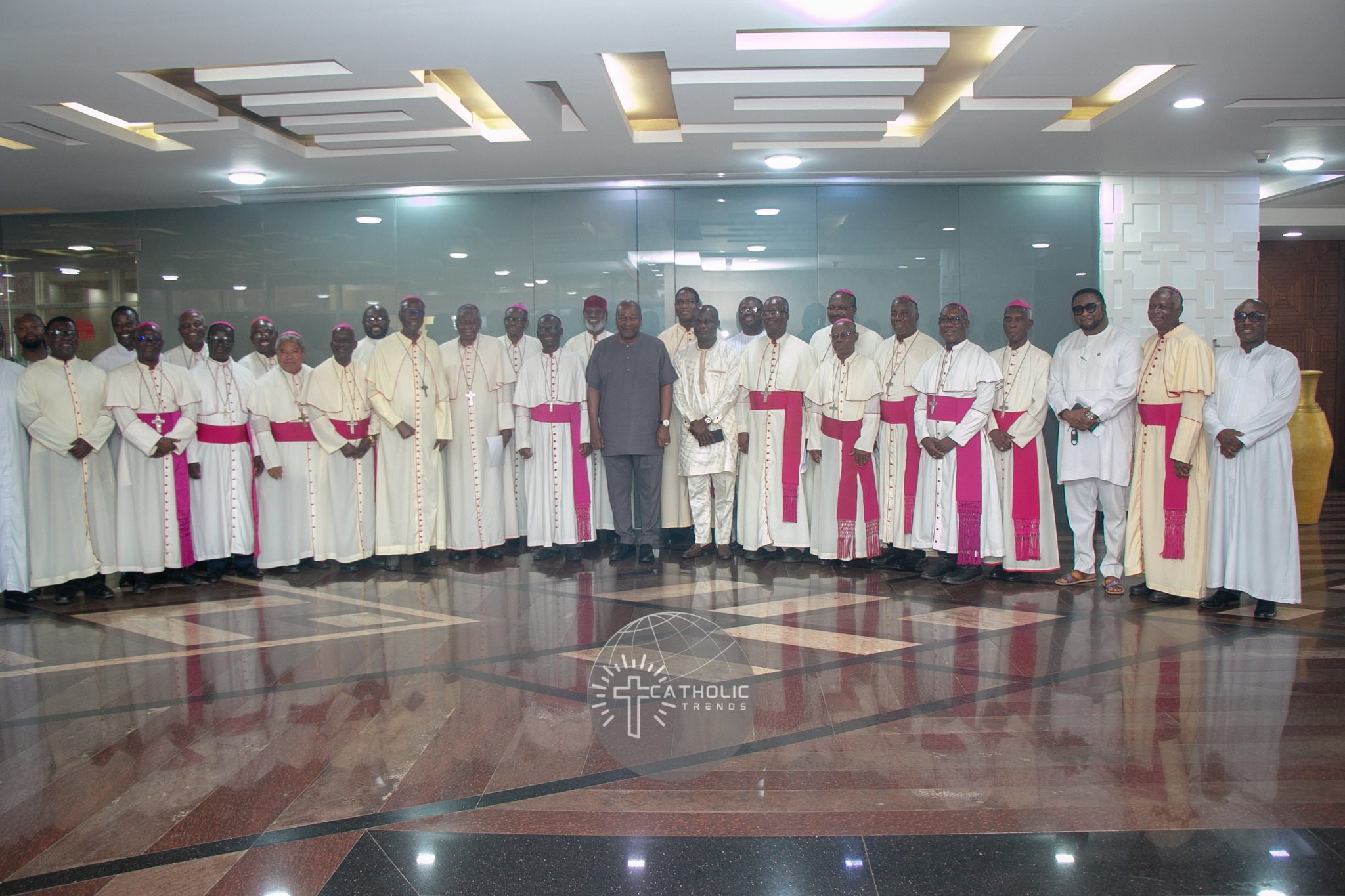
Interestingly, the Church already possesses structures that could form the foundation for such a strategy. The Ghana Catholic Bishops’ Conference has a Department of Human Development whose responsibilities include social development, health, education, governance, justice and peace. Its stated mission includes; promoting the economic, social, cultural and political wellbeing of people and programmes towards good governance. The foundation therefore exists.
What may be missing is a much more deliberate national strategy for identifying talent, developing leadership and deploying expertise.
The recent debate over Catholic representation in education governance provides a perfect example. In August 2026, the Ministry of Education announced that it would initiate the legislative process to amend the Pre-Tertiary Education Act, 2020, to provide adequate representation for recognised faith-based organisations on the Ghana Education Service Council.
The announcement followed concerns raised by the Ghana Catholic Bishops’ Conference over its exclusion from the Council. If the church has deliberately placed her own people (priests, religious men and women and lay Catholics with expertise in education) at key positions would they have been exclusion from the Council?
The lesson is clear: Do not merely ask for a seat at the table. Prepare people who deserve to be at the table.
The Church must move from simply saying “we have contributed” to demonstrating exactly what difference that contribution has made. The Laity Must Be at the Centre. Perhaps the greatest untapped resource of the Catholic Church is its laity.
The Church must stop seeing the lay faithful merely as parishioners who attend Mass, participate in church activities and contribute financially. They are part of the Church’s intellectual and professional strength.
The Catholic teacher, doctor, engineer, lawyer, economist, entrepreneur, journalist, civil servant, scientist and academic must understand that professional excellence can itself be an expression of Christian service. The Time Is Now.
Ghana does not suffer from a shortage of intelligent people. Ghana suffers from a shortage of systems that consistently identify, develop, support and hold competent people accountable. The Catholic Church has an opportunity to become one of the institutions helping to close that gap.
It has schools, it has hospitals, it has universities, it has professional networks, It has intellectuals, It has priests and religious persons, It has a large and diverse lay population, It has international connections, It has experience in managing institutions.
The Catholic Church has already demonstrated that it can build schools and hospitals. It has demonstrated that it can educate thousands and serve communities across Ghana. Recent discussions about its role in education governance demonstrate that the question of Church-State partnership remains very much alive. The next step is bigger. The Church must deliberately build the people who will help build Ghana. That is what it should mean to “own” the state.
Not to possess Ghana. Not to control Ghana. But to recognise that the transformation of Ghana is also our responsibility. This too is evangelisation. From Evangelisation to Transformation
But evangelisation cannot be separated completely from the transformation of the human person and society.
In short
If the Catholic Church truly believes that its mission is to transform lives, perhaps the time has come to transform not only the individual, but also the institutions and systems through which millions of Ghanaian lives are shaped.
The Church has the resources.
The Church has the people.
The Church has the institutions.
The Church has the knowledge.
Now it needs the strategy, courage and deliberate leadership to put them all to work for Ghana.
Written by; Christian Cash Amoah
Sacred Heart Parish-Breman Essiam
Archdiocese of Cape Coast







Discussion about this post