


Question by Theresa Asantewaa Effah:
My Lord, is it appropriate for a priest to join the faithful in making contributions during the offertory collection, or to contribute financially during church harvests and other fundraising activities?
Answer by Most Rev. Joseph Osei-Bonsu:
Dear Theresa, your question touches upon a significant dimension of priestly life and pastoral practice, one that merits careful and balanced reflection. In response, I offer guidance drawn from liturgical theology, canonical principles, pastoral sensitivity, and the rich tradition of the Church’s teaching on stewardship and clerical identity.
The straightforward answer is that it is indeed appropriate for a priest to make contributions during the offertory, harvest celebrations, or other fundraising initiatives, provided that certain important considerations are observed. These pertain to liturgical context, discretion, financial propriety, and the preservation of the priest’s unique sacramental identity. The matter is not simply one of permission, but rather of pastoral wisdom, theological coherence, and the proper ordering of both liturgical and communal life.
- Theological and Pastoral Foundation
Although set apart for sacred ministry through the sacrament of Holy Orders, the priest remains a member of the Christian community and shares in its responsibilities and privileges. His participation in giving expresses solidarity with the faithful, demonstrates that he too contributes to the material support of the Church, and affirms that he is not exempt from communal obligations. Moreover, it models stewardship and generosity, reflecting Christ’s teaching that leaders should not only guide but also embody the values they proclaim.
This understanding is rooted in the nature of the Church as the People of God, in which all members—clergy and laity alike—share a common dignity and a shared responsibility for the welfare of the community. Saint Paul’s instruction to the Corinthians applies universally: “On the first day of every week, each of you is to put aside and save whatever extra you earn, so that collections need not be taken when I come” (1 Cor 16:2). The Apostle does not exempt himself or his fellow ministers from this practice; rather, he presumes that all members of the community participate according to their means.
Canon law affirms that “the Christian faithful are free to give temporal goods for the benefit of the Church” (Code of Canon Law no. 1260), and clerics are likewise called to support the Church and its works. Financial contributions are one means of fulfilling this obligation, alongside spiritual and pastoral service.
The Church’s goods exist principally “to order divine worship, to care for the decent support of the clergy and other ministers, and to exercise works of the sacred apostolate and of charity, especially towards the needy” (Code of Canon Law no. 1254). A priest who contributes from his own resources participates in this threefold purpose, demonstrating that he is both a minister of the Church and a member of the faithful who shares in its mission.
Furthermore, the priest’s contribution serves as a catechetical moment. When the faithful observe their priest giving from his own means, they are reminded that stewardship is not a burden imposed solely on the laity, but a calling shared by all.
The priest preaches not only with words but through actions, and his financial generosity gives authenticity to his teaching on detachment from material goods and the primacy of the Kingdom. Canon 282 of the Code of Canon Law further encourages priests to embrace simplicity of life and to contribute from their resources to works of charity. This canonical encouragement reinforces the pastoral wisdom that a priest’s generosity flows naturally from his vocation of self-giving.
- The Nature of the Offertory During Mass
The offertory in the Holy Mass is not primarily a financial transaction. It is a liturgical act in which the faithful bring forward the fruits of their labour as a symbolic participation in the one Sacrifice of Christ. The General Instruction of the Roman Missal (GIRM) describes it as the moment when “the participation of the faithful is expressed by an offering, whether of bread and wine for the celebration of the Eucharist or of other gifts to relieve the needs of the Church and of the poor” (GIRM no. 73). This moment is an integral movement of the Mass, in which the gifts are presented to be transformed along with the bread and wine.
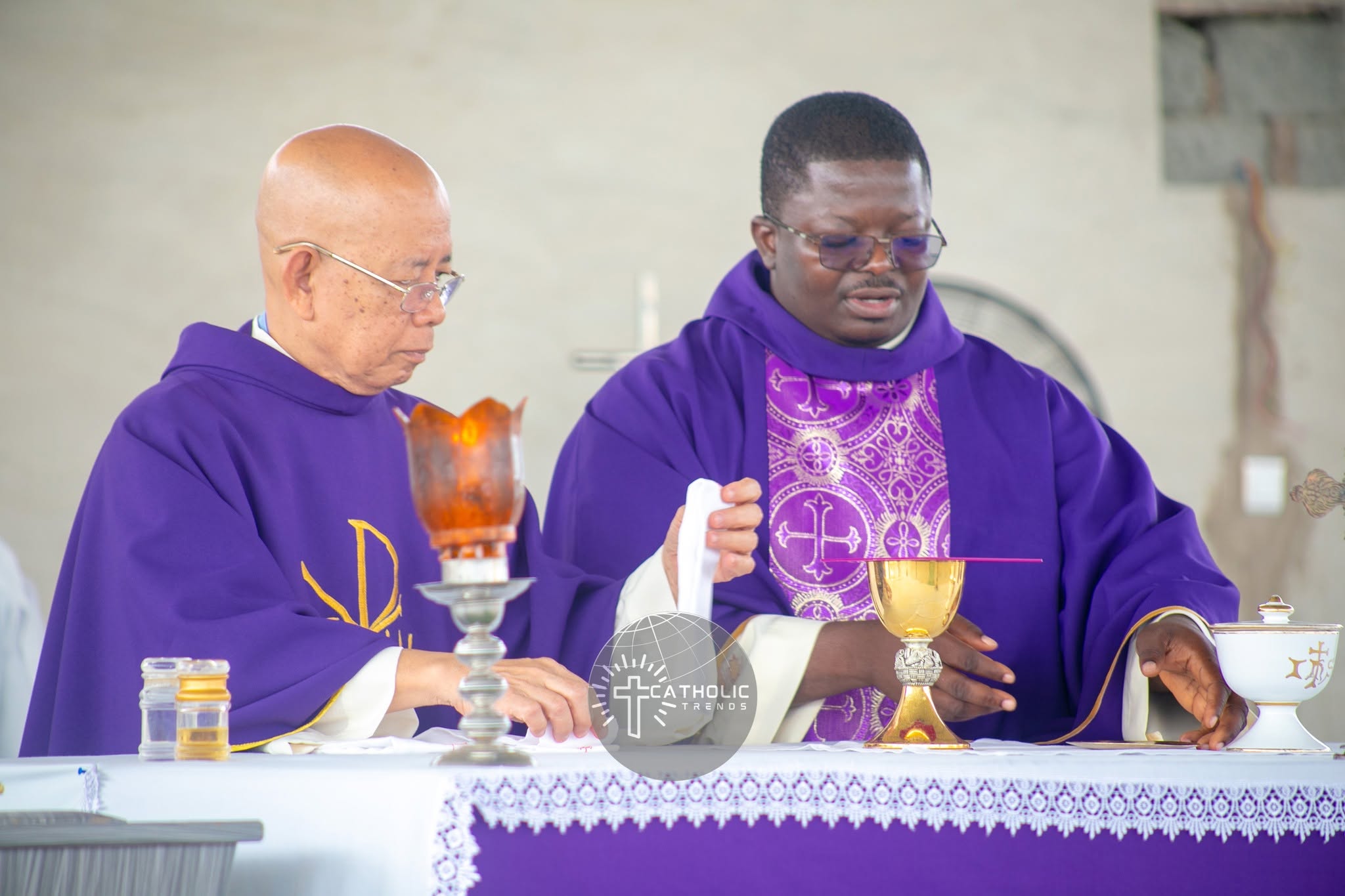
During Mass, the priest acts in persona Christi (in the person of Christ), offering the Eucharistic sacrifice on behalf of the entire Church. His role at the altar is therefore that of the celebrant, not that of a donor. For this reason, he would not normally join the procession of the faithful to place an offering in the collection basket, since such a gesture could blur the distinct roles within the liturgy and obscure the meaning of the offertory.
While the faithful present their gifts and offerings, the priest presides over and offers the Eucharistic sacrifice itself. As the ordained minister of the sacred mysteries, his participation in the offering differs in nature from that of the laity.
There is no canonical prohibition against a priest making a personal donation during the offertory. The Code of Canon Law addresses Mass offerings and stipends (canons 945-958) but does not regulate whether clergy may contribute to ordinary parish collections.
Such giving is a matter of pastoral prudence and local custom rather than law. However, pastoral prudence suggests that it is best done quietly and discreetly—for example, before Mass, through an envelope, or by handing it privately to the ushers—so as to signify solidarity without confusing his liturgical role. If a priest chooses to make a contribution during the offertory, he may place his offering in the collection basket just as any member of the faithful would.
However, he should not participate in the collection, counting, recording, or handling of the funds afterwards. Maintaining this clear distinction of responsibilities helps to safeguard the integrity of the liturgy, ensures proper accountability in the management of Church finances, and avoids any perception of impropriety or conflict of interest.
It is also worth noting that many priests choose to make their contributions outside the liturgical celebration altogether, whether through direct giving to the parish office, bank transfer, or standing orders where such facilities exist. This approach preserves the symbolic clarity of the offertory while still allowing the priest to fulfil his desire to support the parish financially. Such discretion is not a sign of reluctance but of respect for the sacred action taking place at the altar.
- Financial Contributions at Harvests and Fundraising Events (Outside Mass)
Here the answer becomes more nuanced and clearly affirmative. In Ghana, harvest and thanksgiving collections are deeply cultural as well as ecclesial. These celebrations are moments of communal joy, gratitude, and shared responsibility for the mission of the Church.
In these contexts, the priest is not presiding at the altar in the same sacramental manner; he is a member of the community giving thanks alongside his people. His participation underscores unity with the faithful, supports the Church’s works of charity and mission, builds community, and provides a pastoral example of generosity.
On the one hand, a priest retains his human dignity and personhood. He earns a stipend or allowance and has legitimate personal resources. Contributing can be a powerful witness of solidarity with his people, demonstrating that he too is a steward of God’s gifts. It can equally dispel the perception that priests are merely collectors of the faithful’s resources rather than participants in the community’s life.
On the other hand, there are considerations that urge caution or a different mode of engagement. A priest’s public contribution at a harvest can, if not handled prudently, become a form of performance or social pressure, contradicting the spirit of free and joyful giving. His contribution may overshadow or implicitly coerce others, particularly if announced publicly. In some traditions, moreover, the priest’s contribution is understood as already rendered through his service, his time, his celibacy, and his pastoral labour—which is itself an offering of immeasurable worth.
The same principles apply to fundraising activities, including appeals for building projects or for the poor. In all these contexts, the priest’s contribution is a visible sign that he shares in the burdens and joys of the community. It says to the faithful: “I am with you. I, too, am part of this project. What we build, we build together.”
However, the priest should exercise pastoral sensitivity. His contribution should be voluntary and free from obligation, modest and without display, and given through the normal channels used by parishioners. He may consider giving early or through the organising committee so that the focus remains on the community’s thanksgiving, rather than on his gift.
He should never use his position to pressure others to give, nor should he allow his gift to become a topic of public discussion or comparison. In many African contexts, there is a cultural expectation that leaders give generously and visibly.
While this expectation is understandable, the priest must balance it with the Gospel call to humility and the liturgical principle that his primary gift is the Eucharist. A wise pastor will find ways to support his community financially while ensuring that the focus remains on God’s goodness rather than on human generosity.
Conclusion
A priest may appropriately contribute financially during offertory collections, harvests, and fundraising activities as a sign of solidarity with the faithful, a fulfilment of his responsibility to support the Church, and a witness to Christian generosity. Such contributions should always be made with humility, discretion, and from his personal resources—never from parish funds or Mass stipends.
During Mass, a quiet and unobtrusive manner of giving is preferable, since his principal role is that of the minister who offers the Eucharistic sacrifice. Outside the liturgy, his participation in harvests and fundraising efforts can serve as an encouraging example of shared responsibility for the Church’s mission.
At the same time, a priest is not obliged to make a public financial contribution on every occasion. If he has already supported the parish in other ways, or if his liturgical role renders such a gesture impractical, he may legitimately refrain from doing so. His greatest offering remains his priestly ministry, especially the celebration of the Eucharist and his life of service to God’s people.
Ultimately, the priest who gives generously yet discreetly embodies the spirit of Christ’s teaching: “When you give alms, do not let your left hand know what your right hand is doing” (Mt 6:3-4). By supporting the community without seeking recognition, and by offering himself wholeheartedly in pastoral charity, he teaches the faithful not only through his words but also through his example.
Like St John Vianney, whose life was marked by humble generosity and self-sacrificing service, the priest becomes a living offertory, pleasing to God and inspiring to the Church.
| For further explanations or enquiries, you may contact the author, Most Rev. Joseph Osei-Bonsu, Emeritus Catholic Bishop of Konongo-Mampong, on this number: 0244488904, or on WhatsApp (with the same number). |







Discussion about this post