


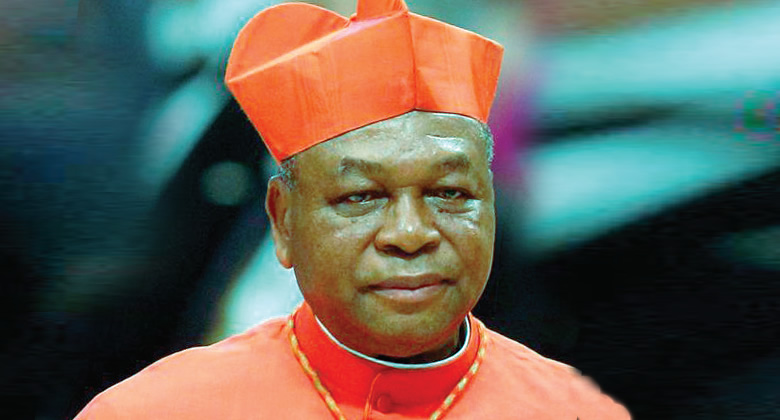
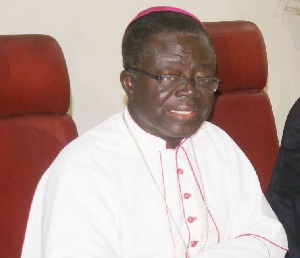
Cardinal John Onaiyekan has called on the Nigerian government and security agencies to take action over remarks attributed to Islamic cleric Sheikh Muhammadu Sani Yahaya Jingir, saying claims that non-Muslims are not “full Nigerians” threaten the country’s unity and fundamental human rights.
The Cardinal said the controversial remarks should not be interpreted as representing Nigeria’s wider Muslim community, noting that mainstream Muslim leaders had already publicly distanced themselves from the comments.
“When Jinji speaks the way he spoke, I am glad that the mainstream of Muslims in Nigeria have come out openly to condemn him,” Cardinal Onaiyekan said in comments reported by Catholic Television of Nigeria.
According to the Cardinal, Muslim leaders had made clear that the cleric’s comments did not represent Islam.
“He is on his own. I’m not sure he even speaks for all the Izalas,” he said.
Cardinal Onaiyekan, however, said the issue went beyond an interreligious disagreement when the remarks allegedly suggested that Nigerians who are not Muslims do not fully belong to the country.
“When he then says that if you are not a Muslim, you are not a full Nigerian, he then approaches on fundamental human rights,” he said.
He urged the government and security agencies to respond where necessary, warning that statements capable of deepening religious divisions should not be allowed to go unchecked.
“We cannot allow that to happen,” the Cardinal said.
While commending Muslim religious leaders who had condemned the remarks, Cardinal Onaiyekan said responsibility for protecting social cohesion ultimately also rested with the state.
“The religious people, Muslim religious leaders, have done their part, but our country, our government should also do its part,” he said.
He argued that authorities should apply Nigeria’s laws on hate speech where appropriate, insisting that his criticism was not directed at the cleric because he is Muslim.
“Not because he’s a Muslim, no, but because he’s talking rubbish,” the Cardinal said.
Cardinal Onaiyekan also used the controversy to revisit the debate over Nigeria’s Muslim-Muslim presidential ticket ahead of the 2027 general elections.
He recalled that Christians had initially accepted the All Progressives Congress’ decision to field a Muslim presidential candidate and Muslim running mate as a political strategy aimed at winning the 2023 election.
But he questioned whether the reported comments attributed to Sheikh Jinji should prompt Nigerians to reconsider the implications of the arrangement.
“I imagine the APC should think seriously whether they have taken the right decision,” he said.
The Cardinal argued that Nigeria’s religious diversity requires an inclusive approach to political leadership.
“Do they not care about how Christians feel?” he asked.
He noted that Nigeria had for years had political leadership involving both Christians and Muslims and questioned the implications of maintaining a Muslim-Muslim ticket at the presidential level.
Cardinal Onaiyekan particularly challenged Christian politicians within the APC to speak openly about the concerns of their constituents.
“For a long time we have been having Christian Muslim presidents,” he said.
“And I think this is where Christian politicians should now rise up.”
He said he was especially interested in hearing from Catholics and other Christians holding senior positions within the governing party.
“I’m still waiting to hear from Christian politicians. And especially, I’m waiting to hear from our Christians, Catholics in APC at the highest level. Do you agree to this whole situation?”
The Cardinal distinguished between Muslim-Muslim or Christian-Christian tickets at subnational levels and the composition of Nigeria’s presidential ticket.
He pointed to Muslim-Muslim tickets in states such as Yobe and Sokoto, as well as Christian-Christian tickets in Anambra and Imo, saying these arrangements had generally not generated the same level of concern.
“But it’s not the same thing when we are talking of Muslim tickets for the president of the Federal Republic of Nigeria,” he said.
Cardinal Onaiyekan acknowledged that the APC has the political right to determine its electoral strategy and has indicated that it intends to retain the Muslim-Muslim ticket for the 2027 elections.
He stressed, however, that Christians who disagree with the arrangement should express their position through democratic and political means rather than confrontation.
“The APC is entitled to organise itself the way it likes,” he said.
“But since I don’t agree with the Muslim-Muslim ticket, I don’t want to vote for them.”
He added that those opposed to the arrangement should wait for the elections and make their position known through the ballot box.
“If it is politics, then handle it politically,” the Cardinal said.
He also challenged Christian politicians to consider whether remaining within a political party whose decisions they fundamentally disagree with compromises their ability to represent their communities.
“How much are you able to compromise when it comes to this kind of political decisions? How much? Must we accept everything?” he asked.
“Who is it that decides in the party? So you have no say in the decisions in the party. What are you doing there?”






Discussion about this post