


Question by Joseph B. R. Obu Jnr., Archdiocese of Accra:
My Lord Bishop, while reading online about the Feast of Pentecost, I came across a statement that left me somewhat confused. It stated that, after Saint Peter preached his first sermon, “about three thousand people were baptised that day” (cf. Acts 2:41). I would be most grateful if Your Lordship could kindly clarify how accurate this statement is and how realistic it would have been for such a large number of people to be baptised on the same day.
In addition, I have encountered differing theological perspectives regarding Pentecost as the “birthday of the Church.” Some theologians maintain that the Church truly began on the Cross on Good Friday, particularly from the pierced side of Christ, and was later manifested publicly to the world at Pentecost—rather like the distinction between conception and birth: conceived on the Cross and publicly revealed at Pentecost. Others, however, argue that the Church began in the Upper Room with the descent of the Holy Spirit on the day of Pentecost itself.
In light of these perspectives, I would be deeply grateful if Your Lordship could explain the Church’s official teaching on the matter, together with any related theological insights concerning the significance and celebration of Pentecost. In particular, would it be theologically correct for Catholics, especially members of the clergy, to refer to Pentecost as the “birthday of the Church”?
Answer by Most Rev. Joseph Osei-Bonsu:
Joseph, your questions touch both Scripture and theology in an important way. The New Testament account that “about 3,000 were baptised that day” is found in Acts 2:41, following Peter’s Pentecost sermon in Acts 2:14-40.
Catholic theology understands Pentecost as the decisive public manifestation of the Church, while also affirming that the Church’s origin is rooted in Christ’s death and resurrection. The phrase “birthday of the Church” is therefore a legitimate pastoral expression, provided it is understood in its full theological sense: conception on the Cross and public manifestation at Pentecost.
- The 3,000 Baptisms: Scripture and Scholarly Perspectives
The baptism of the 3,000 on the day of Pentecost has attracted significant scholarly interest from both Catholic and Protestant interpreters, who approach the event through theological, historical, sacramental, and ecclesiological lenses. My response considers the perspectives of three prominent Catholic and three leading Protestant exegetes, each known for influential commentaries on the Acts of the Apostles. It draws attention to their common acknowledgment of Pentecost as the Spirit-filled inauguration of the Church’s public mission and as a pivotal moment of conversion and incorporation into the early Christian community.
Joseph A. Fitzmyer (Roman Catholic)
Fitzmyer interprets the baptism of the 3000 in Acts 2:41 chiefly as the visible and decisive beginning of the Church’s missionary expansion after Pentecost. He stresses Luke’s theological intent in shaping the narrative rather than merely reporting a statistic. In his reading, the Holy Spirit is the driving force behind apostolic preaching at Pentecost.
This Spirit-empowered proclamation leads directly to the conversion of those who hear the message. Repentance and baptism follow immediately as the appropriate response to the kerygma. Fitzmyer notes that the figure “3,000” may be stylised or symbolic in character.
He therefore cautions against treating it as a strictly literal census of converts. At the same time, he does not deny that the account may rest on a historical core. For Fitzmyer, baptism here functions as incorporation into the life of the believing community.Thus, the event marks the emergence of the Church as a visible, structured, and rapidly growing body of disciples.
Luke Timothy Johnson (Roman Catholic)
Johnson emphasises the transformative power of Peter’s preaching and the active presence of the Holy Spirit in bringing about the conversion of the crowd at Pentecost. In his view, Peter’s proclamation of the crucified and risen Jesus is not merely persuasive speech but a Spirit-empowered message that deeply moves the hearts of the listeners and calls them to repentance.
For Johnson, the baptism of those gathered on Pentecost signifies far more than an individual religious decision; it marks the formation of a new covenant community centred on faith in the risen Christ. He highlights the communal dimension of Luke’s account, observing that baptism immediately draws believers into fellowship, apostolic teaching, common prayer, and mutual care. Johnson also underscores the importance of shared life in Acts, where believers express their faith through unity and solidarity.
He sees the newly baptised not as isolated converts but as members of a Spirit-shaped people. Furthermore, Johnson interprets Pentecost as the decisive moment when the Church moves from a hidden group of disciples to a visible and public body. Through the outpouring of the Holy Spirit, the Church receives both its identity and mission. Thus, Pentecost becomes the foundational event in which the Christian community emerges as a Spirit-filled witness to the risen Christ before the wider world.
William S. Kurz (Roman Catholic)
Kurz highlights both the pastoral and sacramental significance of the event described in Acts 2:41. He interprets the baptism of the 3,000 as a foundational model of Christian initiation, beginning with the hearing of the Gospel and progressing through repentance, faith, baptism, and incorporation into the life of the Church. For Kurz, Luke presents a clear pattern of conversion that continues to shape Christian discipleship and ecclesial life.
He strongly connects this passage with Catholic sacramental theology, viewing baptism not merely as a symbolic act but as an effective means through which believers are united with Christ and welcomed into the Christian community.
Kurz emphasises that the Holy Spirit works powerfully through apostolic preaching and the sacrament of baptism to create and sustain the Church. He also notes the pastoral dimension of the event, in which newly converted believers are nurtured in faith through communal life, prayer, and instruction.
According to Kurz, Pentecost establishes a model for evangelisation that combines proclamation with sacramental response. He further stresses the continuity between the Pentecost experience and the Church’s ongoing mission throughout history. In his view, the same Spirit who acted through the apostles continues to guide the Church whenever the Gospel is preached and people are brought into communion with Christ and his Church.
- F. Bruce (Protestant)
Bruce believes that the number of 3,000 converts mentioned in Acts 2:41 could well be historical rather than merely symbolic. He explains that Jerusalem would have been exceptionally crowded during the feast of Pentecost, with large numbers of Jewish pilgrims arriving from various regions, making such a mass response to Peter’s sermon entirely plausible. Bruce argues that the context of a major religious festival provided an ideal setting for the rapid spread of Peter’s message.
He also points to the many ritual washing pools (mikva’ot) situated near the Temple precincts, suggesting that these facilities could have served as practical locations for baptising large numbers of people. In addition, Bruce proposes that the apostles, assisted by other disciples, would likely have shared in the task of administering baptism to the converts. For him, the event vividly demonstrates the fulfilment of Jesus’ promise to send the Holy Spirit upon his followers after his ascension.
Bruce sees Pentecost as the decisive beginning of the Church’s worldwide mission, empowered by the Spirit and rooted in apostolic proclamation. He interprets baptism as the public and visible sign of repentance and faith in Jesus Christ. Through baptism, converts openly identified themselves with the risen Lord and entered the fellowship of the emerging Christian community. Thus, for Bruce, Acts 2:41 reflects both historical plausibility and profound theological significance.
Darrell L. Bock (Protestant)
Bock stresses the profoundly Christ-centred nature of Peter’s Pentecost sermon and the powerful response it evoked among the listeners. He argues that Peter’s message is focused entirely on the identity and saving work of Jesus, especially his death, resurrection, exaltation, and lordship.
Bock understands the baptism of the 3,000 as the visible and outward expression of genuine repentance, faith, and acceptance of Jesus as both Messiah and Lord. For him, Peter’s proclamation confronts the crowd with the reality that the crucified Jesus has been raised and exalted by God, leading many listeners to deep conviction and conversion.
Bock further emphasises that, throughout Acts, baptism is inseparably linked with repentance and conversion, functioning as a public confession of faith in Christ. He sees baptism not merely as a ritual act but as an open declaration of allegiance to Jesus and identification with the emerging Christian community. In his view, the response of the crowd demonstrates the transforming power of Spirit-filled preaching.
Bock also interprets Pentecost as the inauguration of the Church’s universal mission, extending beyond Israel to all nations. The Holy Spirit empowers the apostles to proclaim the Gospel boldly and effectively. Thus, Pentecost marks the beginning of a new Spirit-filled people of God gathered around the risen and exalted Christ.
- Craig S. Keener (Protestant)
Keener, an evangelical Protestant scholar, believes that the baptism of 3,000 people at Pentecost was historically possible because Jerusalem would have been crowded with pilgrims gathered for the feast. He explains that the city’s many ritual purification pools (mikva’ot), especially around the Temple area, would have provided sufficient locations for baptising such a large number of converts.
Nevertheless, Keener insists that the principal emphasis of the narrative lies not in the number itself but in the extraordinary work of the Holy Spirit through Peter’s preaching. According to Keener, Peter’s sermon, empowered by the Spirit, brought listeners to conviction, repentance, and faith in Jesus Christ. He further explains that the event fulfils Old Testament promises, particularly prophetic expectations that God would pour out his Spirit upon his people in the messianic age.
For Keener, Pentecost represents the fulfilment of these divine promises and the inauguration of a new phase in salvation history. He also stresses that baptism functioned as a public declaration of faith in Jesus and a visible sign of entry into the Christian community. In his view, those baptised openly identified themselves with the crucified and risen Christ. Keener therefore sees Acts 2:41 as evidence of both the rapid expansion of the early Church and the dynamic power of God working through the apostles. Through the Spirit’s activity, the Church emerges as a growing community of faith empowered for witness and mission.
What they have in common
All six exegetes agree that the account of the 3,000 baptisms in Acts primarily presents a theological and ecclesial picture of the rapid growth of the early Church after Pentecost. They consistently see the event as the result of the Holy Spirit’s powerful action working through Peter’s preaching rather than a merely human achievement.
All also affirm that baptism functions as the essential entry point into the Christian community, signifying repentance, forgiveness, and incorporation into the People of God. Even where they differ on whether the number is literal or symbolic, they agree that Luke intends to highlight an extraordinary response of faith and expansion of the Church. They further converge on the view that Pentecost fulfils Jesus’ promise of the Holy Spirit and inaugurates the Church’s universal mission. In sum, they emphasise the Spirit’s decisive role, the centrality of baptism, and the remarkable growth of the early Christian community.
- When Was the Church Born? Cross and Pentecost
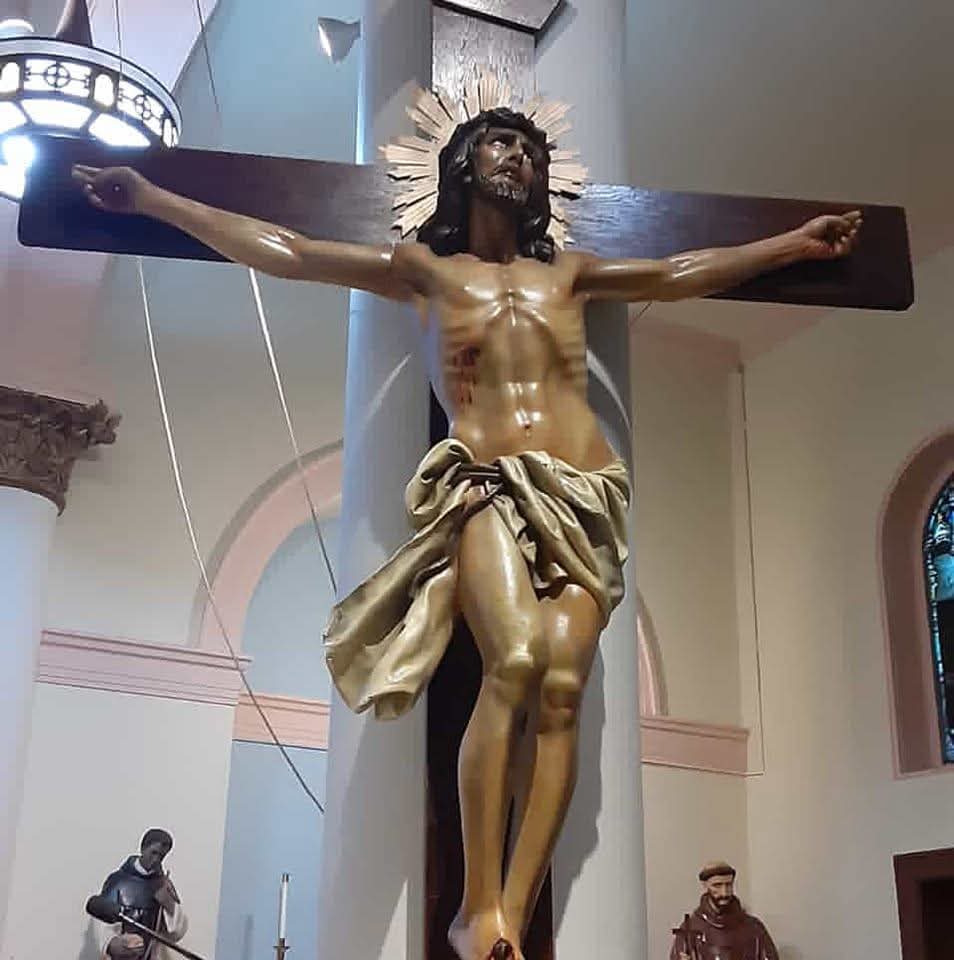
Catholic theology holds both the Cross and Pentecost together, not as alternatives but as complementary dimensions of one mystery. The Cross is the source of the Church, since the Church is born from Christ’s saving death, symbolised by blood and water flowing from his side (John 19:34). As the Catechism teaches, the Church was “born from the pierced heart of Christ” (CCC 766). In this sense, the Church is constituted in principle and grounded in the sacrifice of Christ.
Pentecost is the manifestation and empowerment of the Church. The outpouring of the Holy Spirit in Acts 2 marks the public unveiling of the Church’s mission to the world. “The Church was openly displayed to the crowds and the spread of the Gospel began” (CCC 767). At Pentecost, the Church becomes visible, vocal, and missionary. The Church is therefore born from the Cross in a foundational sense and revealed at Pentecost in a historical and missionary sense.
- “Birthday of the Church”: Meaning and Use
The expression “birthday of the Church” is not a formal liturgical title but a popular catechetical and pastoral phrase used because Pentecost marks the moment when the Church emerged publicly from the Upper Room into mission. The Church already exists in Christ’s saving work before Pentecost, but it is manifested to the world at Pentecost in a visible and public way.
For this reason, the expression is useful when properly explained. However, the official liturgy prefers more precise theological language such as “outpouring of the Spirit,” “fulfilment of the Paschal Mystery,” and “beginning of the Church’s mission,” ensuring that Pentecost is not separated from the Cross. The image of a child coming into public view after life in the womb helps to see this distinction: the Church’s life precedes Pentecost, while Pentecost reveals and sends the Church.
- Integrated Theological Understanding
All perspectives converge on a single truth: the Cross is the origin and sacrificial foundation of the Church; Pentecost is the public manifestation and missionary empowerment of the Church; and the 3,000 baptisms in Acts 2 signify the Spirit’s transforming action and the growth of the early Christian community. The differences among Fitzmyer, Johnson, Kurz, Bruce, Bock and Keener do not contradict the core message but illuminate it from complementary perspectives—ranging from historical plausibility, literary-theological emphasis, and balanced interpretation to strong historical defence.
- Conclusion
Pentecost celebrates the outpouring of the Holy Spirit and the visible emergence of the Church’s mission to the world. The account of 3,000 baptisms expresses the impact of Peter’s preaching and the Spirit’s power to gather believers into one body. Whether interpreted strictly historically or with theological emphasis, the passage affirms significant growth in the early Church.
In Catholic understanding, the Church is born from Christ’s pierced side on the Cross and publicly revealed at Pentecost through the gift of the Holy Spirit. The phrase “birthday of the Church” is therefore a useful pastoral expression, provided it is always anchored in the fuller mystery of Christ’s Paschal event.
| For further explanations or enquiries, you may contact the author, Most Rev. Joseph Osei-Bonsu, Emeritus Catholic Bishop of Konongo-Mampong, on this number: 0244488904, or on WhatsApp (with the same number). |








Discussion about this post