


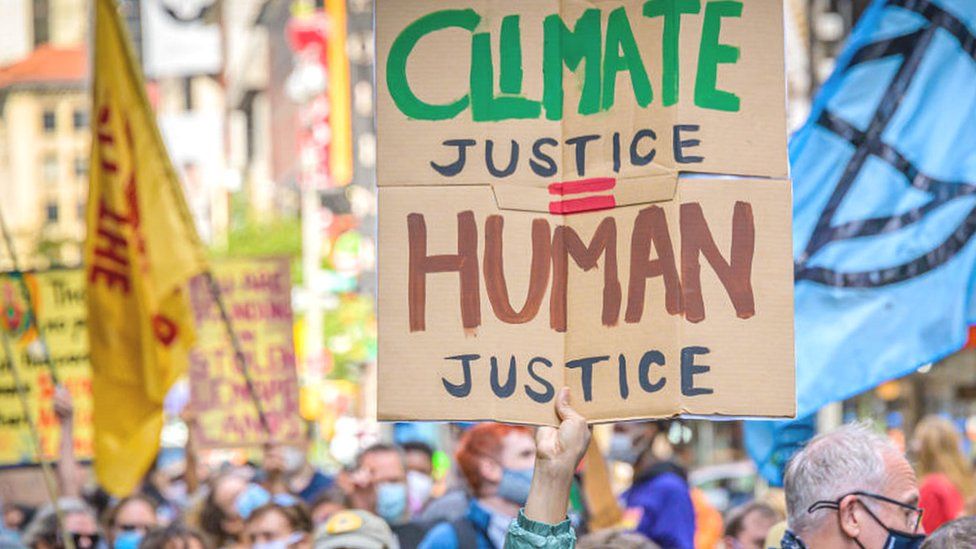
The Catholic Episcopal Conferences of Africa, Asia, Latin America, and the Caribbean have issued an urgent call to the global community ahead of the COP30 climate summit in Brazil. Titled “A Call for Climate Justice and the Common Home”, the statement lays out a bold vision for ecological conversion, systemic transformation, and resistance to what it describes as “false solutions” to the climate crisis.
Ten years after the publication of Laudato Si’ and the signing of the Paris Agreement, the Church leaders warn that the world is teetering on the edge of ecological collapse. “The world in which we live is collapsing and may be nearing the breaking point,” they declare, echoing Laudate Deum (2), the latest apostolic exhortation of Pope Leo XIV, successor to Pope Francis.
A Prophetic Cry for Climate Justice
The bishops’ message is rooted in a deep theological and moral conviction: that climate change is not only a technical issue but an existential crisis of justice and human dignity. With global warming reaching 1.55°C in 2024—surpassing safe limits outlined by the Intergovernmental Panel on Climate Change (IPCC)—they warn that “millions are already suffering the consequences, particularly in the Global South.”
They reject superficial “green” solutions such as carbon markets, “green capitalism,” and the commodification of nature, which they argue merely mask the systemic problems of exploitation and inequality. Instead, the statement calls for:
Equity and Justice: Rich nations must pay their ecological debt through climate finance without indebting the Global South.
Phase-out of Fossil Fuels: An end to new fossil infrastructure and a just energy transition that respects communities and ecosystems.
Zero Deforestation by 2030: Urgent protection of biomes such as the Amazon, Congo Basin, and Mekong Delta.
Protection of Indigenous Peoples and Women: Recognition of their sovereignty, contributions, and vulnerabilities in climate policy.
A Church That Acts, Not Just Speaks
Far from remaining a moral observer, the Church commits to tangible action. The bishops pledge to:
Defend vulnerable populations in every climate decision.
Promote integral ecological education rooted in Pope Francis’ “happy sobriety” and ancestral wisdom such as Buen Vivir.
Launch a Climate Justice Observatory under the Ecclesial Conference of the Amazon to monitor COP outcomes and hold governments accountable.
Build a historic coalition between the Global South and ethical allies in the Global North.
“We will not cease to raise our voice against social and ecological injustices,” the statement insists, adding that “without climate justice there is no peace; without ecological conversion, there is no future.”
False Solutions and the Myth of Green Capitalism
In a scathing critique, the document dismantles popular climate strategies that, according to the bishops, only reinforce the status quo. Chief among their concerns:
Carbon Offsets: Allow major polluters to buy credits while continuing emissions.
Mining for the ‘Green’ Transition: The exploitation of minerals like lithium and cobalt is causing devastation in communities across the Global South.
Technocratic Solutions: The obsession with technology and profit, they warn, sidelines ethics and people’s real needs.
Instead, they advocate decentralised, community-based solutions designed “with, not for, the people,” including local renewable energy, agroecology, and community reforestation.
A Call for a New Economic Model
The bishops issue a radical challenge to current economic systems, calling for a complete transformation. “It is urgent to abandon an economic model that proposes infinite growth on a finite planet,” they state. “Happy sobriety,” they argue, “is more than a lifestyle; it is an ethical and spiritual response to the climate crisis.”
They demand production and consumption models that are fair, circular, and restorative. “Such an economy kills,” they quote from Evangelii Gaudium, calling for one that serves life, justice, and peace.
Women, Migrants, and Margins at the Centre
The statement highlights that women and girls—especially in the Global South—bear the brunt of climate impacts. They call for gender-responsive climate finance, equal representation, and targeted policies that uplift women as entrepreneurs, leaders, and defenders of life.
They also elevate climate-induced migration as a central justice issue, urging its recognition in global frameworks on loss and damage, with adequate humanitarian and development funding.
A Kairos Moment for COP30
As the world prepares for COP30 in Brazil, the bishops insist this summit must be more than another meeting: it must be “a milestone of resistance, intercontinental coordination, and real transformation.”
They call on faith communities, governments, social movements, and ethical leaders worldwide to unite in a North-South Coalition for Climate, Nature, and Humanity.
“The cry of the Earth is inseparable from the cry of the poor,” they remind the world, quoting Laudato Si’. And they close with a powerful invocation: “May the Spirit grant us the unity, boldness and tenderness necessary to continue weaving together the Kingdom of God on this wounded Earth.”
Download the full message: https://www.synod.va









Discussion about this post